
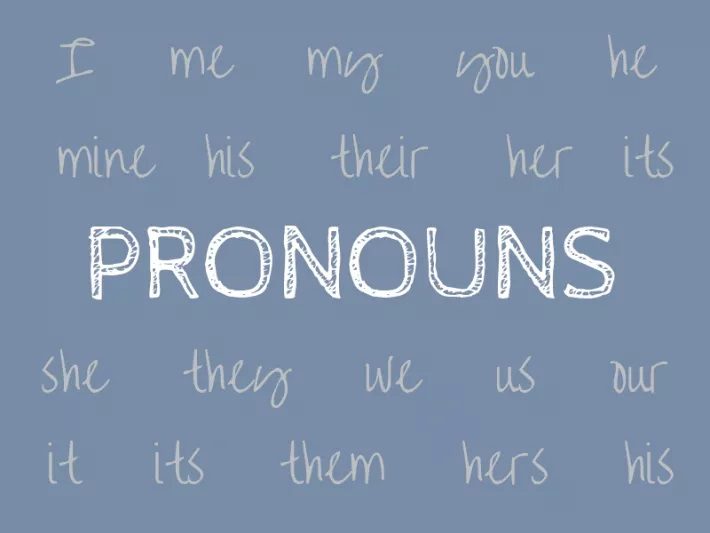
Week 12: Intensive and Vague Pronouns

Flashcard
•
English
•
7th Grade
•
Practice Problem
•
Hard

Wayground Content
FREE Resource
Student preview

15 questions
Show all answers
1.
FLASHCARD QUESTION
Front
What is an intensive pronoun?
Back
An intensive pronoun is a pronoun that emphasizes a preceding noun or pronoun. Examples include 'myself', 'yourself', 'himself', 'herself', 'itself', 'ourselves', and 'themselves'.
2.
FLASHCARD QUESTION
Front
What is a vague pronoun?
Back
A vague pronoun is a pronoun that does not clearly refer to a specific noun, making the sentence unclear. For example, in the sentence 'He went to the store', 'he' is vague if it is not clear who 'he' refers to.
3.
FLASHCARD QUESTION
Front
How can you identify a vague pronoun in a sentence?
Back
You can identify a vague pronoun by checking if the pronoun refers to a specific noun mentioned earlier in the text. If it does not, it is considered vague.
4.
FLASHCARD QUESTION
Front
What is the difference between intensive and reflexive pronouns?
Back
Intensive pronouns emphasize a noun (e.g., 'I myself did it'), while reflexive pronouns refer back to the subject of the sentence (e.g., 'I hurt myself').
5.
FLASHCARD QUESTION
Front
Provide an example of a sentence using an intensive pronoun.
Back
I baked the cake myself.
6.
FLASHCARD QUESTION
Front
Provide an example of a sentence using a vague pronoun.
Back
When Sarah saw her, she waved.
7.
FLASHCARD QUESTION
Front
How can you replace a vague pronoun to make a sentence clearer?
Back
You can replace a vague pronoun with the specific noun it refers to. For example, 'she' can be replaced with 'Sarah'.
Access all questions and much more by creating a free account
Create resources
Host any resource
Get auto-graded reports

Continue with Google

Continue with Email

Continue with Microsoft
or continue with

%20(1).png)
Apple

Others
By signing up, you agree to our Terms of Service & Privacy Policy
Already have an account?



