
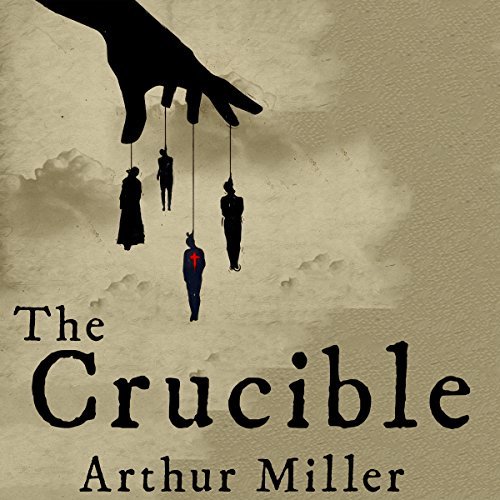
The Crucible- Act 2 & 3 Review

Flashcard
•
English
•
11th Grade
•
Practice Problem
•
Hard

Wayground Content
FREE Resource
Student preview

15 questions
Show all answers
1.
FLASHCARD QUESTION
Front
What is the significance of Hale's statement about examining those who confessed to dealing with the Devil in Act II?
Back
Hale's statement highlights the theme of hysteria and the flawed nature of the court, as it shows that confessions are coerced and not necessarily truthful.
2.
FLASHCARD QUESTION
Front
What does Arthur Miller suggest is the worst crime in Act III of The Crucible?
Back
Betraying a friend or loved one to save oneself.
3.
FLASHCARD QUESTION
Front
Define verbal irony.
Back
Verbal irony is when someone says the opposite of what they mean, often for humorous or emphatic effect.
4.
FLASHCARD QUESTION
Front
What motivates Hale to intervene on behalf of Proctor in Act III?
Back
Hale's commitment to the truth drives him to intervene, as he begins to question the legitimacy of the court's proceedings.
5.
FLASHCARD QUESTION
Front
What are the consequences for Proctor in Act III?
Back
Proctor is jailed for lying to the court.
6.
FLASHCARD QUESTION
Front
Explain the role of hysteria in The Crucible.
Back
Hysteria in The Crucible serves as a catalyst for the events of the play, leading to irrational behavior and the persecution of innocent people.
7.
FLASHCARD QUESTION
Front
What is the theme of reputation in The Crucible?
Back
The theme of reputation explores how characters are driven by the need to maintain their social standing, often leading to moral compromises.
Access all questions and much more by creating a free account
Create resources
Host any resource
Get auto-graded reports

Continue with Google

Continue with Email

Continue with Classlink

Continue with Clever
or continue with

Microsoft
%20(1).png)
Apple

Others
Already have an account?


