Patterns in Electron Configurations Flashcard

Flashcard
•
Chemistry
•
9th - 12th Grade
•
Practice Problem
•
Hard

Wayground Content
FREE Resource
Student preview

15 questions
Show all answers
1.
FLASHCARD QUESTION
Front
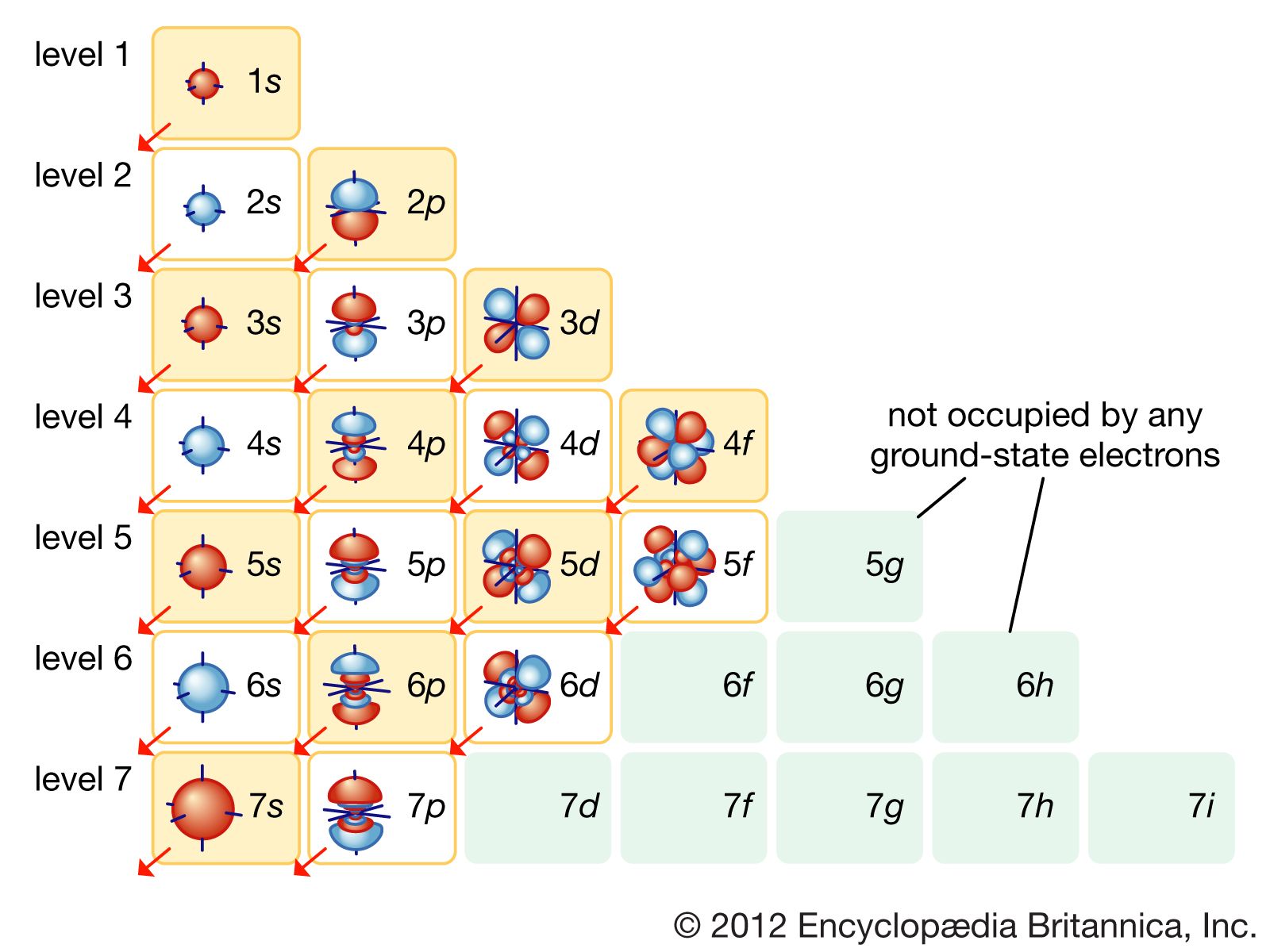
What is the atomic orbital model?
Back
The atomic orbital model describes the regions in an atom where there is a high probability of finding electrons. It visualizes the arrangement of electrons around the nucleus based on their energy levels.
2.
FLASHCARD QUESTION
Front
What are atomic orbitals?
Back
Atomic orbitals are mathematical functions that describe the wave-like behavior of electrons in an atom. They are often represented as shapes (s, p, d, f) that indicate the probability distribution of an electron.
3.
FLASHCARD QUESTION
Front
What is the significance of energy levels in an atom?
Back
Energy levels in an atom represent the fixed distances from the nucleus where electrons can exist. Each energy level can hold a specific number of electrons, influencing the atom's chemical properties.
4.
FLASHCARD QUESTION
Front
What is the maximum number of electrons in the first energy level?
Back
The maximum number of electrons in the first energy level (n=1) is 2.
5.
FLASHCARD QUESTION
Front
What is the shape of s orbitals?
Back
s orbitals have a spherical shape, with the electron density evenly distributed around the nucleus.
6.
FLASHCARD QUESTION
Front
What is the shape of p orbitals?
Back
p orbitals have a dumbbell shape and are oriented along the x, y, and z axes, allowing for three different orientations.
7.
FLASHCARD QUESTION
Front
What is the Pauli Exclusion Principle?
Back
The Pauli Exclusion Principle states that no two electrons in an atom can have the same set of four quantum numbers, meaning that an orbital can hold a maximum of two electrons with opposite spins.
Access all questions and much more by creating a free account
Create resources
Host any resource
Get auto-graded reports

Continue with Google

Continue with Email

Continue with Classlink

Continue with Clever
or continue with

Microsoft
%20(1).png)
Apple

Others
Already have an account?
Similar Resources on Wayground

10 questions
Key Principles of Risk Management
Flashcard
•
KG - University
15 questions
paměť + pozornost
Flashcard
•
9th - 12th Grade
7 questions
International Yoga Day Quiz
Flashcard
•
KG - University
16 questions
April Fools Trivia
Flashcard
•
KG - University
10 questions
Present Simple - Negative
Flashcard
•
10th Grade
12 questions
Political Advocacy and Interest Groups
Flashcard
•
9th - 12th Grade
9 questions
Classical and Medieval Art
Flashcard
•
KG
Popular Resources on Wayground
15 questions
Fractions on a Number Line

Quiz
•
3rd Grade
20 questions
Equivalent Fractions
Quiz
•
3rd Grade
25 questions
Multiplication Facts
Quiz
•
5th Grade
54 questions
Analyzing Line Graphs & Tables
Quiz
•
4th Grade
22 questions
fractions
Quiz
•
3rd Grade
20 questions
Main Idea and Details
Quiz
•
5th Grade
20 questions
Context Clues
Quiz
•
6th Grade
15 questions
Equivalent Fractions
Quiz
•
4th Grade
Discover more resources for Chemistry
20 questions
Types of Chemical Reactions
Quiz
•
9th - 12th Grade
10 questions
Formative 3BC: Ionic v Covalent Bonds
Quiz
•
9th Grade
10 questions
Exploring Stoichiometry Concepts

Interactive video
•
6th - 10th Grade
20 questions
Mixed Bonding Naming
Quiz
•
9th Grade
20 questions
Naming & Writing Chemical Formulas
Quiz
•
10th Grade
20 questions
Chemical Reactions
Quiz
•
9th Grade
20 questions
Practice: E-Con, Orbital Notation, Noble Gas Notation
Quiz
•
10th Grade
20 questions
Covalent Bonding
Quiz
•
10th Grade