
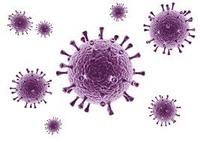
Viruses

Flashcard
•
Biology
•
10th Grade
•
Practice Problem
•
Hard

Wayground Content
FREE Resource
Student preview

15 questions
Show all answers
1.
FLASHCARD QUESTION
Front
What is a virus?
Back
A virus is a microscopic infectious agent that is non-living and cannot reproduce on its own. It consists of genetic material (DNA or RNA) surrounded by a protein coat.
2.
FLASHCARD QUESTION
Front
Do viruses have cells?
Back
No, viruses do not have cells. They are acellular and lack the cellular structure found in living organisms.
3.
FLASHCARD QUESTION
Front
What are organelles?
Back
Organelles are specialized structures within a cell that perform specific functions. Viruses do not have organelles.
4.
FLASHCARD QUESTION
Front
How do viruses reproduce?
Back
Viruses reproduce by infecting a host cell and hijacking the cell's machinery to replicate their genetic material and produce new virus particles.
5.
FLASHCARD QUESTION
Front
What happens when a virus enters a host cell?
Back
Once a virus enters a host cell, it releases its DNA or RNA into the cell to begin the replication process.
6.
FLASHCARD QUESTION
Front
What role does soap play in destroying viruses?
Back
Soap destroys viruses by breaking up the lipid layer surrounding the virus, allowing it to be washed away.
7.
FLASHCARD QUESTION
Front
What is the lipid layer?
Back
The lipid layer is a protective membrane made of lipids that surrounds some viruses and cells, playing a crucial role in their structure and function.
Access all questions and much more by creating a free account
Create resources
Host any resource
Get auto-graded reports

Continue with Google

Continue with Email

Continue with Classlink

Continue with Clever
or continue with

Microsoft
%20(1).png)
Apple

Others
Already have an account?

