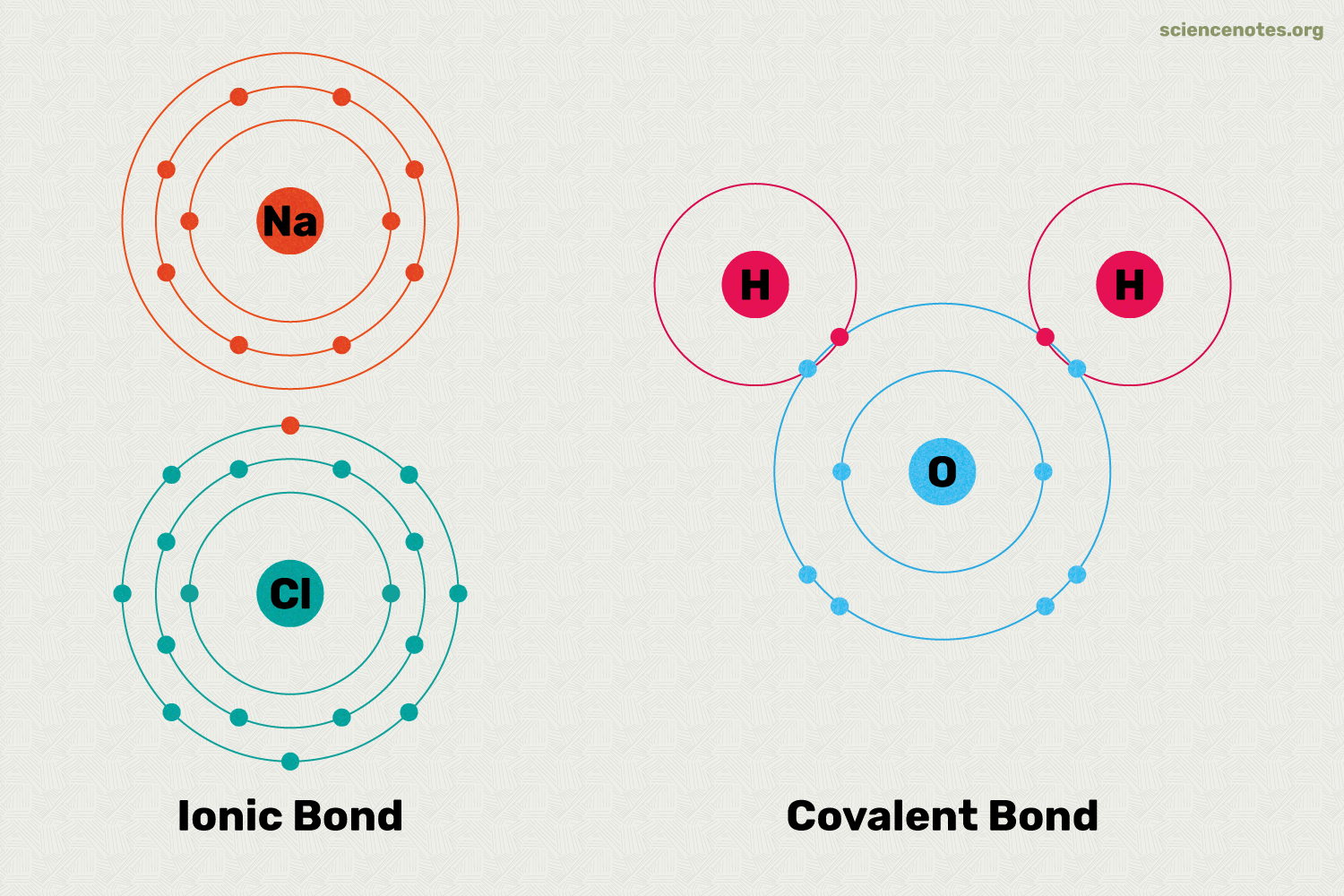
Ionic and Covalent Bonding

Flashcard
•
Chemistry
•
10th Grade
•
Practice Problem
•
Hard

Wayground Content
FREE Resource
Student preview

15 questions
Show all answers
1.
FLASHCARD QUESTION
Front
What is an ionic bond?
Back
An ionic bond is a type of chemical bond formed through the electrostatic attraction between oppositely charged ions, typically between a metal and a nonmetal.
2.
FLASHCARD QUESTION
Front
What is a covalent bond?
Back
A covalent bond is a type of chemical bond where two atoms share one or more pairs of electrons, usually occurring between nonmetals.
3.
FLASHCARD QUESTION
Front
Define a polyatomic ion.
Back
A polyatomic ion is a group of covalently bonded atoms that carry a charge, such as sulfate (SO4^2-) or ammonium (NH4+).
4.
FLASHCARD QUESTION
Front
What is the difference between ionic and covalent bonding?
Back
Ionic bonding involves the transfer of electrons from one atom to another, resulting in charged ions, while covalent bonding involves the sharing of electrons between atoms.
5.
FLASHCARD QUESTION
Front
What is the formula for sodium chloride?
Back
The formula for sodium chloride is NaCl, which represents the ionic compound formed from sodium (Na+) and chloride (Cl-).
6.
FLASHCARD QUESTION
Front
What type of elements typically form covalent bonds?
Back
Covalent bonds typically form between nonmetals.
7.
FLASHCARD QUESTION
Front
What is a chemical bond?
Back
A chemical bond is the force that holds two atoms together in a compound, which can be ionic, covalent, or metallic.
Create a free account and access millions of resources
Create resources
Host any resource
Get auto-graded reports

Continue with Google

Continue with Email

Continue with Classlink

Continue with Clever
or continue with

Microsoft
%20(1).png)
Apple

Others
Already have an account?
Similar Resources on Wayground

10 questions
Funções Orgânicas para o 11º Ano
Flashcard
•
11th Grade
10 questions
Mathematics Glossary
Flashcard
•
KG
11 questions
T4.Potencial de membrana y propagación de la señal
Flashcard
•
KG
10 questions
Atoms and Molecules
Flashcard
•
9th Grade
10 questions
Disney descendants flashcard
Flashcard
•
KG
11 questions
Deklaracja dwuwymiarowej tablicy C++
Flashcard
•
10th Grade
10 questions
Nervous System and Responses
Flashcard
•
10th Grade
11 questions
Unit 1 | Topic 2 | Key Terms - Flashcards
Flashcard
•
9th - 12th Grade
Popular Resources on Wayground
10 questions
Forest Self-Management

Lesson
•
1st - 5th Grade
25 questions
Multiplication Facts

Quiz
•
5th Grade
30 questions
Thanksgiving Trivia
Quiz
•
9th - 12th Grade
30 questions
Thanksgiving Trivia
Quiz
•
6th Grade
11 questions
Would You Rather - Thanksgiving
Lesson
•
KG - 12th Grade
48 questions
The Eagle Way
Quiz
•
6th Grade
10 questions
Identifying equations
Quiz
•
KG - University
10 questions
Thanksgiving
Lesson
•
5th - 7th Grade
Discover more resources for Chemistry
20 questions
Unit 3, Quiz #6 Practice - Types of Covalent
Quiz
•
9th - 12th Grade
22 questions
Unit 2 Part 1 Rumble
Quiz
•
10th Grade
20 questions
Molar Mass
Quiz
•
9th - 12th Grade
20 questions
Electron Configuration
Quiz
•
10th - 12th Grade
15 questions
Balancing Chemical Equations
Quiz
•
10th - 12th Grade