
Unit 4

Flashcard
•
Chemistry
•
12th Grade
•
Practice Problem
•
Hard

Wayground Content
FREE Resource
Student preview

15 questions
Show all answers
1.
FLASHCARD QUESTION
Front
What is a physical change?
Back
A physical change is a change that affects one or more physical properties of a substance without altering its chemical composition. Examples include changes in state (solid, liquid, gas), shape, or size.
2.
FLASHCARD QUESTION
Front
What is a chemical change?
Back
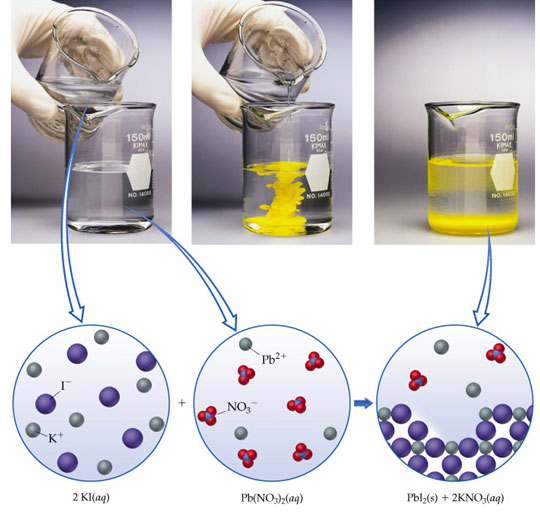
A chemical change is a change that results in the formation of new chemical substances. It involves the breaking and forming of bonds between atoms. Indicators include color change, gas production, and precipitate formation.
3.
FLASHCARD QUESTION
Front
What is the significance of balancing chemical equations?
Back
Balancing chemical equations is essential to obey the law of conservation of mass, which states that matter cannot be created or destroyed in a chemical reaction. It ensures that the number of atoms for each element is the same on both sides of the equation.
4.
FLASHCARD QUESTION
Front
What is a half-reaction in redox reactions?
Back
A half-reaction is either the oxidation or reduction part of a redox reaction, showing the transfer of electrons. Oxidation involves loss of electrons, while reduction involves gain of electrons.
5.
FLASHCARD QUESTION
Front
What is a precipitate?
Back
A precipitate is an insoluble solid that forms when two solutions are mixed and a chemical reaction occurs, resulting in a new compound.
6.
FLASHCARD QUESTION
Front
What is the role of coefficients in a balanced chemical equation?
Back
Coefficients indicate the number of moles of each substance involved in the reaction. They are used to balance the equation according to the law of conservation of mass.
7.
FLASHCARD QUESTION
Front
What is the photoelectron spectrum?
Back
The photoelectron spectrum is a graph that shows the energies of electrons ejected from an atom when it is exposed to ultraviolet or X-ray radiation. It provides information about the electron configuration of the atom.
Access all questions and much more by creating a free account
Create resources
Host any resource
Get auto-graded reports

Continue with Google

Continue with Email

Continue with Classlink

Continue with Clever
or continue with

Microsoft
%20(1).png)
Apple

Others
Already have an account?


