

Inter and Intramolecular forces

Flashcard
•
Science
•
10th Grade
•
Easy
Standards-aligned

Yamini Mital
Used 1+ times
FREE Resource
Student preview

35 questions
Show all answers
1.
FLASHCARD QUESTION
Front
Which of the following has hydrogen bonding? Options: CBr4, NO2, H2S, NH3
Back
NH3
Answer explanation
Hydrogen bonding occurs when hydrogen is bonded to N, O, or F. Among the options, NH3 (ammonia) has hydrogen bonded to nitrogen, allowing for hydrogen bonding. CBr4, NO2, and H2S do not exhibit this type of bonding.
2.
FLASHCARD QUESTION
Front
Rank these in order of strength of the attraction: covalent bond, hydrogen bond, dipole-dipole attraction.
Back
covalent bond > hydrogen bond > dipole-dipole
Answer explanation
Covalent bonds are the strongest due to shared electrons, followed by hydrogen bonds which are weaker attractions between polar molecules. Dipole-dipole attractions are the weakest, occurring between molecules with permanent dipoles.
3.
FLASHCARD QUESTION
Front
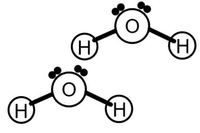
Type of intermolecular force responsible for the attraction pictured above.
Back
Hydrogen Bonds
Answer explanation
Hydrogen bonds are a specific type of dipole-dipole interaction that occur when hydrogen is bonded to highly electronegative atoms like oxygen or nitrogen, leading to strong attractions between molecules.
4.
FLASHCARD QUESTION
Front
Intermolecular forces are attractions between ______.
Back
Neighboring molecules
Answer explanation
Intermolecular forces are attractions between neighboring molecules, which allow them to interact and influence each other's properties. This distinguishes them from forces within a molecule or between charged particles.
5.
FLASHCARD QUESTION
Front
What kind of force is the arrow pointing to?

Back
Intermolecular Force
Answer explanation
The arrow points to an Intermolecular Force, which is the attraction between molecules. Intramolecular Forces occur within a molecule, while Intermolecular Forces are responsible for interactions between different molecules.
6.
FLASHCARD QUESTION
Front
Does CH4 have hydrogen bonding? Note, the electronegativity of H is 2.1 and C is 2.5.
Back
no
Answer explanation
CH4 (methane) does not exhibit hydrogen bonding because the electronegativity difference between C (2.5) and H (2.1) is too small to create the strong dipole necessary for hydrogen bonds. Therefore, the answer is no.
7.
FLASHCARD QUESTION
Front
In CF4, which charge will the Fluorine atoms tend to have given that fluorine has an electronegativity of 3.0 and carbon has an electronegativity of 2.5?
Back
slight negative
Answer explanation
In CF4, fluorine (3.0) is more electronegative than carbon (2.5), leading to an uneven sharing of electrons. This results in fluorine atoms acquiring a slight negative charge due to their stronger attraction for the bonding electrons.


Access all questions and much more by creating a free account
Create resources
Host any resource
Get auto-graded reports

Continue with Google

Continue with Email

Continue with Microsoft
or continue with

%20(1).png)
Apple

Others
By signing up, you agree to our Terms of Service & Privacy Policy
Already have an account?



