

Pollution

Flashcard
•
Science
•
6th - 8th Grade
•
Practice Problem
•
Hard

Barbara White
FREE Resource
Student preview

24 questions
Show all answers
1.
FLASHCARD QUESTION
Front
Pollutant Noun
[puh-loo-tnt]
Back
Pollutant
Any substance or form of energy that is introduced into the environment and causes harm or adverse changes.
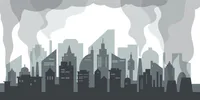
Example: This image shows harmful substances, or pollutants, like smoke and smog being released into the air from factories and buildings in a city.
2.
FLASHCARD QUESTION
Front
Point-source pollution Noun
[point-sors puh-loo-shun]
Back
Point-source pollution
Pollution that originates from a single, identifiable source, such as a factory smokestack or a specific discharge pipe.
Example: This image shows pollution coming from a single, identifiable location—the car's exhaust pipe—which is the definition of point-source pollution.

3.
FLASHCARD QUESTION
Front
Nonpoint-source pollution Noun
[non-point-sors puh-loo-shun]
Back
Nonpoint-source pollution
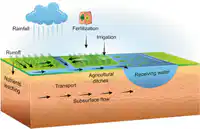
Pollution that comes from many diffuse sources rather than a single identifiable point, such as agricultural runoff.
Example: Rainfall and irrigation carry pollutants like fertilizers from a wide area, such as a farm field, into rivers and lakes through runoff.
4.
FLASHCARD QUESTION
Front
Biodegradable Adjective
[bai-oh-di-grey-duh-buhl]
Back
Biodegradable
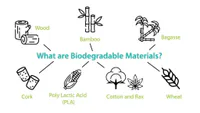
A substance that can be broken down into simpler, often less harmful, components by natural processes like bacterial decomposition.
Example: This image shows several examples of biodegradable materials, such as wood, cotton, and wheat, which are materials that can be broken down naturally by microorganisms.
5.
FLASHCARD QUESTION
Front
Nonbiodegradable Adjective
[non-bai-oh-di-grey-duh-buhl]
Back
Nonbiodegradable
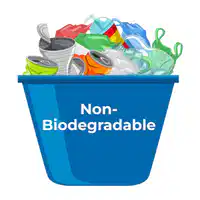
A substance that cannot be broken down by natural processes and thus persists and accumulates in the environment.
Example: This image shows a bin full of nonbiodegradable waste, such as plastic bottles and metal cans, which do not break down naturally in the environment.
6.
FLASHCARD QUESTION
Front
Bioaccumulation Noun
[bai-oh-uh-kyoo-myoo-ley-shun]
Back
Bioaccumulation
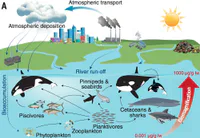
The process where nonbiodegradable pollutants build up in an organism's tissues, becoming more concentrated at higher trophic levels.
Example: Pollutants from the environment, like in the water, enter and build up inside a single organism over its lifetime, as shown by the arrow pointing to the whale.
7.
FLASHCARD QUESTION
Front
Eutrophication Noun
[yoo-tro-fi-key-shun]
Back
Eutrophication
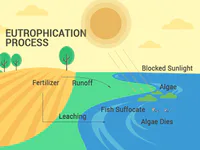
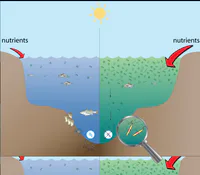
The process where a body of water becomes overly enriched with nutrients, leading to excessive growth of plant life.
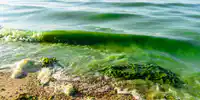
Example: Fertilizer runoff into water causes excessive algae growth, which blocks sunlight, dies, and depletes oxygen, leading to the suffocation of fish.
Access all questions and much more by creating a free account
Create resources
Host any resource
Get auto-graded reports

Continue with Google

Continue with Email

Continue with Classlink

Continue with Clever
or continue with

Microsoft
%20(1).png)
Apple

Others
Already have an account?



