

Chemical Reactions

Flashcard
•
Science
•
6th - 8th Grade
•
Hard

Barbara White
FREE Resource
Student preview

17 questions
Show all answers
1.
FLASHCARD QUESTION
Front
Chemical Reaction Noun
[kem-i-kuhl ree-ak-shun]
Back
Chemical Reaction
A process where a set of substances undergo a chemical change to form a different substance.
Example: This image shows a chemical reaction where starting substances, called reactants (left), are transformed into new substances, called products (right), by rearranging their atoms.

2.
FLASHCARD QUESTION
Front
Reactant Noun
[ree-ak-tant]
Back
Reactant
A substance that is consumed or used up during a chemical reaction, written on the left side of a chemical equation.
Example: The image shows that reactants, like methane (CH₄) and oxygen (O₂), are the starting substances on the left side of a chemical reaction arrow.

3.
FLASHCARD QUESTION
Front
Product Noun
[prod-ukt]
Back
Product
A new substance that is formed as a result of a chemical reaction, written on the right side of a chemical equation.
Example: In a chemical reaction, the starting materials (reactants) are transformed into new substances called products, like the carbon dioxide and water shown here.

4.
FLASHCARD QUESTION
Front
Coefficient Noun
[koh-uh-fish-uhnt]
Back
Coefficient
A number placed in front of a chemical formula that indicates the number of molecules of that substance in the reaction.
Example: The large number in front of a chemical formula (the green '2') is the coefficient, indicating the number of molecules in a chemical reaction.

5.
FLASHCARD QUESTION
Front
Subscript Noun
[sub-skript]
Back
Subscript
A number written after an element's symbol in a formula that indicates the number of atoms of that element.
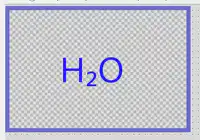
Example: The chemical formula for water, H₂O, shows that the small number '2' is a subscript, indicating there are two hydrogen (H) atoms in one molecule.
6.
FLASHCARD QUESTION
Front
Aqueous Adjective
[ay-kwee-uhs]
Back
Aqueous
A state of matter designation indicating that a substance has been dissolved in a water-based solution.
Example: This diagram shows a solute (particles) dissolved in a solvent (liquid) to form a solution. An aqueous solution is a specific type where water is the solvent.

7.
FLASHCARD QUESTION
Front
Precipitate Noun
[pri-sip-i-teyt]
Back
Precipitate
An insoluble solid that emerges from a liquid solution as the result of a chemical reaction.
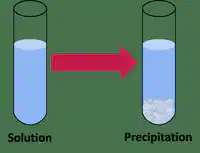
Example: A chemical reaction in a liquid solution can form an insoluble solid, called a precipitate, which then settles at the bottom.


Access all questions and much more by creating a free account
Create resources
Host any resource
Get auto-graded reports

Continue with Google

Continue with Email

Continue with Microsoft
or continue with

%20(1).png)
Apple

Others
By signing up, you agree to our Terms of Service & Privacy Policy
Already have an account?


