Search Header Logo
Enzymes L3

Enzymes L3

Assessment

Presentation

Biology

12th Grade

Practice Problem

Medium

NGSS
HS-PS1-5, MS-LS1-7, HS-PS1-4

Standards-aligned

Created by

Emma Dawes

Used 6+ times

FREE Resource

12 Slides • 20 Questions

1

Enzymes L3
Slide image

2

Multiple Choice

Organelles that make proteins by putting together chains of amino acids.

1

Mitochondria

2

Lysosomes

3

Ribsomes

4

Chloroplast

3

Multiple Choice

All amino acids have a ...

1

ether group & carboxyl group

2

amino group & hydroxide group

3

amino group & carboxyl group

4

ether group & hydroxide group

4

Multiple Choice

If a amino acid is Non-polar it is

1

Hydrophobic

2

Hydrophilic

5

Multiple Choice

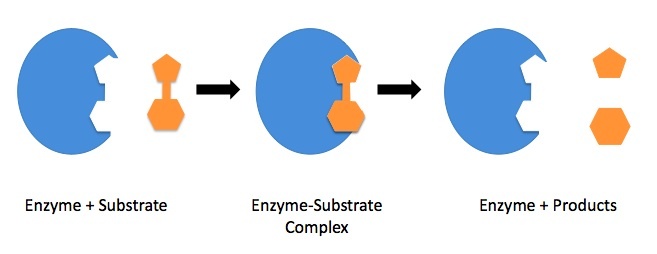
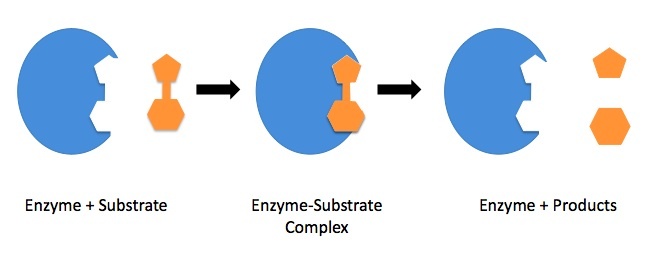
Any substance that is acted upon by an enzyme is called a(n)?
1
Coenzyme
2
Substrate
3
Vitamin
4
Polypeptide

6

Multiple Choice

What is a substance called if it speeds up a chemical reaction?
1
reusable
2
catalyst
3
specific
4
fragile

7

Slide image

8

Multiple Choice

What is a cofactor (L1)?

1

A carbohydrate side chain that activates an enzyme.

2

A non-protein that is bound to an enzyme and is required for catalysis.

3

A requirement for the hydrolysis of urease.

4

A non-protein that is not attached to the enzyme structure.

9

Multiple Select

Which are cofactors?

1

A catalase molecule

2

Coenzymes

3

Polypeptides

4

Prosthetic groups

10

Slide image

11

Poll

Which environmental factors do you think might affect enzyme action?

Temperature

Moisture availabilty

Substrate concentration

pH

Salinity

12

Slide image

13

Slide image

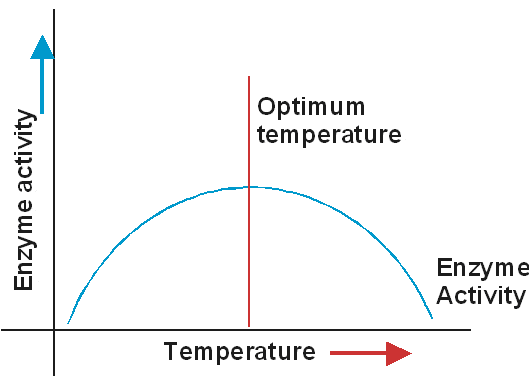
The optimum temperature range varies for different enzymes.

14

Slide image

15

Multiple Select

What conditions do you think would be optimal for the action of pepsin?

1

37 - 42 degrees Celsius

2

32 - 36 degrees Celsius

3

pH 1.5 - 2.0

4

pH 4.5 - 7.0

16

Slide image

Vm is the maximum level of enzyme activity and cannot be exceeded.

17

Multiple Choice

Vm is reached when...

1

maximum temperature is reached.

2

The pH is optimal.

3

Roughly 50% of enzymes are bound to substrate.

4

the enzyme is saturated.

18

Slide image

19

Poll

Can you confidently explain what a cofactor is?

Yes!

Not sure

No.

20

Enzyme Inhibitors

chemicals which bind to an enzyme to suppress its activity

Slide image

21

Slide image

Reversible inhibitors either bind to an active site (competitive inhibitors), or to another site on the enzyme (non-competitive inhibitors).

22

Slide image

23

Slide image

24

Multiple Choice

You are given a reaction and are told it is at “saturation.” To determine if this is true, you should add _______ and see if the reaction rate _______.

1

ATP; increases

2

more substrate; increases

3

a competitive inhibitor; decreases

4

a downstream product; decreases

5

a noncompetitive inhibitor; decreases

25

Multiple Choice

Question image
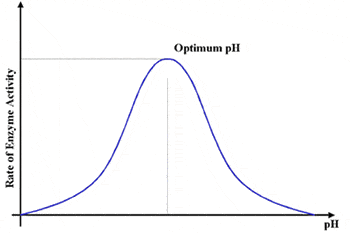
Which explanation best fits the graph for pH's effect on an enzyme?
1
As the pH gets closer to neutral more H-Bonds are broken
2
Larger numbers of H+ & OH- ions distort the active site
3
There are more collisions between substrates and active sites near the optimal pH
4
Low pHs cause more H-Bonds to happen near the active site

26

Multiple Choice

Question image
Molecules that bind to enzymes and enhance an enzyme's ability are called:
1
CoFactors
2
CoEnzymes
3
Allosteric Inhibitors
4
Allosteric Activators

27

Multiple Choice

Question image
When a molecule can occupy the same active site as the substrate, a situation called __________________ can result
1
Competitive lnhibition
2
Allosteric Regulation
3
Non-Competitive Inhibition
4
Feedback Inhibition

28

Multiple Choice

Question image
The molecule an enzyme is working on is called the:
1
Substrate
2
Solvent
3
Allosteric Inhibitor
4
CoEnzyme

29

Multiple Choice

Question image
At low temperatures enzyme activity declines because of:
1
Denaturation
2
Decreased Kinetic Motion
3
Increased H-Bonding
4
Dissociation of Ionic Compounds

30

Multiple Choice

Question image
At high temperatures enzyme activity declines because of:
1
Denaturation
2
Decreased Kinetic Motion
3
Increased H-Bonding
4
Dissociation of Ionic Compounds

31

Multiple Choice

Question image
Enzymes catalyze reactions by ___________ Activation Energy.
1
Increasing
2
Decreasing

32

Multiple Choice

Question image
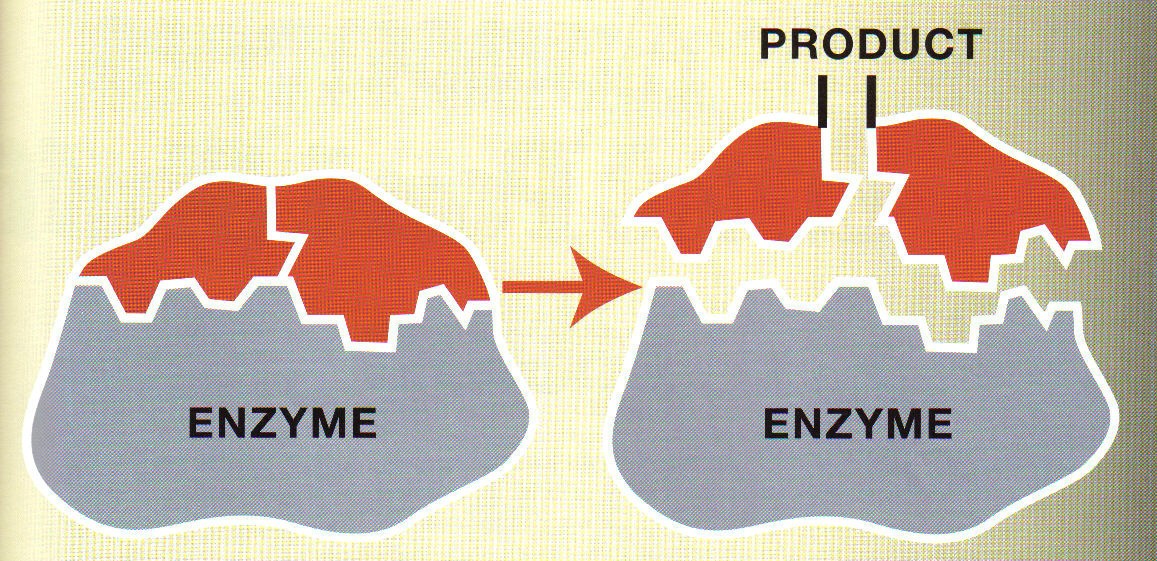
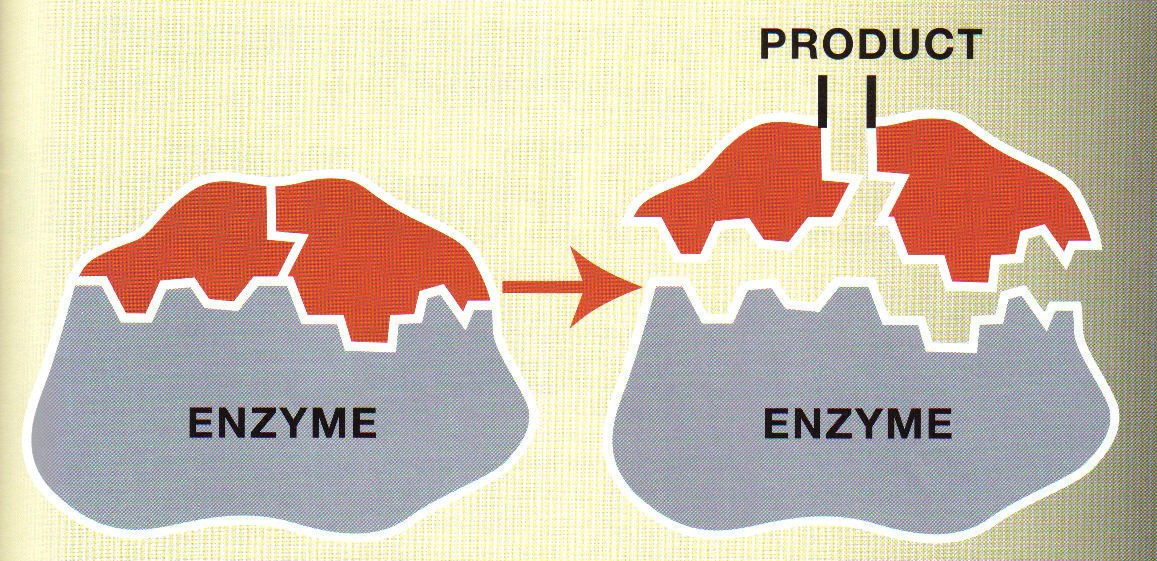
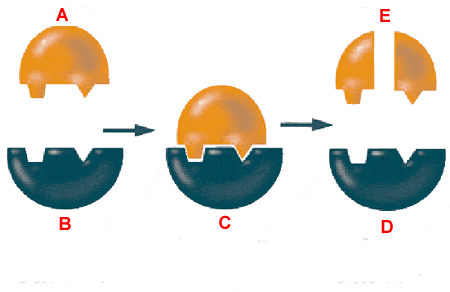
The current model of enzyme action is referred to as the:
1
Induced Fit Model
2
Lock & Key Model
3
Singer-Nicolson Model
4
Davson-Danielli Model

Enzymes L3

Slide image

Show answer

Auto Play

Slide 1 / 32

SLIDE