

The Scientific Revolution

Presentation
•
History
•
8th Grade
•
Practice Problem
•
Easy

Susy Mereles
Used 10+ times
FREE Resource
6 Slides • 14 Questions
1
The Scientific Revolution
Impact of the Scientific Revolution 1550-1800

2
Multiple Choice
3
Open Ended
4
5
Open Ended
6
7
Open Ended
8
Open Ended
9
Open Ended
10
Open Ended
11
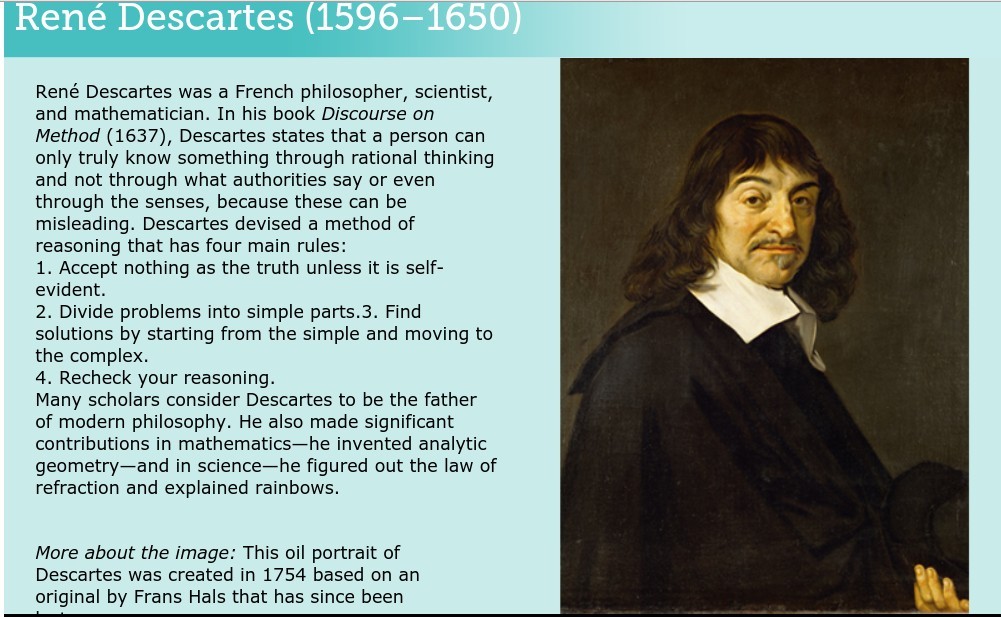
12
13
14
Multiple Choice
15
Multiple Choice
16
Multiple Choice
17
Multiple Choice
18
Multiple Choice
19
Multiple Choice
20
Multiple Choice
The Scientific Revolution
Impact of the Scientific Revolution 1550-1800
Show answer
Auto Play
Slide 1 / 20
SLIDE
Similar Resources on Wayground

16 questions
Thomas Jefferson Presidency
Lesson
•
8th Grade
13 questions
Civil Rights
Lesson
•
8th Grade
15 questions
Marbury v. Madison
Lesson
•
8th Grade
15 questions
Huang River/Shang Dynasty
Lesson
•
8th Grade
18 questions
Unit 7 New Deal
Lesson
•
8th Grade
14 questions
World War Two - Introduction to WWII
Lesson
•
7th - 8th Grade
16 questions
Near East - Israel
Lesson
•
8th Grade
15 questions
War of 1812
Lesson
•
8th Grade
Popular Resources on Wayground
15 questions
Fractions on a Number Line

Quiz
•
3rd Grade
10 questions
Probability Practice
Quiz
•
4th Grade
15 questions
Probability on Number LIne
Quiz
•
4th Grade
20 questions
Equivalent Fractions
Quiz
•
3rd Grade
25 questions
Multiplication Facts
Quiz
•
5th Grade
22 questions
fractions
Quiz
•
3rd Grade
6 questions
Appropriate Chromebook Usage
Lesson
•
7th Grade
10 questions
Greek Bases tele and phon
Quiz
•
6th - 8th Grade
Discover more resources for History
7 questions
Lunar and Chinese New Year for Kids | Bedtime History

Interactive video
•
1st - 12th Grade
29 questions
STAAR REVIEW: Industrial Revolution / Reform
Quiz
•
8th Grade
10 questions
Exploring the Causes of the Civil War
Interactive video
•
6th - 8th Grade
22 questions
Black History Month Luncheon
Quiz
•
6th - 8th Grade
35 questions
Ancient & Classical Greece 20-21
Quiz
•
6th - 8th Grade
30 questions
Quizizz Review - Mod 8 (War of 1812) - 2025
Quiz
•
8th Grade
42 questions
Spring Benchmark Review
Quiz
•
8th Grade
30 questions
The Fight for Freedom: Unit 4 Knowledge Organizer Scavenger Hunt
Quiz
•
8th Grade