Search Header Logo
Unit 3 Earth Resources Review

Unit 3 Earth Resources Review

Assessment

Presentation

Biology

10th Grade - University

Medium

NGSS
MS-ESS2-4

Standards-aligned

Used 5+ times

FREE Resource

4 Slides • 25 Questions

1

Unit 3 Earth Resources Review

Slide image

2

3

Multiple Choice

Which of the following is not a primary goal of a dam and reservoir?
1
produce electricity
2
clean the water supply
3
supply water for irrigation
4
reduce downstream flooding

4

Multiple Choice

What is the driving force of the water cycle?
1
evaporation from the ocean
2
heat from the sun
3
precipitation from rainfall
4
runoff from mountains

5

Multiple Choice

What percentage of Earth's water is fresh water?

1

3%

2

10%

3

50%

4

90%

6

Multiple Choice

How has the diversion of water, as in the case of the Aral Sea, affected their original source of water?

1

It left behind plains covered with salts and toxins.

2

90% of the volume has been lost.

3

Fisheries have collapsed, causing an economic disaster

4

All of the above.

7

Multiple Choice

Landscaping with plants that dont require much water is called
1
xeriscaping
2
zenoscaping
3
hydroscaping
4
terrascaping

8

Multiple Choice

Question image

Use Figure provided. Household per capita daily use of water is greatest in

1

Cambodia

2

Australia

3

Canada

4

The United States

9

Multiple Choice

97 % of all water on Earth is in the oceans. Which of the following is the correct order of the Earth’s water storage compartments from largest to smallest?

1

ocean, atmosphere, lakes, groundwater, rivers, ice caps

2

ocean, groundwater, rivers, ice caps, atmosphere, lakes

3

ocean, ice caps, groundwater, lakes, atmosphere, rivers

4

ocean, lakes, ice caps, groundwater, atmosphere, rivers

10

Multiple Choice

Withdrawing too much water from an aquifer can cause all of the following except
1
freshwater contaminated with saltwater
2
land subsidence
3
sinkholes
4
drought

11

Multiple Choice

Throughout the world, the majority of water is used for
1
irrigation
2
industrial uses
3
humans and animals
4
cooling towers of power plants

12

Multiple Choice

Question image

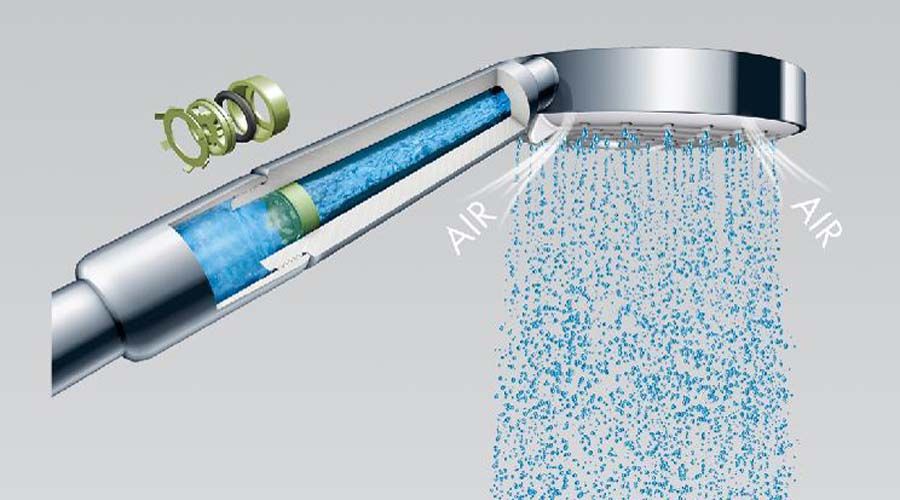
A family of five recently replaced its 7-gallon-per-minute showerheads with water-saving 3-gallon-per-minute showerheads. Each member of the family averages 10 minutes in the shower per day. How many fewer gallons of water will the family use each day with the new showerheads?

1

40 gallons per day

2

200 gallons per day

3

1,000 gallons per day

4

2,100 gallons per day

13

Multiple Choice

The freeze-thaw cycle is an example of

1

chemical weathering.

2

physical erosion.

3

physical weathering.

4

chemical erosion.

5

both physical and chemical weathering.

14

Multiple Choice

Question image

Use Figure 8-1. New ocean floor is created at

1

point A.

2

point B.

3

point C.

4

point D.

5

point E.

15

Multiple Choice

Question image

Use Figure 8-1. A subduction zone is shown at

1

point A.

2

point B.

3

point C.

4

point D.

5

point E.

16

Multiple Choice

Which is NOT a characteristic of metamorphic rocks?
1
They are formed when other rock is subjected to high temperature.
2
They are structurally very strong.
3
They can result from exposure to tectonic forces.
4
They include marble and slate.
5
They are formed by compression by overlying sediments.

17

Multiple Choice

Select the correct rock type connected with its mode of origin.
1
Igneous: liquid magma
2
Sedimentary: exposure to high temperatures and pressures
3
Metamorphic: compression of mud by overlying sediments
4
Sedimentary: compression of magma
5
Igneous: exposure to high temperatures and pressure.

18

Multiple Choice

An earthquake that measures 8.0 on the Richter Scale is ____ times stronger than an earthquake that measures 5.0.
1
3
2
300
3
3000
4
1000
5
10000

19

Multiple Choice

What happens at a hot spot?
1
Water rises.
2
Plates spread.
3
Magma rises.
4
Fault zones appear.
5
Magma sinks.

20

Multiple Choice

The high temperatures at the center of Earth are thought to be the result of
1
the rotation of Earth on its access.
2
absorption of solar energy.
3
seismic activity.
4
radioactive decay.
5
hot spots.

21

Multiple Choice

The layer of soil on the surface of Earth is at the top of the
1
crust.
2
mantle.
3
core.
4
asthenosphere.
5
stratosphere.

22

Multiple Choice

Magma circulates in convection cells in Earth's
1
crust.
2
asthenosphere.
3
core.
4
lithosphere.
5
mid-ocean ridge.

23

Multiple Choice

Earth's lithosphere includes
1
the liquid outer core.
2
all of the crust.
3
the entire mantle.
4
all of the core.
5
the solid inner core.

24

25

Multiple Choice

Which type of soil is best for containment of pollution?

1

Soils high in clay content do not allow water to drain readily and keep contaminants from leaching into groundwater.

2

Soils high in humus have high bacteria content that will break down pollutants in the soil quickly.

3

Soils high in sand content will filter pollutants out of the soil and infiltrating ground water.

4

Soils high in loam turn nitrogen high pollutants into fertilizer through denitrification.

26

Multiple Choice

Soil drains most rapidly when it is made up of

1

primarily sand.

2

roughly equal proportions of silt and clay.

3

primarily clay.

4

roughly equal proportions of sand, silt, and clay.

5

primarily silt.

27

Multiple Choice

The porosity of soil is a measure of

1

its cation exchange capacity.

2

the depth of its topsoil layer.

3

how much biological material it contains.

4

how quickly it drains.

5

how much clay it contains.

28

Multiple Choice

Question image

Use Figure 8-2. Identify the zone labeled 1.

1

A horizon

2

O horizon

3

B horizon

4

C horizon

5

E horizon

29

Unit 3 Earth Resources Review

Slide image

Show answer

Auto Play

Slide 1 / 29

SLIDE