

Programming Languages. (II)

Presentation
•
English, Computers
•
University
•
Practice Problem
•
Medium

Claudio Cárdenas
Used 35+ times
FREE Resource
10 Slides • 9 Questions
1
Programming Languages
Lesson 2

2
3
High Level Languages
When we think about computer programmers, we are probably thinking about people who write in high-level programming languages.
High level languages are written in a form that is close to our human language, enabling to programmer to just focus on the problem being solved.

4
No particular knowledge of the hardware is needed as high level languages create programs that are portable and not tied to a particular computer or microchip.
These programmer friendly languages are called ‘high level’ as they are far removed from the machine code instructions understood by the computer.
Examples include: C++, Java, Pascal, Python, Visual Basic.

5
Advantages of high-level languages
Easier to modify as it uses English like statements
Easier/faster to write code as it uses English like statements
Easier to debug during development due to English like statements
Portable code – not designed to run on just one type of machine

6
Low Level Languages
Low level languages are used to write programs that relate to the specific architecture and hardware of a particular type of computer.
They are closer to the native language of a computer (binary), making them harder for programmers to understand.

7
Examples of low level language:
Assembly language
Machine code

8
Assembly Language
Few programmers write programs in low level assembly language, but it is still used for developing code for specialist hardware, such as device drivers.
It is easyly distinguishable from a high level language as it contains few recognisable human words but plenty of mnemonic code.

9
10
Machine Code
Programmers rarely write in machine code (binary) as it is difficult to understand.

11
Multiple Choice

Which generation?
12
Multiple Choice
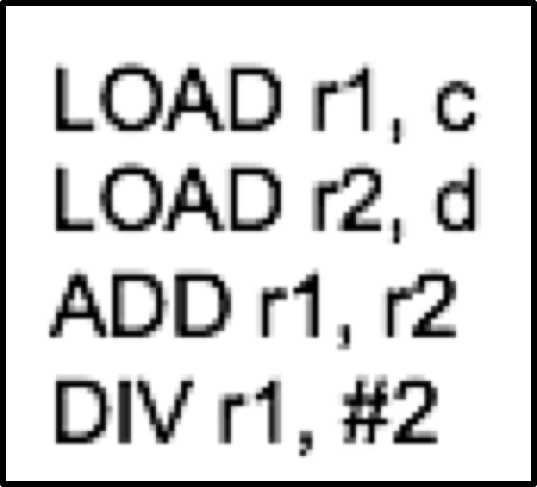
Which generation?
13
Multiple Choice

Which generation?
14
Multiple Choice
15
Multiple Choice
16
Multiple Choice
17
Multiple Choice
18
Multiple Choice
19
Multiple Choice
Programming Languages
Lesson 2
Show answer
Auto Play
Slide 1 / 19
SLIDE

