
Search Header Logo
Modes of Writing

Modes of Writing

Assessment

Presentation

•

English

•

5th - 8th Grade

•

Practice Problem

•

Medium

•
CCSS
RL.5.3, RL.8.3, RI.5.5

+24

Standards-aligned

Created by

ANNA BURROWS-BLAIR

Used 41+ times

FREE Resource

12 Slides • 18 Questions

1

Modes of Writing

A look at the types of writing and the structure of narratives.

Slide image

2

TODAY'S OBJECTIVES - By the end of the lesson, students will be able to:

  • State the four main modes/types of writing

  • Give the definition of each mode of writing

  • Explain the structure and elements of narrative writing

3

THE FOUR MODES OF WRITING

What are they?

4

Poll

From the list, select the words that tell us the different types of writing.

narrative

descriptive

persuasive

expository

essay

5

MODES OF WRITING

  • Expository Writing

  • Persuasive Writing

  • Descriptive Writing

  • Narrative Writing

Slide image

6

EXPOSITORY

This type of writing is done to share information about a particular topic.


It exposes things by informing, explaining, defining, or stating basic details, and relies on facts.


Gives information about: processes, cause-and-effect, classification, compare/contrast, and problem/solutions.

Slide image

7

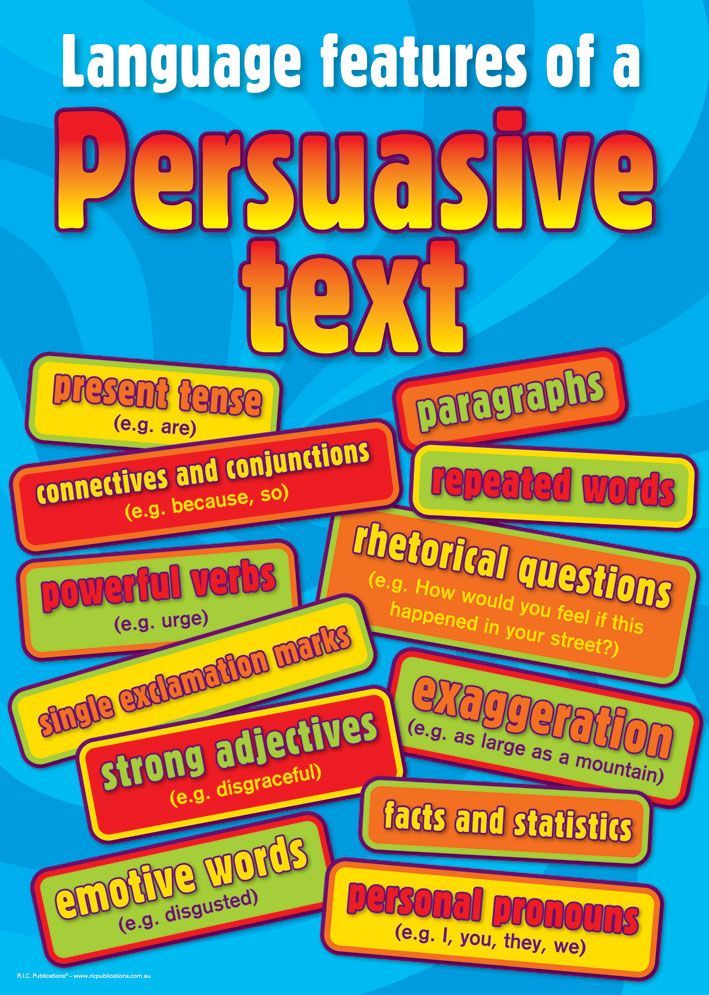
PERSUASIVE

This type of writing aims to persuade or convince its audience about something.


It uses facts but also includes opinions to either support or go against a particular topic.


Examples include: debates, editorials, speeches, advertisements
Slide image

8

DESCRIPTIVE

This type of writing aims to describe things (person, place, event, etc)


It uses sensory language (the five senses) and vivid words (adjectives and adverbs) to help people better picture and imagine what they are reading in their mind.


Slide image

9

NARRATIVE

This type of writing tells a story.


It uses things like characters, plot, and setting in order to tell a story, and can either be fiction or non-fiction (i.e. real or fake).

Slide image

10

Multiple Choice

What are the four modes of writing?

1

position, personal, informative, descriptive

2

argument, editorial, narrative, expository

3

narrative, expository, descriptive, persuasive

4

narrative, argument, descriptive, persuasive

11

Multiple Choice

1. What is the goal of narrative writing?

1

To describe something

2

To tell a story

3

To inform a reader or explain a topic

4

To convince or persuade someone about a topic

12

Multiple Choice

1. What is the goal of descriptive writing?

1

To describe something

2

To tell a story

3

To inform a reader or explain a topic

4

To convince or persuade someone about a topic

13

Multiple Choice

What is the goal of persuasive writing?

1

To tell a story

2

To tell about something

3

To write about a topic

4

To convince or persuade about a topic

14

Multiple Choice

What is the goal of expository writing?

1

To tell a story

2

To convince someone about a topic

3

To share information about a topic

4

To tell about something in detail

15

Multiple Choice

Which type of writing is featured in the following sentence? "You should drink a glass of milk at each meal to build healthy bones."

1

Persuasive writing

2

Expository writing

3

Descriptive writing

4

Narrative writing

16

Multiple Choice

Your teacher asks you to write about your favorite place. They want to know what they would see, smell, hear, taste, and feel if they went there. What type of writing will you use?

1

Narrative

2

Descriptive

3

Persuasive

4

Expository

17

Multiple Choice

A writing piece that covers the history of the Olympics is an example of what type of writing?

1

Narrative

2

Persuasive

3

Expository

4

Descriptive

18

Multiple Choice

A journal entry telling the story of the day I got my first puppy is an example of what type of writing?

1

Expository

2

Narrative

3

Persuasive

4

Descriptive

19

NARRATIVE WRITING

What are the elements and structure of narrative writing?

Slide image

20

Open Ended

Do you remember the elements of a story? Type them, below.

21

Narrative Structure

  • Plot

  • Setting

  • Character

  • Dialogue

  • Conflict

  • Climax

  • Resolution

Slide image

22

Narrative Structure

Plot - what happens in the story


Setting - time and place of a story


Character - the people in the story


Dialogue - the things characters say


Conflict - the problem in the story


Climax - the most exciting part


Resolution - the conflict is solved

Slide image

23

Multiple Choice

Question image
The story's conclusion. The outcome of the conflict. 
1
Exposition
2
Rising Action
3
Climax
4
Resolution

24

Multiple Choice

Question image

The most exciting part of the story.

1

Expostion

2

Resolution

3

Climax

4

Falling Action

25

Multiple Choice

Question image
A struggle between opposing forces. The problem of the story. 
1
Exposition
2
Climax
3
Rising Action
4
Conflict

26

Multiple Choice

Dialogue is

1

the things characters say to each other

2

a debate about something

3

when the narrator tells you what is happening in a story

4

a conversation readers have about a story

27

Multiple Choice

Question image

Setting is the ___________________ of the action of the story.

1

Problem

2

Solution

3

time and place

4

plot

28

Multiple Choice

Question image
The people or animals that take part in the action of a story are called ________________.
1
Characters
2
Plot
3
Setting
4
Author

29

Multiple Choice

Question image
The sequence of events that make up a story is called ____________.
1
Exposition
2
Climax
3
Plot
4
Setting

30

RECAP

  • Name the four modes of writing?

  • Which type tries to convince its audience of something?

  • Which type tells a story?

  • Which structural element tells us about what happened in a story?

  • Which structural element tells us what the characters say?

Slide image

Modes of Writing

A look at the types of writing and the structure of narratives.

Slide image

Show answer

Auto Play

Slide 1 / 30

SLIDE
