Search Header Logo
Classification Lesson Period 5

Classification Lesson Period 5

Assessment

Presentation

•

Biology

•

9th Grade

•

Easy

•
NGSS
MS-LS4-2, MS-LS2-3

Standards-aligned

Created by

Betty Henderson

Used 1+ times

FREE Resource

13 Slides • 33 Questions

1

Classy Classification - Everything you ever wanted to know about classifying organisms
Slide image

2

Who is known as the Father of Classification?

What is binomial nomenclature?

3

4

Multiple Choice

Binomial nomenclature is the ____________ system for naming organisms.
1
Numerical
2
Symbolical
3
two word
4
alphabetical

5

Multiple Choice

Question image
Who first proposed binomial nomenclature as a way of classifying organisms?
1
Carolus Linnaeus
2
Thomas Jefferson
3
Charles Darwin
4
Albert Einstein 

6

Multiple Choice

Question image
The 2-part naming system developed by Linneus is known as:
1
dichotomous key
2
taxonomy
3
binomial nomenclature
4
classification

7

Levels of Classification

Carolous Linnaeus

8

Multiple Choice

The science of describing, classifying and naming living things is known as _______.

1

Biology

2

Taxonomy

3

Sortology

4

Phylogeny

9

Multiple Choice

What is the genus name here:

Canis lupus

1

Canis

2

lupus

10

Multiple Choice

Question image
The 8 levels of classification, most broad to most specific.
1
Domain, Genus, Family, Order, Class, Phylum, Kingdom, Species
2
Domain, Species, Kingdom, Genus, Phylum, Family, Class, Order
3
Domain, Kingdom, Phylum, Class, Order, Family, Genus, Species
4
Domain, Kingdom, Species, Phylum, Family, Order, Class, Genus

11

Multiple Choice

Question image
Who first proposed binomial nomenclature as a way of classifying organisms?
1
Carolus Linnaeus
2
Thomas Jefferson
3
Charles Darwin
4
Albert Einstein 

12

13

Multiple Choice

True or False?

Classification is the process of grouping things based on similarities.

1

True

2

False

14

Multiple Choice

What is the most specific level of classification?
1
Family
2
Domain
3
Species
4
Carolus Linnaeus

15

Multiple Choice

Question image
The 8 levels of classification, most broad to most specific.
1
Domain, Genus, Family, Order, Class, Phylum, Kingdom, Species
2
Domain, Species, Kingdom, Genus, Phylum, Family, Class, Order
3
Domain, Kingdom, Phylum, Class, Order, Family, Genus, Species
4
Order, Kingdom, Species, Domain, Phylum, Family, Class, Genus

16

Multiple Choice

Which 2 taxa are used as the organism's scientific name?
1
Kingdom and species
2
Kingdom and phylum
3
Class and species
4
Genus and species

17

Multiple Choice

A group of similar organisms that can mate with each other and produce fertile offspring.

1

Genus

2

Species

3

Domain

4

specific

18

Multiple Choice

The second level of classification under Domain

1

Order

2

Genus

3

Kingdom

19

Dichotomous Keys


20

21

Multiple Choice

Question image
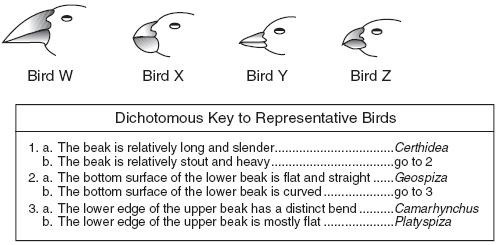
What is the name of bird W?
1
Certhidea
2
Geospiza
3
Camarhynchus
4
Platyspiza

22

Multiple Choice

What step do we always start with when using dichotomous keys?
1
1
2
2
3
3
4
4

23

Multiple Choice

Question image
A dichotomous key for trees is provided. Hikers found a tree that has large brown cones and single sharp needles. What species of tree have the hikers found?
1
Juniper
2
Pine
3
Spruce
4
Fir

24

Multiple Choice

Question image
A table of arachnid and insect characteristics is shown. Which characteristic could be used to distinguish between
arachnids and insects?
1
Jointed legs
2
Body segments
3
Presence of eyes
4
Presence of antennae

25

Multiple Choice

Question image
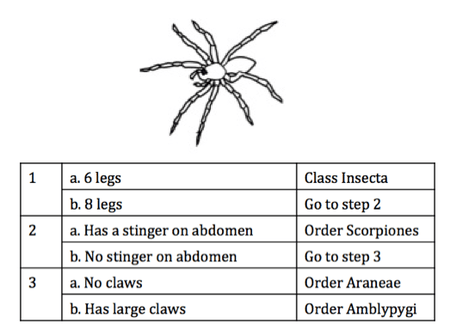
An illustration and a dichotomous key are given. What is the correct classification for this organism?
1
Class Insecta
2
Order Amblygygi
3
Order Araneae
4
Order Scorpiones

26

What are Cladograms?

27

28

6 Living Kingdoms

29

Multiple Choice

Question image
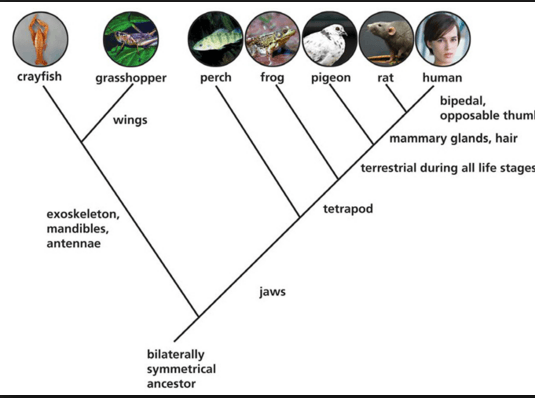
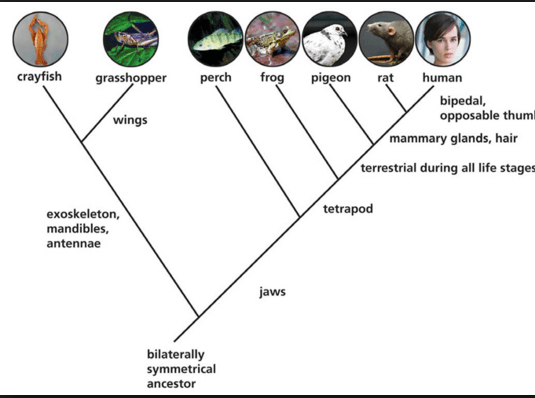
Which trait do only humans have, according to the cladogram?
1
jaws
2
mammary glands & hair
3
terrestrial during all life stages
4
bipedal & opposable thumbs

30

Multiple Choice

Question image
According to the cladogram, which organism is most distantly related to the human?
1
crayfish
2
grasshopper
3
perch
4
frog

31

Multiple Choice

Question image
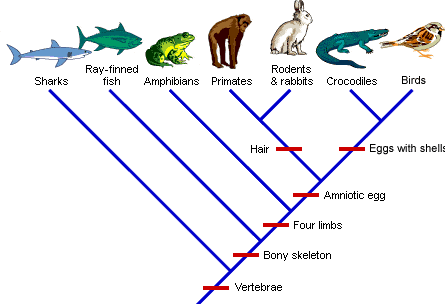
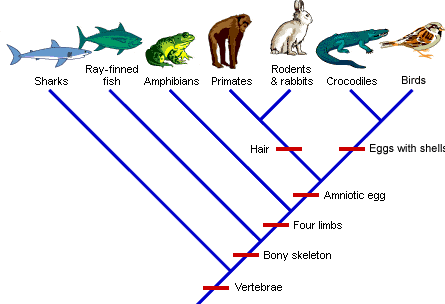
According to this cladogram, birds are LEAST related to: 
1
Amphibians
2
Sharks
3
Ray Finned Fish
4
Crocodiles

32

Multiple Choice

Question image
According to this cladogram, sharks are MOST closely related to which organism? 
1
Amphibians
2
Ray finned fish
3
Crocodiles
4
Birds

33

34

Multiple Choice

How many kingdoms are there?

1

2

2

4

3

6

4

5

35

Multiple Choice

What do protists, plants, fungi, and animals ALWAYS have in common? They are all...
1
Multicellular
2
Eukaryotic
3
Prokaryotic
4
Consumers

36

Multiple Choice

Archeabacteria...
1
are eukaryotic
2
live in extreme environments
3
are non-living
4
live in the soil

37

Multiple Choice

Tigers, Jellyfish, Gorillas and Sponges are all part of kingdom _______.
1
Animalia
2
Plantae
3
Fungi
4
Bacteria

38

Multiple Choice

Examples are tomato plants and oak trees
1
Fungi
2
Plantae
3
Protista
4
Animalia

39

Multiple Choice

Examples are mushrooms and mold

1

Fungi

2

Protista

Protista

3

Plantae

4

Animalia

40

What are viruses?

41

42

Multiple Choice

What is a way to become immune to a disease without first having the disease?
1
antibiotics
2
Anti-retroviral drugs
3
Vaccinations
4
Exposure Therapies

43

Multiple Choice

What is the first step of the virus reproduction cycle?
1
The viruses genetic material (DNA) starts to take over the functions of the cell
2
The host cell bursts open, releasing the new viruses
3
The virus injects its genetic material into the cell
4
A virus attaches to the surface of a host cell

44

Multiple Choice

Is a virus considered living or non-living?
1
Living
2
Non-Living
3
Neither

45

Multiple Choice

What part of a virus is the protein capsule that houses the genetic material (DNA/RNA)?
1
tail
2
nucleus
3
capsid
4
glycoprotein

46

Multiple Choice

Influenza is caused by a ___________________.

1

virus

2

bacteria

3

prion

Classy Classification - Everything you ever wanted to know about classifying organisms

Slide image

Show answer

Auto Play

Slide 1 / 46

SLIDE