Search Header Logo
Invertebrates

Invertebrates

Assessment

Presentation

•

Biology

•

University

•

Practice Problem

•

Medium

•
NGSS
MS-LS4-2, MS-LS2-1, MS-LS2-4

+3

Standards-aligned

Created by

Sondi Hoffman

Used 42+ times

FREE Resource

150 Slides • 45 Questions

1

Invertebrates

Chapter 28

media

2

media

3

media

4

media

5

media

6

media

7

media

8

media

9

media

10

Multiple Choice

Most sponges are hermaphrodites.  What does this mean?
1
sponges can produce their own food
2
sponges can produce both eggs and sperm
3
sponges cannot reproduce
4
sponges can swim around

11

Multiple Choice

Flagella inside a sponge keep water moving through its body. Why is this necessary?

1

It prevents the sponge from floating away

2

It allows the sponge to feed

3

It allows the sponge to absorb carbon dioxide

4

It maintains the water pressure inside the sponge

12

Multiple Choice

Question image

Water exits the sponge here

1

A

2

B

3

C

4

D

13

Multiple Choice

Question image

Name of D (opening at top)

1

Osculum

2

Ostia

3

Choanocytes

4

Incurrent Pore

14

media

15

media

16

media

17

18

media

19

media

20

media

21

media

22

media

23

media

24

media

25

media

26

27

media

28

media

29

30

media

31

media

32

media

33

media

34

Multiple Choice

The Portuguese Man-of-War is...

1

A colony of organisms with 2 polyps

2

A solitary organism

3

A colony of organisms with 4 polyps

4

None of the above

35

Multiple Choice

What substance do coral polyps secrete that creates their rocky limestone exoskeleton?

1

Silica

2

Mitochondria

3

Calcium carbonate

4

Collagen

36

Multiple Choice

What causes coral bleaching?

1

Warmer water temperatures

2

Loss of algae

3

Stress

4

All of the above

37

media

38

39

media

40

media

41

Multiple Choice

What type of symmetry do Cnidarians have?

1

Asymmetry

2

Radial Symmetry

3

Pentaradial Symmetry

4

Bilateral symmetry

42

Multiple Choice

Cnidarians are named after __________, the stinging cells found in their tentacles.

1

cnidocytes

2

cnidocils

3

nematocysts

4

cniliocysts

43

Multiple Choice

Question image

Name this body type.

1

Medusa

2

Polyp

44

media

45

media

46

47

media

48

Multiple Choice

Instead of ctenophora having stinging cells, they have sticky cells called
1
cnidoblasts
2
colloblasts
3
nematocysts 
4
stickacytes 

49

Multiple Choice

Question image

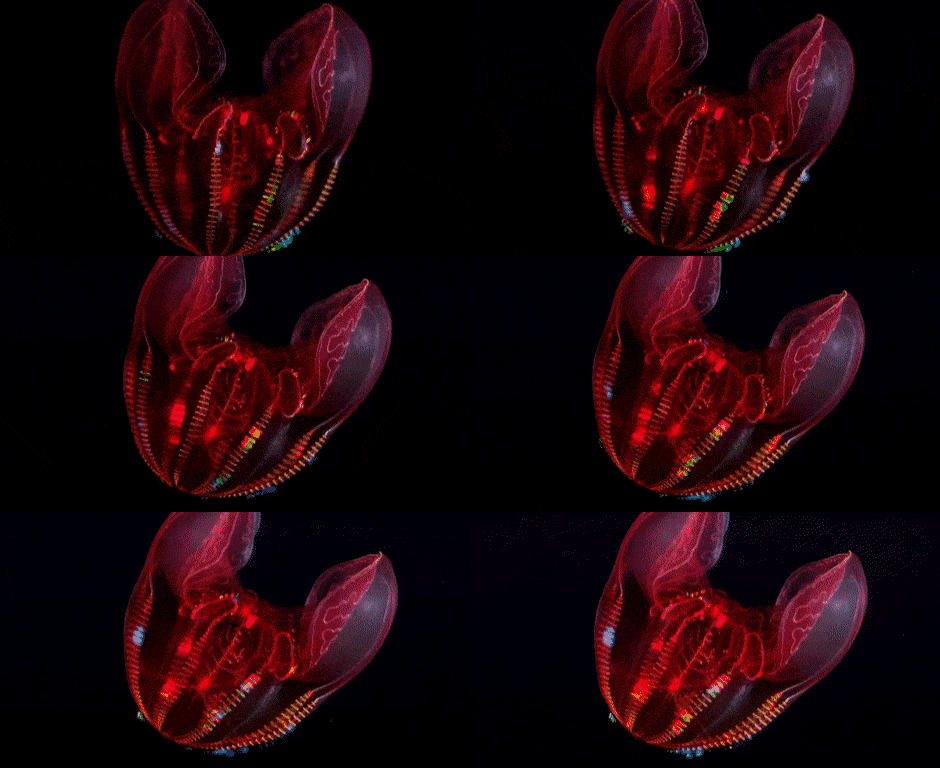
What trait gives jellies in the Phylum Ctenophora their common name?

1

Box shape

2

Combs

3

Tentacles

4

Polyps

50

media

51

media

52

media

53

media

54

media

55

media

56

media

57

media

58

media

59

media

60

media

61

media

62

63

Multiple Choice

What is cephalization? 
1
Having male and female parts.
2
A concentration of sense organs and nervous system at the anterior end of the body. 
3
Feeding off of another organism.
4
Breathing through the skin.

64

Multiple Choice

Question image

What is a flat worms excretory system?

1

Anus

2

Mouth

3

Flame cells

4

Skin

65

Multiple Choice

Question image

What is a flat worms excretory system?

1

Anus

2

Mouth

3

Flame cells

4

Skin

66

media

67

68

media

69

media

70

media

71

Multiple Choice

A brightly colored flatworm, swimming with a wavelike motion, likely belongs to which class?
1
Cestoda
2
Trematoda 
3
Turbellaria 
4
Monogenea 

72

Multiple Choice

The small segments behind a scolex that reproduce quickly, making a tapeworm longer and longer are called...
1
Cilia
2
Hooks
3
Proglottids
4
Snaps

73

media

74

media

75

media

76

media

77

78

79

media

80

media

81

media

82

83

Multiple Choice

What is the radula used for?

1

Locomotion

2

Feeding

3

Swimming

4

Digging

84

Multiple Choice

What is the radula used for?
1
Locomotion
2
Feeding
3
Swimming
4
Digging

85

media

86

87

media

88

media

89

media

90

media

91

media

92

93

media

94

Multiple Choice

Question image

What TYPE of mollusk is this?

1

Bivalve

2

Gastropod

3

Cephalopod

95

Multiple Choice

Question image

What TYPE of mollusk is this?

1

Bivalve

2

Gastropod

3

Cephalopod

96

media

97

media

98

media

99

Multiple Choice

Question image

What TYPE of mollusk is this?

1

Bivalve

2

Gastropod

3

Cephalopod

100

media

101

media

102

media

103

104

105

media

106

media

107

Multiple Choice

Question image

What TYPE of mollusk is this?

1

Bivalve

2

Gastropod

3

Cephalopod

108

media

109

110

media

111

media

112

media

113

Multiple Choice

Question image

A stiff hair, bristle or bristle like process or part on an organism

1

Ganglia

2

Setae

3

Nephridia

4

Parapodia

114

media

115

116

Multiple Choice

Question image

The leg-like structures seen in polychaetes are called

1

Setae

2

Parapodia

3

Trochophore

4

Antennae

117

media

118

Multiple Choice

Which of the following is a thickened segment of the earthworm’s body is used in reproduction?

1

Setae

2

Ganglia

3

Clitellum

4

Septa

119

media

120

media

121

media

122

media

123

media

124

media

125

126

media

127

Multiple Choice

Nematodes are protected by an outer waxy layer known as a _____.

1

auricle

2

coelom

3

pharynx

4

cuticle

128

media

129

Multiple Choice

What type of body cavity nematodes have?

1

Pseudocoelom

2

Acoelom

3

True coelom

130

Multiple Choice

Nematodes have a _____ digestive system

1

incomplete

2

complete

3

external

4

vertical

131

media

132

Multiple Choice

Question image

What sex is this worm?

1

Male

2

Female

3

Hermaphrodite

4

unknown

133

media

134

media

135

media

136

Multiple Choice

Which Filarial worm is being described?

Affects the lymph system

1

Heartworms

2

Elephantiasis

3

Both

137

Multiple Choice

Question image

Trichinella cysts will be found in what kind of tissue?

1

Nervous

2

Muscle

3

Skin

4

Intestinal

138

Multiple Choice

Heartworm is represented by what picture ?

1
2
3
4

139

Multiple Choice

Ascaris is represented by what picture ?

1
2
3
4

140

Multiple Choice

hookworm is represented by what picture ?

1
2
3
4

141

media

142

media

143

144

media

145

media

146

media

147

media

148

149

Multiple Choice

Directly after molting, arthropods are

1

more vulnerable because their new exoskeleton is soft

2

less vulnerable because they shed their old, weak exoskeleton

150

Multiple Choice

Why do arthropods have to shed their exoskeletons?

1

they don't shed

2

to go from water to land environments

3

it limits the size they can grow

4

it wears out

151

media

152

media

153

media

154

media

155

Multiple Choice

Respiratory organ in spiders that is modified for life on land

1

gills

2

Tracheal system

3

Pharynx

4

Book lungs

156

media

157

media

158

Multiple Choice

All arthropods have segmented bodies, an exoskeleton, and ________________.

1

lungs

2

movable tails

3

jointed appendages

4

wings

159

media

160

media

161

media

162

media

163

media

164

media

165

media

166

media

167

media

168

media

169

170

Multiple Choice

Lobster, shrimp, and crabs are examples of what group of Arthropods?

1

Chilopoda

2

Diplopoda

3

Crustacean

4

Arachnida

171

media

172

media

173

media

174

media

175

media

176

177

178

media

179

media

180

Multiple Choice

What type of symmetry do adult echinoderms exhibit?

1

Pentaradial symmetry

2

Asymmetry

3

Bilateral symmetry

4

Trilateral symmetry

181

media

182

media

183

184

185

Multiple Choice

Question image

What allows water to enter the water vascular system?

1

tube feet

2

ampulla

3

mouth

4

madreporite

186

Multiple Choice

A network of water filled canals with thousands of tubes connected to it.

1

tube feet

2

water vascular system

3

sea star

4

endoskeleton

187

media

188

media

189

190

media

191

media

192

media

193

media

194

Multiple Choice

Question image

Which class does the sea cucumber belong

1

Asteroidea

2

Holothuroidea

3

Crinoidea

4

Echinoidea

195

Multiple Choice

Question image

Which class of echinoderms do the sand dollars belong?

1

Asteroidea

2

Holothuroidea

3

Crinoidea

4

Echinoidea

Invertebrates

Chapter 28

media

Show answer

Auto Play

Slide 1 / 195

SLIDE