Ecology Review
Presentation
•
Science
•
8th Grade
•
Medium
+10
Standards-aligned
Shane Davis
Used 10+ times
FREE Resource
1 Slide • 48 Questions
1
Ecology Review
2
Multiple Choice
What causes the seasons?
The distance of the Earth and Sun
The tilt of the Earth's Axis
The distance of the Earth and the Moon
The tilt of the Earth's Equator
3
Multiple Choice
Which of these best compares the conditions at Location X and Location Y?
It is day at Location X and night at Location Y.
It is winter at Location X and summer at Location Y
There are more hours of daylight at Location X than at Location Y
The moon is brighter when viewed from Location X than when viewed from Location Y
4
Multiple Choice
What is the most important factor concerning seasons changing?
Rotation
Revolution
5
Multiple Choice
The Northern Hemisphere experiences the beginning of spring when Earth is in —
1
2
3
4
6
Multiple Choice
When the Southern Hemisphere is in summer, what season is the Northern in?
Summer
Fall
Winter
Spring
7
Multiple Choice
8
Multiple Choice
9
Multiple Choice
10
Multiple Choice
11
Multiple Choice
12
Multiple Choice
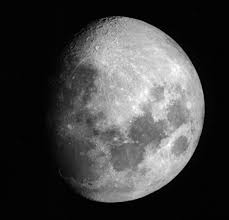
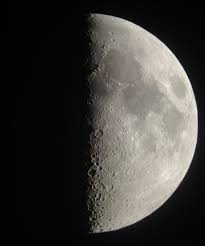
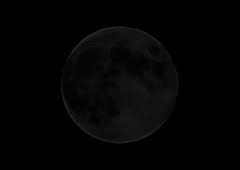
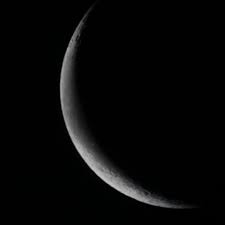
When the moon is near the Sun what phase would be seen from Earth?
New
Full
Waxing Gibbous
Waxing Crescent
13
Multiple Choice
When the moon is far from the Sun what phase would be seen from Earth?
New
Full
Waxing Gibbous
Waxing Crescent
14
Multiple Choice
Which of these correctly compares the masses of different objects in the universe?
A moon has less mass than a star and more mass than the planet it orbits.
A planet has less mass than a galaxy and more mass than the star it orbits.
A galaxy has less mass than a moon and more mass than a planet.
A star has less mass than a galaxy and more mass than a planet.
15
Multiple Choice
A wave has wavelength of 4.87 x 10 -8. What kind of wave is most likely?
microwaves
ultraviolet
x-rays
radio waves
16
Multiple Choice
Investigators using a special telescope determined that a certain quasar was emitting waves with a frequency of 1.41 × 10 +9 Hz. An electromagnetic spectrum is shown.
The investigators were most likely using a telescope that detects —
microwaves
visible light
x-rays
gamma rays
17
Multiple Choice
Looking at this image, is this a balanced or unbalanced equation?
Balanced
Unbalanced
18
Multiple Choice
What is the net force in this equation?
19
Multiple Choice
two forces acting in opposite directions on an object, and do not cause a change in motion; equal in size
Force
Balanced Force
Unbalanced Force
Inertia
20
Multiple Choice
21
Multiple Choice
22
Multiple Choice
Newtons first law states...
An object at rest will remain at rest unless a force is applied
An object is moving
An object has stopped
An moving object will keep going when a force is applied to it
23
Multiple Choice
What is the formula for the law of acceleration?
M = F x A
F = M x A
A = F x M
24
Multiple Choice
Which is newtons 3rd law
for every thing there is reaction
for every reaction there is a unusual action
For every reaction there is an equal and opposite reaction
for every reaction there is an good action
25
Multiple Choice
Which is an example of the law of action/reaction?
A rocket taking off from Earth
A crash test dummy flies through the windshield in a collision
A small rock skips a pond faster than a large rock
26
Multiple Choice
27
Multiple Choice
28
Multiple Choice
29
Multiple Choice
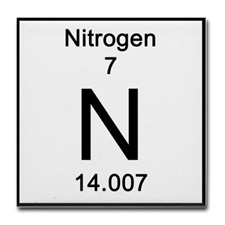
What is the number of protons that the element in this image contain?
14
7
15
18
30
Multiple Choice
What does the 1.00794 stand for?
Hydrogen
atomic number
atomic mass
atomic explosion
31
Multiple Choice
32
Multiple Choice
Particles in an atom that are neutral and have no charge are
negatrons
electrons
neutrons
protons
33
Multiple Choice
The central region of an atom where its neutrons and protons are is its
nucleus
electron cloud
core
center
34
Multiple Choice
The positive particles of an atom are
electrons
positrons
neutrons
protons
35
Multiple Select
Nonmetals (select all that apply)
are found on the right side of the periodic table.
are found on the left side of the periodic table.
are good conductors of heat and electricity.
are brittle.
can be solid, liquids, or gases at room temperature.
36
Multiple Select
Metals (select all that apply)
are found on the right side of the periodic table.
are found on the left side of the periodic table.
are good conductors of heat and electricity.
are brittle.
are malleable and ductile.
37
Multiple Choice
A row on the Periodic Table of Elements
family
period
row
isotope
38
Multiple Choice
where are the metaloids found
far left, vertical
stair step/diagonal
far right horizontal
at the bottom
39
Multiple Choice
40
Multiple Choice
41
Multiple Choice
Which of the following organisms in competition with the weasel for their food source?
grass
rabbit
fox
snake
42
Multiple Choice
43
Multiple Choice
44
Multiple Choice
45
Multiple Choice
46
Multiple Choice
47
Multiple Choice
48
Multiple Choice
49
Multiple Choice
An individual belonging to a specific species
Biotic
Community
Organism
Reptile
Ecology Review

Show answer
Auto Play
Slide 1 / 49
SLIDE

Similar Resources on Wayground
45 questions
IFA REVIEW
Presentation
•
8th Grade
44 questions
Friday sev2csec Lesson
Presentation
•
8th Grade
44 questions
EMS- 5.2 Reasons for the Seasons
Presentation
•
8th Grade
47 questions
Chemical reactions and equations
Presentation
•
8th Grade
46 questions
Force and Motion
Presentation
•
7th - 8th Grade
43 questions
Superposition Notes
Presentation
•
8th Grade
42 questions
Structure & Function of Matter Review
Presentation
•
8th Grade
39 questions
LIght technology
Presentation
•
8th Grade
Popular Resources on Wayground
20 questions
STAAR Review Quiz #3
Quiz
•
8th Grade
20 questions
Equivalent Fractions
Quiz
•
3rd Grade
6 questions
Marshmallow Farm Quiz
Quiz
•
2nd - 5th Grade
20 questions
Main Idea and Details
Quiz
•
5th Grade
20 questions
Context Clues
Quiz
•
6th Grade
20 questions
Inferences
Quiz
•
4th Grade
19 questions
Classifying Quadrilaterals
Quiz
•
3rd Grade
12 questions
What makes Nebraska's government unique?
Quiz
•
4th - 5th Grade
Discover more resources for Science
8 questions
Amoeba Sister Asexual vs Sexual Reproduction
Interactive video
•
8th Grade
19 questions
Introduction to Properties of Waves
Presentation
•
6th - 8th Grade
16 questions
Interactions within Ecosystems
Presentation
•
6th - 8th Grade
45 questions
Food Webs
Quiz
•
6th - 8th Grade
50 questions
Stars, Galaxies, HR Diagram
Quiz
•
8th Grade
40 questions
Unit F1 Review
Quiz
•
8th Grade
20 questions
Energy Transformations
Quiz
•
6th - 8th Grade
46 questions
8th Science STAAR Review
Quiz
•
8th Grade