OUR SPHERES
Presentation
•
Science
•
5th Grade
•
Medium
+7
Standards-aligned
Daniela Deloya
Used 126+ times
FREE Resource
5 Slides • 11 Questions
1
OUR SPHERES
Everything in Earth's system can be placed into one of four major subsystems: land, water, living things, or air. These four subsystems are called "spheres." Specifically, they are the "lithosphere" (land), "hydrosphere" (water), "biosphere" (living things), and "atmosphere" (air). Each of these four spheres can be further divided into sub-spheres.
2
Multiple Choice
3
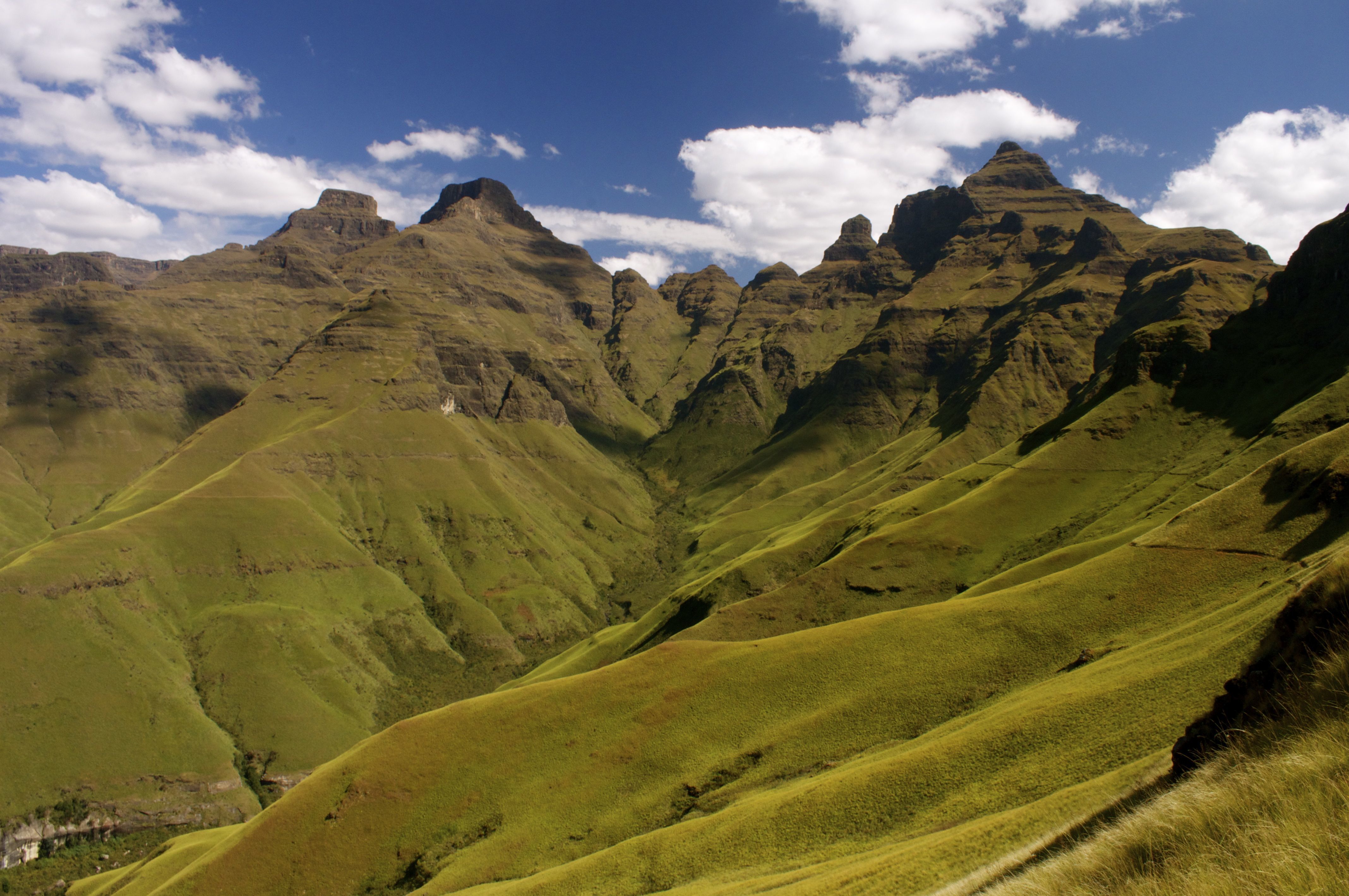
GEOSPHERE (LITHOSPHERE)
The Lithosphere--contains all of the cold, hard solid land of the planet's crust (surface), the semi-solid land underneath the crust, and the liquid land near the center of the planet. The surface of the lithosphere is very uneven. There are high mountain ranges like the Rockies and Andes, huge plains or flat areas like those in Texas, Iowa, and Brazil, and deep valleys along the ocean floor.
4
Multiple Choice
This sphere includes the continents, the ocean floor, all the rocks on the surface, and all of the sand in the deserts.
Hydrosphere
Biosphere
Atmosphere
Geosphere
Cryosphere
5
COMPONENTS OF THE GEOSPHERE
The solid, semi-solid, and liquid land of the lithosphere form layers that are physically and chemically different. If someone were to cut through Earth to its center, these layers would be revealed like the layers of an onion. The outermost layer of the lithosphere consists of loose soil rich in nutrients, oxygen, and silicon. Beneath that layer lies a very thin, solid crust of oxygen and silicon. Next is a thick, semi-solid mantle of oxygen, silicon, iron, and magnesium. Below that is a liquid outer core of nickel and iron. At the center of Earth is a solid inner core of nickel and iron.
6
Multiple Choice
Composed of all the water on or near the earth
Hydrosphere
Biosphere
Atmosphere
Geosphere
Cryosphere
7
Multiple Choice
Which of the following is found in the earths Geosphere
Soil
Rocks
Minerals
All of the Above
8
HYDROSPHERE
The Hydrosphere -- contains all the solid, liquid, and gaseous water of the planet. It ranges from 10 to 20 kilometers in thickness. The hydrosphere extends from Earth's surface downward several kilometers into the lithosphere and upward about 12 kilometers into the atmosphere. A small portion of the water in the hydrosphere is fresh (non-salty). This water flows as precipitation from the atmosphere down to Earth's surface, as rivers and streams along Earth's surface, and as groundwater beneath Earth's surface. Most of Earth's fresh water, however, is frozen.
9
OUR WATER
Ninety-seven percent of Earth's water is salty. The salty water collects in deep valleys along Earth's surface. These large collections of salty water are referred to as oceans. The image above depicts the different temperatures one would find on oceans' surfaces. Water near the poles is very cold while water near the equator is very warm. The differences in temperature cause water to change physical states. Extremely low temperatures like those found at the poles cause water to freeze into a solid such as a polar icecap, a glacier, or an iceberg. Extremely high temperatures like those found at the equator cause water to evaporate into a gas.
10
Multiple Choice
What percentage of the earth contains water?
30%
70%
3%
97%
11
Multiple Choice
This sphere contains all of the solid water on Earth
Hydrosphere
Biosphere
Atmosphere
Geosphere
Cryosphere
12
Multiple Choice
Bio =
Earth
Freezing
Life
Water
Air
13
Multiple Choice
Body of air surrounding our planet.
Hydrosphere
Biosphere
Atmosphere
Geosphere
Cryosphere
14
Multiple Choice
This sphere is composed of all the living things
Hydrosphere
Biosphere
Atmosphere
Geosphere
Cryosphere
15
Multiple Choice
Which layer of our atmosphere protects us from the sun's harmful rays?
Tropospheres
Exosphere
Mesosphere
Stratosphere
16
Multiple Choice
How much of the Earth is made up of the Geosphere?
15%
30%
65%
85%
OUR SPHERES
Everything in Earth's system can be placed into one of four major subsystems: land, water, living things, or air. These four subsystems are called "spheres." Specifically, they are the "lithosphere" (land), "hydrosphere" (water), "biosphere" (living things), and "atmosphere" (air). Each of these four spheres can be further divided into sub-spheres.
Show answer
Auto Play
Slide 1 / 16
SLIDE

Similar Resources on Wayground
13 questions
Electric Circuits Lesson
Presentation
•
5th Grade
15 questions
Thermal Energy
Presentation
•
5th Grade
12 questions
The Earth's 4 Spheres
Presentation
•
5th Grade
10 questions
Acids and Bases
Presentation
•
5th Grade
13 questions
Natural Resources
Presentation
•
5th Grade
13 questions
Inherited Trait or Learned Behavior
Presentation
•
5th Grade
13 questions
La Rotación de la Tierra
Presentation
•
5th Grade
10 questions
Cells 4th & 5th Grade
Presentation
•
4th - 5th Grade
Popular Resources on Wayground
20 questions
STAAR Review Quiz #3
Quiz
•
8th Grade
20 questions
Equivalent Fractions
Quiz
•
3rd Grade
6 questions
Marshmallow Farm Quiz
Quiz
•
2nd - 5th Grade
20 questions
Main Idea and Details
Quiz
•
5th Grade
20 questions
Context Clues
Quiz
•
6th Grade
20 questions
Inferences
Quiz
•
4th Grade
19 questions
Classifying Quadrilaterals
Quiz
•
3rd Grade
12 questions
What makes Nebraska's government unique?
Quiz
•
4th - 5th Grade
Discover more resources for Science
15 questions
5.L.3.1/3.2: Inherited/Acquired Traits
Quiz
•
5th Grade
20 questions
Food Chains and Food Webs Review
Quiz
•
5th Grade
15 questions
Fossil Fuel & Sedimentary Rock Formations
Quiz
•
5th Grade
14 questions
5.8.C Light STAAR Question PIN
Quiz
•
5th Grade
19 questions
Electric Circuits 5.8 B
Quiz
•
5th Grade
20 questions
Food Webs
Quiz
•
5th Grade
20 questions
The Water Cycle
Quiz
•
4th - 5th Grade
20 questions
Earth Processes and Landforms
Quiz
•
5th Grade