Search Header Logo
Unit 3-4 Review

Unit 3-4 Review

Assessment

Presentation

Physics

9th - 12th Grade

Medium

NGSS
HS-PS2-1, HS-PS2-2

Standards-aligned

Created by

Katherine Johnson

Used 28+ times

FREE Resource

9 Slides • 26 Questions

1
Unit 3-4 Review

media

2

media

3

Unit 3: Newton's 1st Law

media

4

Unit 3: Free Body Diagrams

NOTE: Use the previous slide to help identify Forces present.

media

5

Multiple Choice

Question image

Is this object in equilibrium?

1

Yes and it's moving right

2

Yes and its at rest

3

No, it's accelerating right

4

No, it's at rest

6

Multiple Choice

Question image

What's happening in this FBD?

1

Forward acceleration

2

Braking

3

at rest

4

constant velocity

7

Multiple Choice

Question image

Here are 3 FBD diagrams for an elevator. Consider them to be A, B, C. Which one shows an elevator moving upward but braking?

1

A

2

B

3

C

4

none of these

8

Multiple Choice

Question image

Here are 3 FBD diagrams for an elevator. Consider them to be A, B, C. Which one shows an elevator accelerating upward?

1

A

2

B

3

C

4

none of these

9

Multiple Choice

Question image

Here are 3 FBD diagrams for an elevator. Consider them to be A, B, C. Which one shows an elevator at rest?

1

A

2

B

3

C

4

none of these

10

Multiple Choice

Question image

A 2-kilogram block slides down a 30° incline as shown above with an acceleration of 2 meters per second squared.

Which of the following diagrams best represents the gravitational force W, the frictional force f, and the normal force N that act on the block?

1
2
3
4
5

11

Multiple Choice

Question image

Is it possible for the object in the diagram to be moving to the right and have this FBD?

1

Yes. It's possible that the x forces were just left off the diagram.

2

Yes. It could be moving at a constant velocity.

3

No. The FBD shows that the system is in equilibrium.

4

No. An FBD shows all F.

12

Multiple Choice

Question image

When the frictionless system shown above is accelerated by an applied force of magnitude F, the tension in the string between the blocks is

1

F

2

2/3 F

3

1/2 F

4

1/3 F

13

media

14

Multiple Choice

A forward force of 15 N is counteracted by a backwards frictional force of 6 N. The mass of the object is 2 kg. what is the acceleration?

1

it cannot be determined

2

4.5 m/s/s in the direction of the larger force

3

7.5 m/s/s in the direction of the larger force

4

3 m/s/s in the direction of the smaller force.

15

Multiple Choice

A force of 8 Newton’s is applied to a crate so that it moves at a constant velocity of 1.5 m/s. What is the net force?

1

1.5 N

2

8 N

3

12N

4

0 N

16

media

17

Multiple Choice

Two people are pulling on the ends of a rope. Each person pulls with a force of 100 N. The tension in the rope is

1

0 N

2

50 N

3

100 N

4

200 N

18

Unit 4: Velocity, Acceleration, and Force Vectors

media

19

Multiple Choice

Question image

At point P, he car hits an area of ice and loses all frictional force on it tires. Which path does the car follow on the ice?

1

A

2

B

3

C

4

D

20

Multiple Choice

Question image

An object moving is moving with uniform speed in a horizontal counterclockwise circle. At the location depicted, the centripetal force stops. Which path will the object follow?

1
2
3
4
5

21

Multiple Choice

Question image

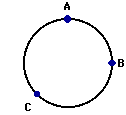
An object is moving with uniform speed in a horizontal, counterclockwise circle. At location B, which way does the acceleration vector point?

1

Left

2

Right

3

Up

4

Down

22

Multiple Choice

Question image

At the instant shown in the diagram, the car's centripetal acceleration is directed-

1

toward E

2

toward N

3

toward W

4

clockwise

23

Multiple Choice

Question image

A curved groove is place on the top of a level table as shown in the diagram. A ball is pushed in the groove at P so that it leaves at Q. Which picture shows how the ball will move when it leaves the groove at Q?

1
2
3
4

24

Multiple Choice

A 10kg car travels at a constant speed of 20.0 m/s around a horizontal circular track. Which diagram correctly represent the direction of the car's velocity (v) and the direction of the centripetal force (Fc) acting on the car at a particular moment?

1
2
3
4

25

Multiple Choice

Question image
What is the direction of the velocity at point B, if the ball is revolving clockwise?
1
up
2
right
3
down
4
left

26

Multiple Choice

Question image
Centripetal acceleration always points
1
in the direction of the object's motion
2
in the opposite direction of the object's motion
3
towards the center of the circle
4
towards the outside of the circle

27

media

28

media

29

Multiple Choice

Question image

The diagram below represents a 2.0-kilogram toy car moving at a constant speed of 3.0 meters per second counterclockwise in a circular path with a radius of 2.0 meters. At the instant shown in the diagram, the centripetal force acting on the car is --

1

4.5 N north

2

4.5 N west

3

9.0 N north

4

9.0 N west

30

Multiple Choice

A car with mass m travels around a curve with velocity v. What do you know about the centripetal force if the radius triples?
1
9.8?
2
Force triples
3
Force divides by 3
4
Force divides by 9

31

Multiple Choice

A car with mass m travels around a curve with velocity v. What do you know about the centripetal force if the velocity triples?
1
Nothing 
2
The centripetal force triples
3
the centripetal force multiplies by 9
4
The centripetal force divides by 3

32

Multiple Choice

Question image

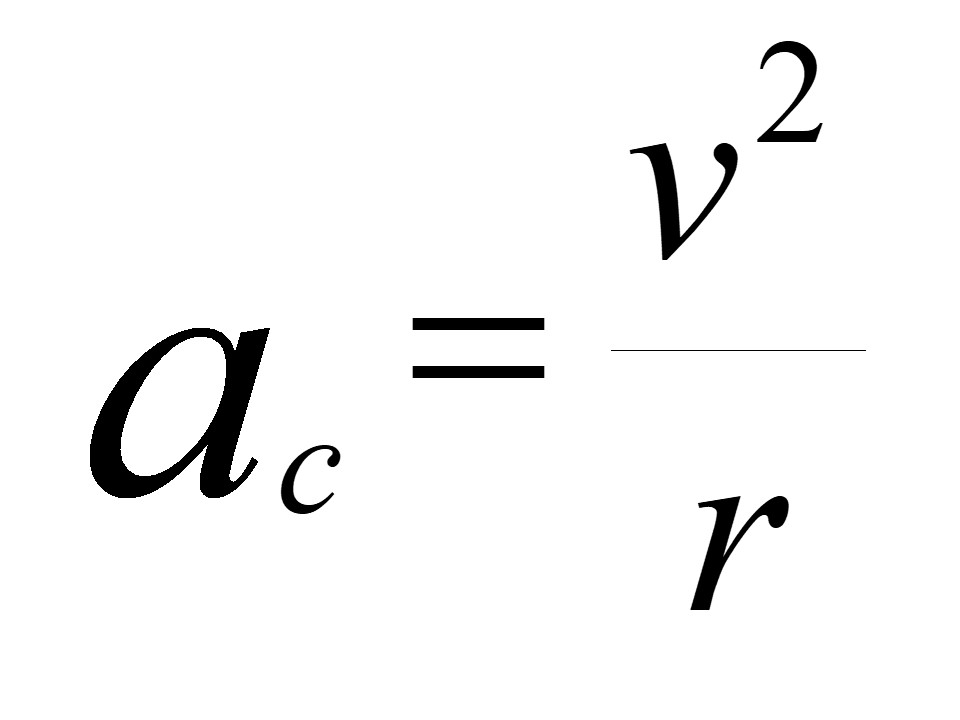
What's the centripetal acceleration of an object traveling 2.3 m/s around a circle of radius 0.3 m?

1

5 m/s2

2

17.63 m/s2

3

10 m/s2

4

8.81 m/s2

33

Multiple Choice

Calculate the centripetal force required to make a 5 kg ball move 4 m/s in a circle with a radius of 2 m.
1
10 N
2
20 N
3
30 N
4
40  N

34

Multiple Choice

A car going around a curve - identify the centripetal force:

1

friction

2

tension

3

force normal

4

gravitational force

35

Multiple Choice

A race car completes three laps of a circular track with a radius of 35 m with a speed of 25 m/s. Determine the centripetal acceleration of the car.

1

0.17 m/s2

2

17.9 m/s2

3

24.4 m/s2

4

1.0 m/s2

Unit 3-4 Review

media

Show answer

Auto Play

Slide 1 / 35

SLIDE