

Big Idea 5: Earth in Time & Space - Physics in Our Solar Sys

Presentation
•
Science
•
6th Grade
•
Medium
+2
Standards-aligned

Carly MacMillan
Used 5+ times
FREE Resource
10 Slides • 36 Questions
1
Big Idea 5: Earth in Time & Space
Physics in Our Solar System (CS1)

2
Big Idea 5: Earth in Time & Space
The origin and eventual fate of the Universe still remains one of the greatest questions in science. Gravity and energy influence the formation of galaxies, including our own Milky Way Galaxy, stars, the planetary systems, and Earth. Humankind’s need to explore continues to lead to the development of knowledge and understanding of the nature of the Universe.
3
Explore the Law of Universal Gravitation by explaining the role that gravity plays in the formation of planets, stars, and solar systems and in determining their motions. (SC.8.E.5.4 - 3)
All objects in the universe have gravity.
The Law of Universal Gravitation states that the force of attraction between two masses is directly proportional to the product of their masses and inversely proportional to the square of the distance between their centers. This means that the closer and more massive two objects are the stronger their gravitational attraction will be.
Orbit is caused by a combination of inertia (speed) and the force of gravity. Inertia keeps the object movng (which is always will unless it experiences an unbalanced force) and gravity holds the object at a relatively constant distance from the object it is orbiting.
4
5
6
Explain the impact of objects in space on each other including the Sun on the Earth (including seasons and gravitational attraction) the Moon on the Earth (including phases, tides, and eclipses) and the relative position of each body. (SC.8.E.5.9 - 3)
The positions of the Earth, Moon, and Sun cause several effects we experience.
Tides are caused by the Sun and Moon's gravitational forces interacting with the water on Earth.
The Moon's phases are cause by the position of the Earth and Moon. The amount of the moon that is lit up never changes. What changes is how much of the lit up side of the Moon we can see from Earth.
Seasons are caused by the revolution of the Earth around the Sun and the tilt of the Earth, which affects how much direct sunlight different areas of Earth receive.
Eclipses are caused by the alignment of the Earth, Moon, and Sun. Lunar eclipses occur when the Earth blocks sunlight from the Moon. Solar eclipses occur when the Moon blocks sunlight from the Earth.
7
8
9
10
11
Multiple Choice
A planet moves fastest during its orbit around the Sun at the when
it is closest to the sun and gravity has a stronger pull
it is farthest from the sun and gravity has a stronger pull
it is closest to the sun and gravity has a weak pull
it is farthest from the sun and gravity has a weak pull
12
Multiple Choice

How are mass and weight different?
Mass is the amount of matter in an object;Weight is the amount of gravitational force acting on the object
Mass is the amount of gravitational force acting on an object;Weight is the amount of matter in an object
Mass is a thing;Weight is a place
Mass is an animal;weight is a human
13
Multiple Choice
Ocean tides occur mainly because
water normally runs to the side of Earth away from the sun
of the gravitational pull of the sun on Earth
of different gravitational pulls of the moon on opposite sides of Earth
as Earth rotates it leaves the ocean water somewhat behind it
14
Multiple Choice
Force of gravity is inversely proportional to
Mass
Weight
Distance
Time
15
Multiple Choice
Which configuration will result in the greatest gravitational force?
small masses far apart
large masses far apart
small masses close together
large masses close together
16
Multiple Choice
Gravity is the force objects put on each other because of their ______.
Mass
Friendliness
Acceleration
Speed
17
Multiple Choice
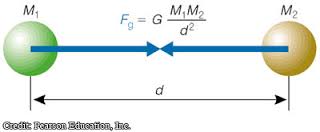
Complete the following statement: The farther away two planets are the _______ the gravitational force between them.
more
same
dosen't matter
less
18
Multiple Choice
Two factors effecting the magnitude of the force of gravity between 2 objects are...
mass and distance
mass and matter
distance and weight
weight and mass
19
Multiple Choice
Force of gravity is inversely proportional to
Mass
Weight
Distance
Time
20
Multiple Choice
What states that "every object in the universe attracts every other object"?
Law of Universal Gravitation
Newton's First Law of Motion
My mother
Inertia & gravity
21
Multiple Choice
The water level at the beach changes during the day. What causes the different water levels?
Earth’s revolution
the Moon’s rotation
Earth’s magnetic field
the Moon’s gravitational pull
22
Multiple Choice
Saturn and Jupiter are two objects in our solar system. Winch of the following two factors keep these objects in their orbits?
inertia and speed
mass and distance
gravity and inertia
gravity and friction
23
Multiple Choice
As the moon moves in its orbit and Earth spins on its axis, the pull of gravity between the moon and different parts of Earth changes. Which of the following events do Florida residents observe as a result of this changing pull of gravity?
Temperatures in Tampa are hotter in August than in February.
Ocean water levels at Miami Beach rise and fall twice each day.
The moon appears to rise in the east and set in the west each day.
The phases of the moon appear to change from one day to the next.
24
Multiple Choice
Earth rotates on an axis that is tilted at an angle of 23.5°. Which of the following would NOT occur if Earth's axis were not tilted?
day and night
moon phases
seasons
tides
25
Multiple Choice
The changing positions of the moon and Earth relative to the sun can cause an eclipse. Which of the following diagrams shows the positions of the sun, moon, and Earth during a solar eclipse?
26
Multiple Choice
Temperatures in Florida tend to be cooler in January than in July. Which of the following explains this difference in temperatures during different times of the year?
How fast Earth spins on its axis changes during the year.
The tilt of Earth's axis changes during the year.
Earth's distance from the sun changes during the year.
How much direct sunlight Florida receives changes during the year.
27
Multiple Choice
Scientific ideas about the solar system have changed over time. Which of the following statements best compares older models of the solar system with the currently accepted model?
In older models, Earth's distance from the sun changed, while in the current model, Earth's distance from the sun is constant.
Older models showed planets moving in circular orbits, while in the current model, planets move in elliptical orbits.
In older models, Venus was closest to the sun, while in the current model, Mercury is closest to the sun.
Older models included ten planets, while the current model includes
eight planets.
28
Multiple Choice
A neap tide is a tide with the greatest difference between low and high tides
true
false
29
Multiple Choice
Tides are the cycle of rising and falling ocean water that repeats automatically every
24 hours
12.5 hours
25 hours
6.25 hours
30
Multiple Choice
Water flows toward the high tides, halfway between them causing ____________.
neap tide
high tide
spring tide
low tides
31
Multiple Choice
A[n] ___________ tide occurs when the sun, Earth, and the moon are nearly in a line.
spring
high
low
neap
32
Multiple Choice
The bulge of water on the side of the Earth closest to the moon produces ___________.
high tide
low tide
neap tide
spring tide
33
Multiple Choice
Differences in the moon's and sun's pull on different sides of the Earth cause _________.
gravity
lunar phases
tides
dabbing
34
Multiple Choice
A[n] ______________ tide occurs when the sun is at right angles to the line between Earth and the moon.
high
neap
low
spring
35
Multiple Choice

Which of the following best describes the tilt of the earth during the spring and fall equinoxes?
The earth is tilted away from the sun (Northern hemisphere)
The earth is tilted neither toward or away from the sun (tilt is side to side)
The earth is tilted toward the sun (Northern hemisphere)
The earth is not tilted during spring and fall
36
Multiple Choice
What happens when the area in which you live tilts away from the sun?
It is winter
It is summer
It is spring
It is fall
37
Multiple Choice
What effect does the tilt of the earth have?
It causes the earth to be farther away from the sun at different times of the year
It changes the angle that the sun strikes the earth in different land areas
When the earth is tilted away from the sun we have day
When the earth is tilted away from the sun we have night
38
Multiple Choice
What is the term used to describe the motion of the Earth around the Sun?
Resolution
Rotation
Revolution
Round
39
Multiple Choice
What does the rotation of the earth cause us to experience?
Seasons
Day and night
Year
Summer
40
Multiple Choice
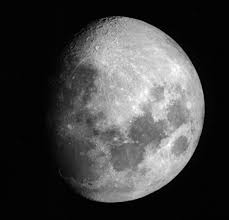
Which percentage accurately describes the amount of illumination for this moon phase?
0%
39%
50%
73%
41
Multiple Choice

Name the moon phase
waning crescent
waxing crescent
waning gibbous
waxing gibbous
42
Multiple Choice
How many days does it take for the moon to complete a full lunar cycle?
27
29.5
28
20
43
Multiple Choice

44
Multiple Choice
Why does the moon appear to change shape?
The Moon changes its actual shape throughout the course of the month.
As the Moon changes position, different amount of the dayside are visible from Earth.
The season of the year determines the phase of the Moon.
The closer the Moon is to Earth, the more light the Moon reflects.
45
Multiple Choice
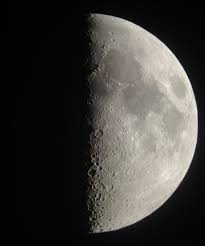
Name the moon phase in the picture.
First Quarter
Last Quarter
New Moon
Full Moon
46
Multiple Choice
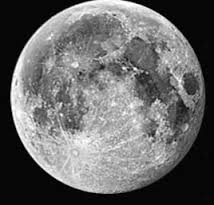
Name the moon phase in the picture.
First Quarter
Last Quarter
New Moon
Full Moon
Big Idea 5: Earth in Time & Space
Physics in Our Solar System (CS1)
Show answer
Auto Play
Slide 1 / 46
SLIDE
Similar Resources on Wayground

37 questions
Potential and Kinetic Energy Guided Lesson
Presentation
•
6th Grade
41 questions
Gravity and Friction Lesson Outline
Presentation
•
6th Grade
42 questions
Speed and Velocity Guided Notes
Presentation
•
6th Grade
40 questions
Pressure systems - causes and weather
Presentation
•
6th Grade
41 questions
Heat Transfer Lesson & Quiz
Presentation
•
6th Grade
38 questions
Temperature, Salinity, and Density
Presentation
•
6th Grade
45 questions
social emotional learning
Presentation
•
6th Grade
39 questions
Introduction to Claims Evidence Resoning
Presentation
•
6th Grade
Popular Resources on Wayground
10 questions
Safety Day 2026 – Student Review

Quiz
•
9th Grade
21 questions
Continents and Oceans
Quiz
•
6th Grade
20 questions
Parts of Speech
Quiz
•
5th Grade
16 questions
Subject & Predicate
Quiz
•
5th Grade
25 questions
Multiplication Facts
Quiz
•
5th Grade
12 questions
Map Skills
Quiz
•
3rd Grade
22 questions
Continents and Oceans
Quiz
•
5th Grade
15 questions
Rounding Decimals
Quiz
•
5th Grade
Discover more resources for Science
20 questions
Elements, compounds, and mixtures
Quiz
•
6th Grade
10 questions
6.6D - Relative Density Review
Quiz
•
6th Grade
10 questions
Exploring Chemical and Physical Changes

Interactive video
•
6th - 10th Grade
20 questions
CONDUCTION,CONVECTION AND RADIATION
Quiz
•
6th Grade
20 questions
Rocks and The Rock Cycle
Quiz
•
6th Grade
19 questions
Describing and Classifying Matter
Presentation
•
6th Grade
21 questions
Waves and Wave Properties
Quiz
•
6th - 8th Grade
20 questions
Phases of the Moon
Quiz
•
6th Grade