Search Header Logo
Final Exam Review: AKS 10, 11

Final Exam Review: AKS 10, 11

Assessment

Presentation

•

Physics

•

9th - 12th Grade

•

Medium

•
NGSS
MS-PS4-1, MS-PS4-2, HS-PS4-1

Standards-aligned

Created by

Leslie Dunham

Used 5+ times

FREE Resource

11 Slides • 9 Questions

1
Final Exam Review: AKS 10, 11

AKS 10: Waves & Sound

AKS 11: EM & Visible Light

AKS 13: Nuclear

media

2

AKS 10: Sound & Waves

Wave Anatomy

Crest

Trough

Amplitude

Wavelength

media

3

Speed of sound is determined by the medium it travels through

Remember, sound (and all mechanical waves) CANNOT travel through a vacuum

media

4

Within a given medium, the temperature also affects the speed!

The warmer the medium, the faster the sound can travel

media

5

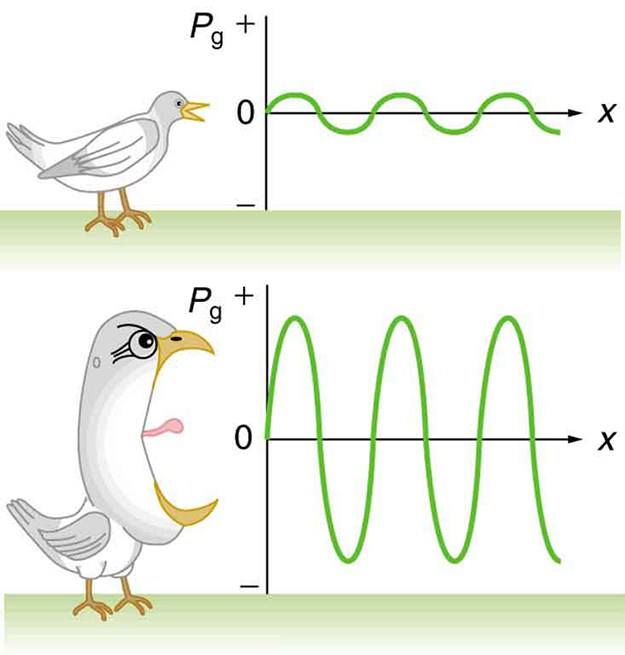
Features of sound

Pitch = frequency

Loudness/Intensity = amplitude

media

6

Doppler Effect

Apparent change in frequency (pitch) due to the motion of the sound source or the sound observer.

media

7

Multiple Choice

Question image

Which number represents the amplitude of the wave in the diagram?

1

1

2

2

3

3

4

4

8

Multiple Choice

Question image

Which wave has the highest frequency?

1

1

2

2

3

3

4

4

9

Multiple Choice

Which medium will transmit sound the fastest?

1

ocean water

2

solid iron

3

perfumed air

4

a sponge

10

Multiple Choice

Question image

When a sound is louder what measurement gets bigger?

1

Frequency

2

Amplitude

3

Wavelength

4

Pitch

11

Multiple Choice

Question image

As the siren goes off in the PARKED car, the young woman at position Y hears

1

a higher pitch than if she were inside the car

2

a lower pitch than if she were inside the car

3

the same pitch she would if she were inside the car

12

AKS 11: EM & Visible Light

Mechanical waves - MUST have a medium

Electromagnetic waves - CAN travel through a vacuum

media

13

Electromagnetic Spectrum

Type of EM wave based on the wavelength


Energy of EM waves = frequency

media

14

Frequency & Wavelength

Inverse relationship - when wavelength increases, frequency decreases

media

15

Behavior of Visible Light

White light (from the sun) is made of all wavelengths of visible light.


A prism splits the white light (disperses it) into the colors of the rainbow.

media

16

Color of objects

An object's color is determined by the wavelengths of light it REFLECTS.

Other wavelengths are ABSORBED and you don't see those colors.

White = ALL reflected

Black = ALL absorbed

media

17

Multiple Choice

How do electromagnetic and mechanical waves compare?

1

Mechanical waves can only travel through a vacuum, but electromagnetic waves can travel through a solid, liquid, or gas.

2

Mechanical waves can travel through a solid, liquid, or gas, but electromagnetic waves can only travel through a gas.

3

Mechanical waves can only travel through a solid, liquid, or gas, but electromagnetic waves can travel through a vacuum.

4

Mechanical waves can travel through a solid, liquid, or gas, but electromagnetic waves can only travel through a solid.

18

Multiple Choice

A wave with a long wavelength (like radio waves) will have a ______ frequency and _____ energy

1

high, low

2

high, high

3

low, high

4

low, low

19

Multiple Choice

White light from the sun enters a prism and is dispersed. What would you observe as the light exits the prism?

1

White light

2

A rainbow of colors

3

No light exits the prism

4

Red and blue light only

20

Multiple Choice

Question image

What color is an object that absorbs all the colors in the light spectrum?

1

A rainbow

2

White

3

Black

4

Invisible

Final Exam Review: AKS 10, 11

AKS 10: Waves & Sound

AKS 11: EM & Visible Light

AKS 13: Nuclear

media

Show answer

Auto Play

Slide 1 / 20

SLIDE