
How Light Travels
Presentation
•
Science, Physics
•
6th - 12th Grade
•
Practice Problem
•
Medium
Omar Alshishani
Used 43+ times
FREE Resource
11 Slides • 8 Questions
1
How Light Travels
2
Learning Objectives
Students will develop and use models to describe light's path as straight lines and describe how objects functions to interact with light waves through reflection, absorption, and transmission.
3
Poll
Sound and light both travel by waves. In order to hear sounds or see light, waves must travel from one place to another and enter either ears or eyes. How do you think these waves travel?
They both need to travel through matter [ Solid, liquid and gas ]
Neither needs to travel through matter [ Solid, liquid and gas ]
Only one of them needs to travel through matter [ Solid, liquid and gas ]
4
What is light?
Electromagnetic waves radiate electric and magnetic fields which can be detected by human eyes.
5
Multiple Choice
Light is:
matter
energy
wave
6
Electromagnetic Spectrum
The electromagnetic spectrum is the range of frequencies of electromagnetic radiation and their respective wavelengths and photon energies.
7
Multiple Choice
Which has the longest wavelength?
Radio waves
Visible light
X-rays
8
Open your Google classroom
Work on WS-Across the Spectrum
9
Transparent
Transparent is a material that allows almost all of the light striking it to pass through, through which objects can be seen clearly.
In this example, the glass is Transparent material.
10
Translucent
Translucent is a material that allows most of the light striking it to pass through, but through which objects appear blurry.
In this example, the glass is Translucent material
11
Opaque
Opaque is a material that absorbs most of the light that strikes it. Therefore, you can't see objects through it.
In this example, the glass is Opaque material
12
13
Multiple Choice
In the following example, which one is an example of Transparent glass?
A
B
C
14
Multiple Choice
In the following example, which one is an example of Translucent glass?
A
B
C
15
16
Open Ended
What are the things you can see in the room?
17
Open Ended
Why might you see some things in the room but not other things?
18
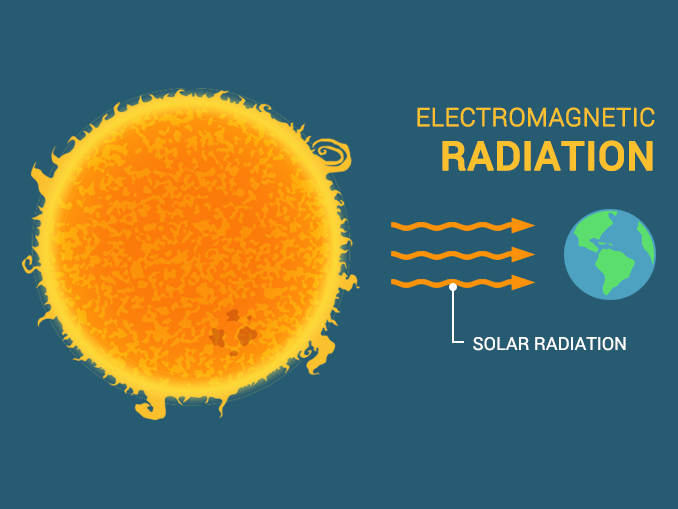
Electromagnetic Radiation
Electromagnetic Radiation doesn't need a medium to travel through.
Watch this video to learn more:
https://www.youtube.com/watch?v=LTvHlYz61lY
19
Multiple Choice
Sound and light both travel by waves. In order to hear sounds or see light, waves must travel from one place to another and enter either ears or eyes. How do you think these waves travel?
They both need to travel through matter [ Solid, liquid and gas ]
Neither needs to travel through matter [ Solid, liquid and gas ]
Only one of them needs to travel through matter [ Solid, liquid and gas ]
How Light Travels
Show answer
Auto Play
Slide 1 / 19
SLIDE

Similar Resources on Wayground
14 questions
Doppler Effect
Presentation
•
6th Grade - University
16 questions
Understanding Primary and Secondary Sources
Presentation
•
KG
14 questions
Conduction, Convection, and Radiation in the Earth's Atmosphere
Presentation
•
KG - University
13 questions
Chemistry Year 8
Presentation
•
7th - 12th Grade
18 questions
Gravity
Presentation
•
7th - 12th Grade
18 questions
Balanced and Unbalanced Forces
Presentation
•
6th Grade - University
13 questions
Environmental Impacts on Human Health
Presentation
•
6th - 12th Grade
15 questions
Parts of a Wave
Presentation
•
4th - 12th Grade
Popular Resources on Wayground
6 questions
PRIDE Always and Everywhere
Presentation
•
12th Grade
20 questions
Lab Safety Quiz
Quiz
•
6th Grade
26 questions
KOR Review Kahoot Questions
Quiz
•
8th Grade
21 questions
Continents and Oceans
Quiz
•
6th Grade
12 questions
Unit Zero lesson 2 cafeteria
Presentation
•
9th - 12th Grade
20 questions
Parts of Speech
Quiz
•
5th Grade
10 questions
Riddles Riddles fun Riddles
Quiz
•
6th - 12th Grade
16 questions
Subject & Predicate
Quiz
•
5th Grade
Discover more resources for Science
20 questions
Lab Safety Quiz
Quiz
•
6th Grade
20 questions
Lab Safety
Quiz
•
5th - 8th Grade
10 questions
Scientific Method (The scientific method)
Interactive video
•
9th Grade
20 questions
Scientific Method and Variables
Quiz
•
8th Grade
20 questions
Scientific method and variables
Quiz
•
8th Grade
27 questions
Counting Atoms - Subscripts
Quiz
•
8th Grade
10 questions
6.6D - Relative Density Review
Quiz
•
6th Grade
10 questions
Scientific Method and Variables
Quiz
•
6th Grade