

Structure of the Earth

Presentation
•
Geography
•
9th Grade
•
Medium

Mariana Jimenez
Used 80+ times
FREE Resource
9 Slides • 14 Questions
1
Objective:
Determine the age of Earth
Identify the 4 Layers of the Earth
Explain the theory of Continental Drift

2
Open Ended
What do you think the Earth is made up of?
When we go outside, we see grass and dirt, but do you think there is more to the Earth?
3
Multiple Choice
How old do you think the Earth is?
a few thousand of years old
billions of years old
hundreds of thousand of years old
millions of years old
tens of thousands of years old
4
How do scientist determine the age of the earth?
Where were some of the oldest rocks found on Earth?
5
Multiple Select
How did scientists determine the age of the Earth? (Choose all correct answers)
by guessing
by making estimations based on evidence
by analyzing rocks from outer space
by analyzing rocks from different parts of the Earth
6
Multiple Select
Where were some of the oldest rocks found on Earth?
in Australia
in Canada
in Einstein's back garden
7
Crust- is the outermost solid shell of the earth, accounting for less than 1% of Earth's volume
Mantle- is the mostly-solid bulk of Earth's interior. (MAGMA)
Outer core-third layer of the earth, is responsible for Earth's magnetic field.
Inner core- is the innermost geologic layer of the planet Earth.

8
the shell of a hard-boiled egg
thin, cold and brittle
made of light elements (silica, aluminum and oxygen)
broken into big pieces, like a gigantic jigsaw puzzle (TECTONIC PLATES)

9
1,865 miles thick
Made mostly of iron, magnesium and silicon,
it is dense, hot and semi-solid (think caramel candy)
1,100 and 2,400 degrees Fahrenheit
Diamonds are tiny pieces of the mantle we can actually touch.

10
made from iron and nickel, just in liquid form
3,220 to 1,790 miles below the surface
VERY HOT-8,132° and 9,932° Fahrenheit


11
4,000 to 3,220 miles beneath Earth’s surface.
Extremely dense, it’s made mostly of iron and nickel
INTENSELY HOT - 9,800° Fahrenheit
almost as hot as the surface of the sun


12
Multiple Choice
Which is the coolest part of the planet?
inner core
outer core
mantle
crust
13
Multiple Choice
Which of these layers is the largest?
lithosphere
asthenosphere
outer core
mantle
14
Multiple Choice
Which is the hottest part of the Earth?
The core
The mantle
The crust
The Asthenosphere
15
Multiple Choice
Which two metals are thought to be found in the core?
iron and steel
iron and nickel
gold and silver
iron and copper
16
Open Ended

What is continental drift? Have you heard this term before? Have you heard the term PANGEA?
17
Think about:
What is the theory of continental drift?
What evidence did Wegener use?
18
a supercontinent that assembled from earlier continental units approximately 335 million years ago, and began to break apart about 175 million years
Continental Drift Theory:
the hypothesis that the Earth's continents have moved over geologic time relative to each other (3cm per year)

19
Multiple Choice
What does the theory of continental drift state?
The continents were once joined in a super-continent and have moved over time
Continents are stationary and do not move
The Earth is broken into lithospheric plates that move due to convection currents
none of the above
20
Multiple Choice
What evidence did Wegener use in his theory?
Continents and fossils fitting together/matching-up like puzzle pieces
glacier scars and evidence from temperature
mountain ranges and coal deposits line up across continents
all of the above
21
Multiple Choice
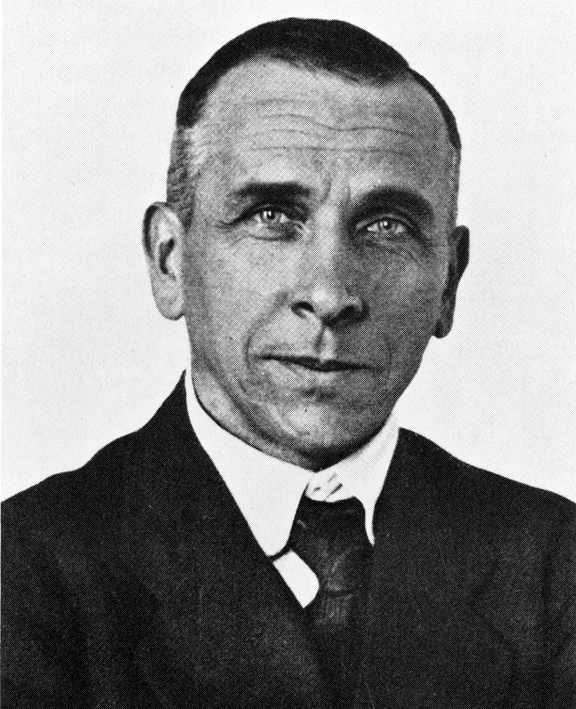
Who is the person credited with developing the theory of continental drift?
Harry Hess
Galileo
Alfred Wegener
Newton
22
Multiple Choice
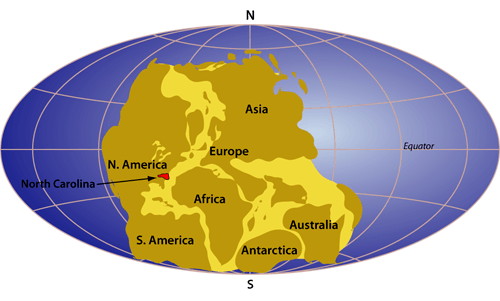
What is this a picture of?
plate tectonics
continental drift
pangea
glacier scaring
23
Open Ended
In your own words, what is the continental drift theory?
Objective:
Determine the age of Earth
Identify the 4 Layers of the Earth
Explain the theory of Continental Drift
Show answer
Auto Play
Slide 1 / 23
SLIDE
Similar Resources on Wayground

19 questions
Carbon and Nitrogen
Presentation
•
9th Grade
17 questions
Themes of Geography
Presentation
•
9th Grade
21 questions
Cultural Geography of Europe
Presentation
•
9th Grade
18 questions
Cell Transport
Presentation
•
9th Grade
18 questions
Slope Intercept Form Review
Presentation
•
9th Grade
17 questions
Simple past
Presentation
•
9th Grade
17 questions
Circumcenter and Incenter
Presentation
•
9th Grade
17 questions
Scientific Revolution
Presentation
•
9th Grade
Popular Resources on Wayground
10 questions
How much do you know about our Portrait of an Eagle?

Quiz
•
10th Grade
10 questions
Fast Food Slogans
Quiz
•
6th - 8th Grade
21 questions
Continents and Oceans
Quiz
•
6th Grade
20 questions
Parts of Speech
Quiz
•
5th Grade
16 questions
Subject & Predicate
Quiz
•
5th Grade
25 questions
Multiplication Facts
Quiz
•
5th Grade
12 questions
Map Skills
Quiz
•
3rd Grade
22 questions
Continents and Oceans
Quiz
•
5th Grade
Discover more resources for Geography
20 questions
Unit 2 Review
Quiz
•
9th Grade
9 questions
Weather vs Climate
Quiz
•
3rd - 9th Grade
42 questions
AP Human Geography Unit 2
Quiz
•
9th Grade
35 questions
Unit 3 Exam Review 2026
Quiz
•
9th Grade
48 questions
AP Human Geography- Unit 2: Population and Migration
Quiz
•
9th - 11th Grade
10 questions
The South, West, and Environmental Change
Presentation
•
9th - 12th Grade
11 questions
Texas History
Presentation
•
9th - 12th Grade
20 questions
2026 Fall World Geography A 2.06 Review
Quiz
•
9th Grade