Search Header Logo
L2.cell structures and function

L2.cell structures and function

Assessment

Presentation

Science

6th Grade

Medium

NGSS
MS-LS1-1, MS-LS1-2, HS-LS1-4

+3

Standards-aligned

Created by

Fatima alzahra

Used 16+ times

FREE Resource

22 Slides • 36 Questions

1

​Week 3

​Module B/Unit 1

L2.cell structures and function

MS-LS1-2

Develop and use a model to describe the function of a cell as a whole and ways parts of cells contribute to the function

2

​Day 1

3

Essential Question :

​what are the main functions of the cell?

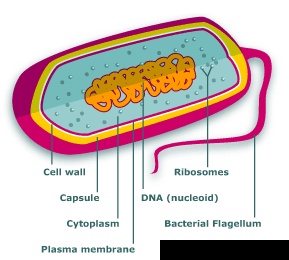
​Success criteria :

Analyze photographic models of cells to compare and contrast each cell's necessary functions.


4

Starter : Watch the video to explore cell functions

​https://youtu.be/1axhVwYcvV0Why

5

Open Ended

Question image

as you explored ,what are the functions of  the cell?

6

​Cell functions

all cells have similar basic functions they need to carry out to remain alive.

These functions are carried out not by the cell as a whole, but by specific parts of the cell.

Cells store and process information, gather energy and matter from the environment, use energy to carry out functions, and get rid of wastes.

media
media
media

7

Basic cell structure  .

media

8

media

9

Open Ended

Question image

page 20 Q3:

Discuss. look at the two cells types in the photos .

Describe how each cell system works to provide functions needed by the whole organisms ?

10

​Answer

the root cell of the plant work with other cells in the plant body to provide water and nutrients to the whole plant .

and

​the single cell of protozoan must perform all the functions needed for survival ,including obtaining matter and energy

11

A Cell Is a Whole System

Cells make up all living organisms, including both unicellular organisms and multicellular organisms. In a unicellular organism, the cell must perform all of the functions it needs to live. In a multicellular organism, different types of cells perform unique functions to provide for the needs of the whole organism. For example, the skin cells of your body provide protection from harmful substances in the environment, and your red blood cells carry oxygen to all cells in your body.

media
media

12

Open Ended

Question image

compare and contrast each cell's necessary functions

(Skin cells and Nerve cells)

13

Multiple Choice

Question image

Why do the cells defined as natural  living system?

1

because it is made of set of interacting parts that work together

2

because it is made of set of interacting parts that are not working together

3

because they are the smallest thing in living things

4

because they are the biggest thing in living things

14

Multiple Choice

Which of the following is the smallest unit of life that can carry out all life functions?

1

the mitochondria

2

the vacuoles

3

the nucleus

4

the cell

15

Multiple Choice

Because they share similar structures, cells all carry out the same function.

1

True

2

False

16

Multiple Choice

Recall which structures are found in every living cell? [strand i; level 3-4]

1

cell membrane and cytoplasm

2

chloroplasts and mitochondria

3

a cell wall and nucleus

4

chloroplasts and cell wall

17

Multiple Choice

In multicellular organisms, cells are "specialists" meaning that they perform different functions

1

True

2

False

18

Multiple Choice

The cells in your eyeballs look exactly the same as the cells in your brain

1

True

2

False

19

Multiple Choice

what allows nutrients in and lets waste products out; it keeps the cytoplasm inside; the gatekeeper

1

cell membrane

2

cell wall

3

cytoplasm

4

chloroplast

20

Multiple Choice

Basic unit of all forms of life

1

Cell

2

Nucleus

3

Prokaryote

4

Eukaryote

21

Multiple Choice

Organism whose cells contain a nucleus

1

Prokaryote

2

Eukaryote

3

Golgi apparatus

4

Chloroplast

22

Multiple Choice

Unicellular organism that lacks a nucleus

1

Eukaryote

2

Prokaryote

3

Vacuole

4

Lysosome

23

Day 2

24

​Success Criteria

Interpret a diagram to visualize how unicellular organism supports its own life functions using various cell parts

25

Open Ended

Question image

warm up

How do unicellular organisms

(such as bacteria)

 remains alive?

26

​Starter

​Let's watch the video and explore the prokaryotic cell

https://youtu.be/7Uq2NSl6qrA

27

Open Ended

Question image

what are the main characteristics of prokaryotic cells?

28

Types of Cells and Their Structures

All cells have three structures that carry out essential life functions.

The cell membrane

Cytoplasm

Genetic material

media

29

Genetic Material

Genetic material contains information that directs all of the cell’s functions.

Cell Membrane

The cell membrane surrounds and protects the cell and controls what materials go into and out of it.

Cytoplasm is a liquid substance that fills the inside of the cell and supports cell structures.

30

Ribosome

Ribosomes make proteins inside the cytoplasm.

Flagellum

These projections move the prokaryote through its environment.

Cell Wall

The cell wall provides structural support for plant cells and some prokaryotic cells.

31

​All cells can be organized into two categories: prokaryotes and eukaryotes.

Prokaryotic Cells

Most prokaryotic cells do not have any membrane-bound organelles, although they do have structures called ribosomes that make proteins. The genetic material is free-floating in the cytoplasm. Prokaryotic cells are unicellular organisms. Bacteria are the largest group of prokaryotes.

media

32

Explore some of the structures in a prokaryotic cell

media

33

Open Ended

Question image

Which structure controls what goes into and out of the cell? Explain in your own words why this function is important to the function of a cell as a whole.

34

Open Ended

Question image

Open ended question

Do multicellular organisms have advantages over unicellular organisms?

35

Open Ended

Question image

How can an organism be composed of only one cell?

do these microscopic organisms supports life just like our lungs, mouth,skin and eyes ?

36

Multiple Choice

Which of these structures surround cells?

Choose the correct answer.

1

cell wall and nucleus

2

cell membrane and cell wall

3

cytoplasm and cytoskeleton

4

cell membrane and cytoplasm

37

Multiple Choice

What two features do eukaryotes have that prokaryotes do not have?

Choose the correct answer.

1

cell wall and ribosomes

2

nucleus and genetic material

3

membrane-bound organelles and nucleus

4

membrane-bound organelles and genetic material

38

Multiple Choice

Eukaryotic cells and prokaryotic cells have some parts in common. Which of these pairs of parts would you find in both types of cells?

1

cytoplasm and nucleus

2

cell membrane and cytoplasm

3

genetic material and membrane-bound organelles

39

Multiple Choice

Prokaryotic cells include bacteria.

1

True

2

False

40

Multiple Choice

Unicellular means

1

single-celled

2

unicycle

3

multi-celled

41

Multiple Choice

Question image

Which type of cell?

1

Prokaryote

2

Eukaryote

42

Multiple Choice

Which of the following is found inside a prokaryote?

1

cytoplasm

2

DNA

3

ribosomes

4

all of these

43

Multiple Choice

Both prokaryotes and eukaryotes have a nucleus.

1

True

2

False

44

Multiple Choice

Cells can only be seen with the help of a...

1

hand lens

2

magnifying glass

3

microscope

45

Multiple Choice

All living things are made of...

1

atoms

2

cells

3

bacteria

46

Multiple Choice

What is multicellular? 

1

one cell 

2

no cells 

3

many cells 

4

no nucleus 

47

Multiple Choice

All cells come from other...

1

cells

2

plants

3

microscopes

48

Multiple Choice

Question image

What kind of cell is this?

1

prokaryotic

2

eukaryotic

49

Multiple Choice

Question image

Does this cell have DNA?

1

yes

2

no

50

Multiple Choice

Question image

Does this cell have a nucleus?

1

yes

2

no

51

Multiple Choice

All prokaryotic cells are unicellular. True or false?

1

True

2

False

52

​Day 3

53

​Success Criteria

Identify the parts and component of cells from relevant phenomenon

54

​Encounter the phenomenon

Bird eggs have different structures .

​such as ,shell a membrane and yolk.

​each structure had a different function

that assist in the development of the baby bird .

media

55

​watch the video Eggcellent to see phenomenon in action

​https://youtu.be/1rgzlB4_TaA

56

Open Ended

Question image

fell the shell and observe the inside of the shell and record your observation 

57

Open Ended

Question image

what do you think is the role of the eggshell ?what does the structure of the eggshell tell you about its function?

58

Eukaryotic Cells

Eukaryotic cells are generally larger and more complex than prokaryotic cells.

Animals and plants are both made of eukaryotic cells.

​Week 3

​Module B/Unit 1

L2.cell structures and function

MS-LS1-2

Develop and use a model to describe the function of a cell as a whole and ways parts of cells contribute to the function

Show answer

Auto Play

Slide 1 / 58

SLIDE