AKS 7 Review (7A-7E)
Presentation
•
Science
•
8th - 12th Grade
•
Easy
+9
Standards-aligned
Marissa Brown
Used 4+ times
FREE Resource
68 Slides • 47 Questions
1
AKS 7 Review
by Ms. Brown
2
3
4
AKS 7A & 7B Review
The next few slides are review!
Take notes!
5
6
7
8
9
10
11
12
13
14
15
16
17
18
19
20
21
22
23
24
25
26
27
28
29
30
31
32
Open Ended
Describe Potential Energy in your own words, reference the image.
33
Open Ended
Describe Kinetic Energy in your own words. Reference the image.
34
Open Ended
What is the relationship between the potential and kinetic energy of an object? Reference the image.
35
Open Ended
Explain the difference between elastic and gravitational potential energy.
36
Open Ended
List 3 examples of potential energy and 3 examples of kinetic energy.
37
Multiple Choice
Energy is the ability to do work or cause changes.
True
False
38
Multiple Choice
A car at the top of the drop on a roller coaster has ________ energy.
potential
kinetic
chemical
sound
39
Multiple Select
Which of following are types of kinetic energy? Check all that apply.
sound energy
light energy
thermal energy
mechanical energy
potential
40
Multiple Choice
We receive ________ and heat energy from the Sun.
sound
mechanical
light
kinetic
41
Multiple Choice
Vibrations produce _______ energy.
chemical
sound
potential
light
42
Multiple Choice
Which of the following is an example of kinetic energy?
A rock at the top of a hill.
Water falling down a waterfall.
A pencil sitting on a desk.
A backpack on the ground.
43
Multiple Choice
Pushing a filing cabinet across the room is an example of ________ energy.
light
thermal
chemical
mechanical
44
Multiple Choice
_________ energy is the energy of motion.
Potential
Kinetic
Thermal
Sound
45
Multiple Choice
_______ energy is stored energy.
Potential
Kinetic
Light
Sound
46
Multiple Choice
______ energy is the energy of moving particles of matter.
Light
Thermal
Potential
Chemical
47
Multiple Choice
Identify the correct energy transformation for the image below.
Chemical --> Radiant --> Thermal
Sound --> Thermal --> Radiant
Kinetic --> Potential --> Sound
Electrical --> Sound --> Thermal
48
Multiple Choice
Identify the correct energy transformation for the image below.
Elastic --> Kinetic --> Sound
Thermal --> Potential --> Gravitational
Kinetic --> Gravitational --> Sound
Sound --> Elastic --> Kinetic
49
Multiple Choice
Energy can be created.
True
False
50
Multiple Choice
Energy cannot be destroyed.
True
False
51
Multiple Choice
Imagine dropping a basketball. When would it have the most gravitational potential energy?
When it is closest to the ground
When it is at the highest point
When it is halfway down
It has the same amount of gravitational PE at all points
52
Multiple Choice
Roller coasters slow down because their energy disappears.
True
False
53
Multiple Choice
The Law of Conservation of Energy states:
Energy can created or destroyed but not transformed
Energy cannot be created or destroyed, it can only transformed
Energy can't be created, destroyed or transformed
54
Multiple Choice
55
Multiple Choice
Where would this tossed baseball have the least amount of kinetic energy?
point W
point X
point y
point z
56
Multiple Choice
Where would this tossed baseball have the greatest amount of kinetic energy?
point W
point X
point y
point z
57
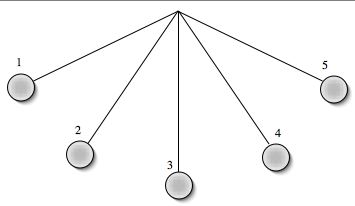
Multiple Choice
When a pendulum swings, at which point is kinetic energy highest?
1
2
3
4
58
59
60
61
62
63
64
65
66
67
68
69
70
71
72
73
74
75
76
77
78
79
80
81
82
83
84
85
86
87
Multiple Choice
How does heat move?
from a warmer to a cooler object
from a cooler to a warmer object
toward a hot object
away from a cold object
88
Multiple Choice
How is energy from the Sun transferred?
by radiation
by conduction
by convection
by the force of gravity
89
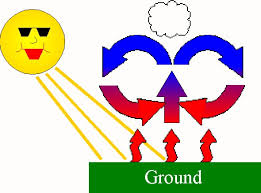
Multiple Choice
Which of these combines with changes in a fluid's density and the force of gravity to set convection currents in motion?
evaporation of a fluid
condensation of a fluid
freezing and melting of a solid
heating and cooling of a fluid
90
Multiple Choice
__________ is the transfer of heat by the movement of a fluid.
Conduction
Convection
Radiation
91
Multiple Choice
When you heat up an object, the particles in the object move _________.
faster
the same speed
slower
92
Multiple Choice
When you touch hot sand, heat is transferred by _________ to your skin.
conduction
convection
radiation
93
Multiple Choice
_____________, convection, and conduction are the three types of heat transfer.
Conveyance
Radiation
Translocation
94
Multiple Choice
Warm air rises and the cool air sinks demonstrates this type of heat transfer.
conduction
convection
radiation
Insolation
95
Multiple Choice
Ironing a shirt is an example of...
condensation
conduction
convection
radiation
96
Multiple Choice
Warm air is __________ dense than cold air and rises creating convection currents.
more
less
97
Multiple Choice
Transfer of thermal energy through "space"
conduction
convection
radiation
98
Multiple Choice
Hot coffee is stirred with a spoon; the spoon gets hot due to
conduction
convection
radiation
99
Multiple Choice
"Lava lamps" contain colored liquids. These liquids form globs that rise to the top due to
conduction
convection
radiation
100
101
102
103
104
105
106
107
108
Multiple Choice
What does temperature measure?
Heat of Molecules
ºC
Average Kinetic Energy of Molecules
Thermal Energy
109
Multiple Choice
Specific heat is....
The measure of kinetic energy of an objects particles
A measure of the energy needed to increase the average kinetic energy of the particles
The heating caused by the motion of flluid due to temperature difference
The transfer of energy by electromagnetic radiation
110
Multiple Choice
How does heat flow?
Always from cold to warm
Always from warm to cold
Both warm to cold & cold to warm
It depends on the temperature
111
Multiple Choice
The amount of energy required to raise the temperature 1ºC for every kilogram is called____?
Thermal Energy
Specific Heat
Temperature
Kinetic Energy
112
Multiple Choice
113
Multiple Choice
Copper, Stainless Steel, Carbon Steel, and Zinc were all heated using 10,000 JOULES of thermal energy. What material would be have the LARGEST change in temperature?
Copper
Carbon Steel
Zinc
Stainless Steel
114
Multiple Choice
Copper, Stainless Steel, Carbon Steel, and Zinc were all heated using 10,000 JOULES of thermal energy. Based on the chart, which material would be have the SMALLEST change in temperature?
Copper
Carbon Steel
Zinc
Stainless Steel
115
Multiple Choice
What would be the effect on the particles if more heat is supplied to the system?
They would slow down
They would stop moving
They would speed up
There would be no effect
AKS 7 Review
by Ms. Brown
Show answer
Auto Play
Slide 1 / 115
SLIDE

Similar Resources on Wayground
107 questions
higiena cyfrowa
Presentation
•
KG - University
116 questions
Organism Reproductive System
Presentation
•
9th - 12th Grade
113 questions
Chapter 2 Lesson Reviewer
Presentation
•
9th Grade - University
108 questions
Chapter 14: Interactions in the Ecosystem
Presentation
•
10th Grade
108 questions
Self-Paced Review
Presentation
•
7th Grade - University
106 questions
All subject quiz
Presentation
•
8th Grade - University
110 questions
Lesson 5 & 6 - Taxonomy and Dichotomous Keys
Presentation
•
9th - 12th Grade
111 questions
ULANGKAJI MATEMATIK FORM 1 (Cikgu Afiqah)
Presentation
•
9th - 12th Grade
Popular Resources on Wayground
20 questions
"What is the question asking??" Grades 3-5
Quiz
•
1st - 5th Grade
20 questions
“What is the question asking??” Grades 6-8
Quiz
•
6th - 8th Grade
10 questions
Fire Safety Quiz
Quiz
•
12th Grade
20 questions
Equivalent Fractions
Quiz
•
3rd Grade
34 questions
STAAR Review 6th - 8th grade Reading Part 1
Quiz
•
6th - 8th Grade
20 questions
“What is the question asking??” English I-II
Quiz
•
9th - 12th Grade
20 questions
Main Idea and Details
Quiz
•
5th Grade
47 questions
8th Grade Reading STAAR Ultimate Review!
Quiz
•
8th Grade
Discover more resources for Science
20 questions
8th Grade Science STAAR Review
Quiz
•
8th Grade
8 questions
Amoeba Sister Asexual vs Sexual Reproduction
Interactive video
•
8th Grade
19 questions
Introduction to Properties of Waves
Presentation
•
6th - 8th Grade
16 questions
Interactions within Ecosystems
Presentation
•
6th - 8th Grade
46 questions
8th Science STAAR Review
Quiz
•
8th Grade
15 questions
Symbiotic Relationships
Quiz
•
6th - 8th Grade
10 questions
Food Chain and Food Web
Quiz
•
8th Grade
24 questions
8th grade Science STAAR Review
Quiz
•
8th Grade