

Factors & Multiples

Presentation
•
Mathematics
•
6th - 8th Grade
•
Medium

Sophie Sinclair
Used 66+ times
FREE Resource
12 Slides • 5 Questions
1
Factors & Multiples
by Sophie Sinclair
2
- Factors are numbers we multiply to get a mulitple or product
Multiples are what we get after multiplying factors together

3
Factors of 6
1 x 6 = 6 , so 1 and 6 are factors of 6
2 x 3 = 6, so 2 and 3 are factors of 6
Multiples of 6
0 x 6 = 0, so 0 is a multiple of 6
1 x 6 = 6, so 6 is a multiple of 6
2 x 6 = 12, so 12 is a multiple of 6
3 x 6 = 18, so 18 is a multiple of 6... and so on
4
Multiples are the times tables of a number
Factors are the whole numbers we can multiply together to make a number
0, 6, 12, 18, 24
1, 2, 3, 6
5
Multiple Choice
What are the first five multiples of 11?
0, 11, 22, 33, 44
11, 22, 33, 44, 55
1, 11, 5, 2, 5.5
6
Let's watch a little YouTube video...
7
Find the factors of 12
Always start with 1 x 12
Then go to 2 x 6
Then 3 x 4
Then 4 x 3 <--- we already have these numbers so we know we're finished.

8
Multiple Choice
What are the factors of 32?
0, 1, 2, 8
1, 2, 4, 8, 16, 32
32, 64, 96
9
Multiple Choice
What are the factors of 40?
1, 2, 4, 5, 8
1, 2, 4, 5, 8, 10, 20, 40
40, 80, 120
10
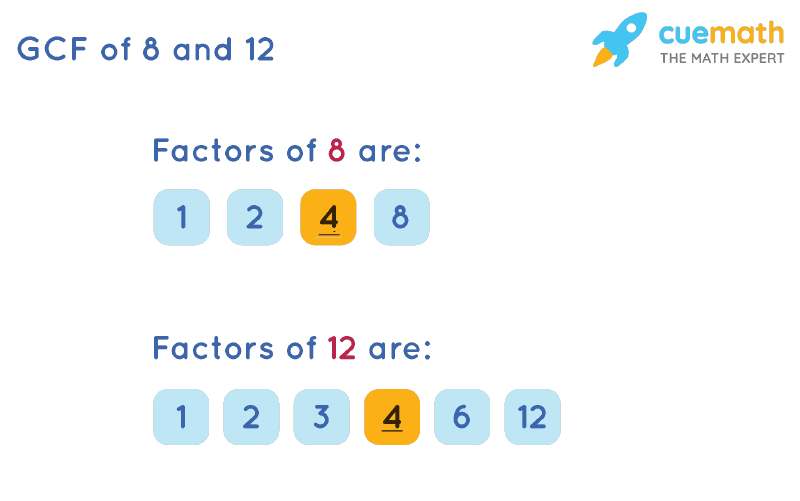
Highest Common Factors
A common factor is a number that divides exactly into two or more different numbers.
The highest common factor is the largest common factor of those numbers
11
Multiple Choice
What is the HCF of 16 and 24?
2
8
16
4
12
A prime number has no factors apart from one and itself!
e.g. 5 is a prime number
the only way we can make 5, is by doing 1 x 5
There are no other factors of 5...
5's only factors are 1 and 5 (itself), therefore it is prime!
13
A prime number has no factors apart from one and itself!
All prime numbers have
exactly two factors!
e.g. 2 = 1 x 2
The factors of 2 are 1 and 2
It has exactly two factors,
therefore, 2 is prime

14
One is not a prime number because it only has one factor... itself!

1 x 1 = 1
15
Which of these numbers are prime?
37, 38, 39, 40, 41
37 can't be divided by any numbers except 1 and itself... it has exactly two factors
38 has four factors:
19 x 2 = 38
1 x 39 = 38
39 has four factors:
3 x 13 = 39
1 x 39 = 39
40 has eight factors:
1, 2, 4, 5, 8, 10, 20 and 40
41 can't be divided by any numbers except 1 and itself... it has exactly two factors
16
Multiple Choice
Based on what we just learned. Which of the following are prime numbers: 37, 38, 39, 40, 41?
38, 39
37
41, 39
41, 37
17
Composite numbers are those that have more than two factors!

Ignoring 2, do you notice anything about all the prime numbers?
Factors & Multiples
by Sophie Sinclair
Show answer
Auto Play
Slide 1 / 17
SLIDE
Similar Resources on Wayground

11 questions
Mental Math Percents
Presentation
•
6th - 8th Grade
10 questions
Finding Slope
Presentation
•
7th - 8th Grade
14 questions
Writing Inequalities
Presentation
•
6th - 7th Grade
10 questions
Proportional and non-proportional relationships
Presentation
•
6th - 7th Grade
16 questions
Circumference of Circles
Presentation
•
6th - 8th Grade
11 questions
Solving Proportions
Presentation
•
7th - 8th Grade
12 questions
TRANSLATING EXPRESSIONS PRACTICE
Presentation
•
6th - 9th Grade
13 questions
Graphing Proportional Relationships
Presentation
•
7th - 8th Grade
Popular Resources on Wayground
24 questions
PBIS-HGMS Day 10

Quiz
•
6th - 8th Grade
10 questions
HCS SCI 03 Summer School Review 3
Quiz
•
3rd Grade
11 questions
Home Scope
Quiz
•
7th - 8th Grade
15 questions
HCS SCI 05 Summer School Assessment 3 Review
Quiz
•
5th Grade
35 questions
Lufkin Road Middle School Student Handbook & Policies Assessment
Quiz
•
7th Grade
18 questions
Geo 11.3 Area of Circles and Sectors
Quiz
•
9th - 11th Grade