

nervous system

Presentation
•
Science
•
2nd - 3rd Grade
•
Medium
Standards-aligned

Mariela De Ugarte
Used 13+ times
FREE Resource
3 Slides • 9 Questions
1
by Mariela De Ugarte

2
The nervous system controls everything you do, including breathing, walking, thinking, and feeling. This system is made up of your brain, spinal cord, and all the nerves of your body. The brain is the control center (computer) and the spinal cord is the major highway to and from the brain (network).

3
Multiple Choice
The central nervous system is composed by.....
Musculoskeletal system, brainstem and nerves.
brain, spinal cord, and all the nerves
Cerebellum, spine, nerves
4
Multiple Choice
These three parts work together to make up the Central Nervous System. They are the ________, ______, and _______.
Brain, Spinal Cord, and Nerves
Heart, Lungs, Brain
Cerebrum, Cerebral Cortex, Cerebellum
5
Multiple Choice
Our ______ receive messages and send them to the brain. The brain sends messages to our body on how to respond.
heart
lungs
nerves
6
The frontal lobe is important for emotions, cognitive functions and control of voluntary movement or activity.
The parietal lobe processes information about temperature, taste, touch and movement.
The occipital lobe is primarily responsible for vision.
The temporal lobe processes memories, recognizes faces, objects, and sounds.

7
Multiple Choice
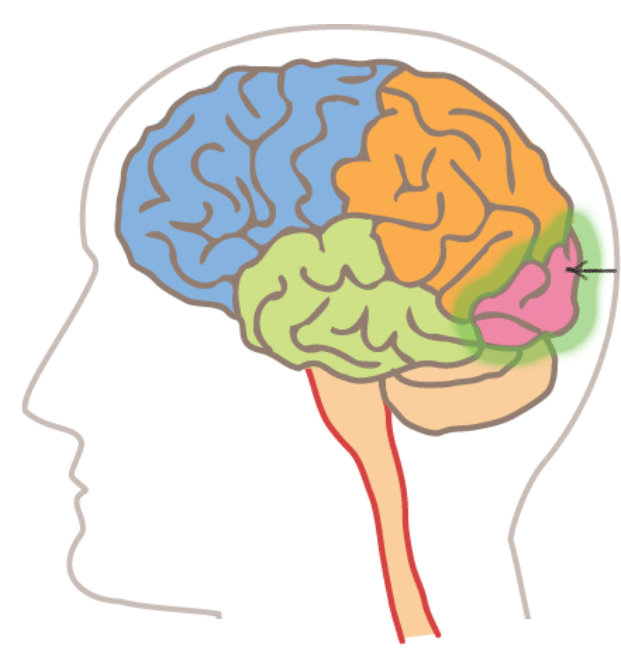
Identify the lobe of the brain highlighted.
Frontal lobe
Parietal lobe
Occipital lobe
Temporal lobe
8
Multiple Choice
The center of visual perception
Frontal lobe
Parietal lobe
Occipital lobe
Temporal lobe
9
Multiple Choice
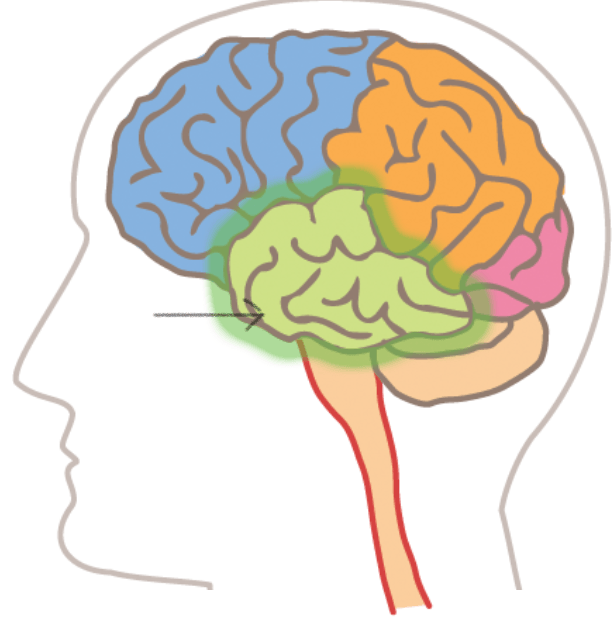
Identify the lobe of the brain highlighted.
Frontal lobe
Parietal lobe
Occipital lobe
Temporal lobe
10
Multiple Choice
Recognize faces, objects, sound, make memories
Frontal lobe
Parietal lobe
Occipital lobe
Temporal lobe
11
Multiple Choice
processes information about temperature, taste, touch and movement.
Frontal lobe
Parietal lobe
Occipital lobe
Temporal lobe
12
Multiple Choice
It is responsible for emotions, cognitive functions and control of voluntary movement or activity.
Temporal lobe
Frontal lobe
Occipital lobe
Parietal lobe
by Mariela De Ugarte
Show answer
Auto Play
Slide 1 / 12
SLIDE
Similar Resources on Wayground

9 questions
All about brain part 2
Presentation
•
2nd - 3rd Grade
11 questions
Antiguo Egipto
Presentation
•
3rd Grade
10 questions
Spelling list #5 2B
Presentation
•
2nd Grade
11 questions
2ª série Luteranismo
Presentation
•
2nd Grade
11 questions
Private Information
Presentation
•
2nd Grade
9 questions
100th day Vocab
Presentation
•
1st - 2nd Grade
9 questions
The Brain House
Presentation
•
3rd - 4th Grade
14 questions
Light Energy
Presentation
•
2nd Grade
Popular Resources on Wayground
10 questions
Safety Day 2026 – Student Review

Quiz
•
9th Grade
21 questions
Continents and Oceans
Quiz
•
6th Grade
20 questions
Parts of Speech
Quiz
•
5th Grade
16 questions
Subject & Predicate
Quiz
•
5th Grade
25 questions
Multiplication Facts
Quiz
•
5th Grade
12 questions
Map Skills
Quiz
•
3rd Grade
22 questions
Continents and Oceans
Quiz
•
5th Grade
15 questions
Rounding Decimals
Quiz
•
5th Grade
Discover more resources for Science
10 questions
Severe Weather Around Us
Quiz
•
2nd Grade
19 questions
3rd Grade CUA #1 Review GC
Quiz
•
3rd Grade
20 questions
Force and Motion
Quiz
•
3rd Grade
4 questions
K-2 Force and Motion Lesson
Presentation
•
KG - 2nd Grade
10 questions
Weather Data: Measure and Graph
Quiz
•
2nd Grade
10 questions
Identifying Physical and Chemical Changes

Interactive video
•
1st - 5th Grade
13 questions
Reflect, refract, and absorb
Quiz
•
3rd - 5th Grade
14 questions
Scientific Method
Quiz
•
3rd - 5th Grade