

Renaissance Europe

Presentation
•
History
•
9th - 10th Grade
•
Practice Problem
•
Easy

James Moran
Used 674+ times
FREE Resource
10 Slides • 10 Questions
1
By James Moran
2

Historical time period from about 1300 to 1600 in Europe. The term means "rebirth." It refers to a revival of art and learning. The educated people of Europe hoped to bring back the culture of classical Greece and Rome.
Some text here about the topic of discussion.
What was the European Renaissance?
3
Fill in the Blanks
The word, "renaissance" means what?
Type answer...
4
Multiple Select

Which two classical civilizations did the Renaissance view as worthy of study? (SELECT TWO ANSWERS)
Egypt
Mesopotamia
Greece
Sumaria
Rome
5

The Renaissance began in Northern Italy particularly the city of Florence and eventually spread to the rest of Europe. Florence had three advantages that made it the birthplace of the Renaissance: thriving cities, a wealthy merchant class, and the classical heritage of Greece and Rome.
Some text here about the topic of discussion.
Where did the Renaissance begin?
6
Multiple Choice

Where was the birthplace of the Renaissance?
England
France
Germany
Greece
Itlay
7

The growth of city-states in Italy led to increased trade. Cities are often places where people exchange ideas. A wealthy merchant class developed in each Italian city-state. These merchants became patrons of the arts and helped to fund new learning. A patron is someone who financially supports artists.
Some text here about the topic of discussion.
What led to the Renaissance?
8
Multiple Choice

A person who financially supports the Arts is called
Patron
King
Nobleman
9

During the Renaissance, the city of Florence came under the rule of one powerful banking family, the Medici. Cosimo de Medici was the wealthiest European of his time. His family were generous patrons of the arts who collected many rare manuscripts. Eventually the Medici family made their library available to the public.
Some text here about the topic of discussion.
The Medici Family
10
Multiple Choice
Why were the Medicis important to the Renaissance?
The commissioned many expeditions.
They started a university in Florence.
They believed in the teachings of Luther.
They were patrons of the arts.
11
Philosophy of the Renaissance
The study of classical texts led to humanism, an intellectual movement that focused on human potential and achievements. Instead of trying to make classical texts agree with Christian teaching as medieval scholars had. Also, humanists popularized the study of subjects common to classical education, such as history, literature, and philosophy. These subjects are called the humanities.
Some text here about the topic of discussion
12
Multiple Choice
13


During the Middle Ages in Europe people were focused on spiritual behavior. They were very concerned with their souls and the afterlife. The Catholic church was very influential.
Spiritual
However, during the Renaissance society became more secular or worldly. People were more concerned with the here and the now.
Secular
14
Multiple Choice
Renaissance Europeans turned towards non-religious interests/topics. This is known as:
Nationalism
Secularism
Humanism
Realism
15
Multiple Choice

Which of the following best describes, "the spirit of the renaissance"?
"People should work hard and stick to tradition."
"People are not creative and shouldn't try new things."
"People are capable of learning and should create new things."
"knowledge is reserved only for those in positions of authority.”
16
The Renaissance Man
Renaissance writers introduced the idea that all educated people were expected to create art. The ideal individual tried to master almost every area of study. A man who excelled in many fields was praised as a "universal man." Later ages called such people "Renaissance men." Leonardo da Vinci was an example of such a person because of his many talents.
Subject | Subject
Some text here about the topic of discussion
17

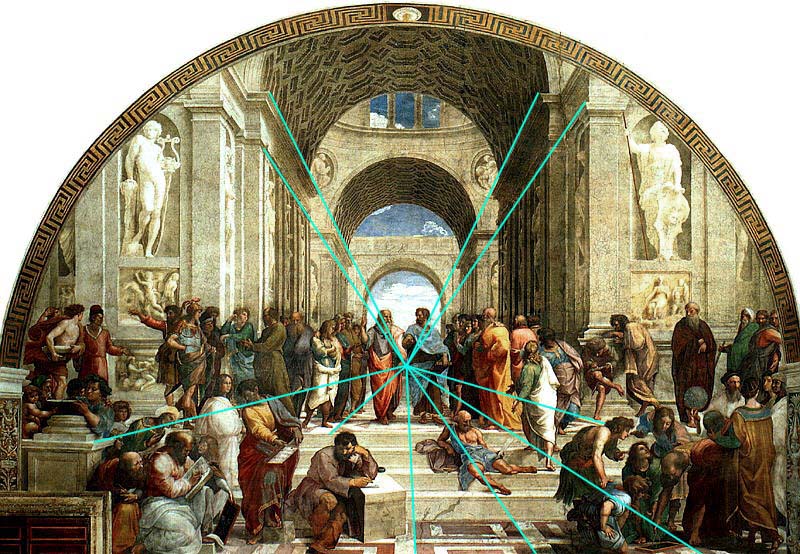
Renaissance artists often portrayed religious subjects, but they used a style copied from the Greeks and Romans. They also used perspective to show three dimensions on a flat surface. They also studied human form to make more realistic looking art.
Some text here about the topic of discussion.
Renaissance Art
18
Multiple Choice
19

Leonardo da Vinci was a painter, sculptor, inventor, and scientist. He was a interested in how things worked. Among his many masterpieces, Leonardo painted the Mona Lisa and the Last Supper.
Some text here about the topic of discussion.
Leonardo Da Vinci
20
Multiple Choice
By James Moran
Show answer
Auto Play
Slide 1 / 20
SLIDE
Similar Resources on Wayground

16 questions
SPACE RACE
Presentation
•
9th Grade
15 questions
Area of Regular Polygons
Presentation
•
9th - 10th Grade
15 questions
Unit 5B DNA Replication and Protein Synthesis Review
Presentation
•
9th - 10th Grade
14 questions
La libertad 1. Qué es la Ilustración
Presentation
•
KG
14 questions
Radicals
Presentation
•
9th - 10th Grade
16 questions
Adding and Subtracting Polynomials
Presentation
•
9th - 10th Grade
14 questions
Classifying Triangles
Presentation
•
10th Grade
17 questions
American History World War II
Presentation
•
10th Grade
Popular Resources on Wayground
10 questions
How much do you know about our Portrait of an Eagle?

Quiz
•
10th Grade
10 questions
Fast Food Slogans
Quiz
•
6th - 8th Grade
21 questions
Continents and Oceans
Quiz
•
6th Grade
20 questions
Parts of Speech
Quiz
•
5th Grade
16 questions
Subject & Predicate
Quiz
•
5th Grade
25 questions
Multiplication Facts
Quiz
•
5th Grade
12 questions
Map Skills
Quiz
•
3rd Grade
22 questions
Continents and Oceans
Quiz
•
5th Grade
Discover more resources for History
10 questions
Exploring the Journey of Early Humans

Interactive video
•
6th - 10th Grade
10 questions
Exploring Jamestown: John Smith and Pocahontas
Interactive video
•
6th - 10th Grade
20 questions
The Early Colonies
Quiz
•
7th - 11th Grade
10 questions
Recap on Mesopotamia: Key Concepts and Facts
Interactive video
•
6th - 10th Grade
16 questions
Government Unit 2
Quiz
•
7th - 11th Grade
10 questions
Exploring Types of Government
Interactive video
•
6th - 10th Grade
16 questions
Students of Civics Unit 2: The Constitution
Quiz
•
7th - 11th Grade
15 questions
Unit 4
Quiz
•
10th Grade