Search Header Logo
Evolution and Classification

Evolution and Classification

Assessment

Presentation

•

Science

•

12th Grade

•

Medium

Created by

Virginia Moulder

Used 2+ times

FREE Resource

9 Slides • 21 Questions

1

Evolution and Classification

By Virginia Moulder

2

Different structure, same function

Example: Butterfly wings and bird wings​

Analogous

Same structure, different function

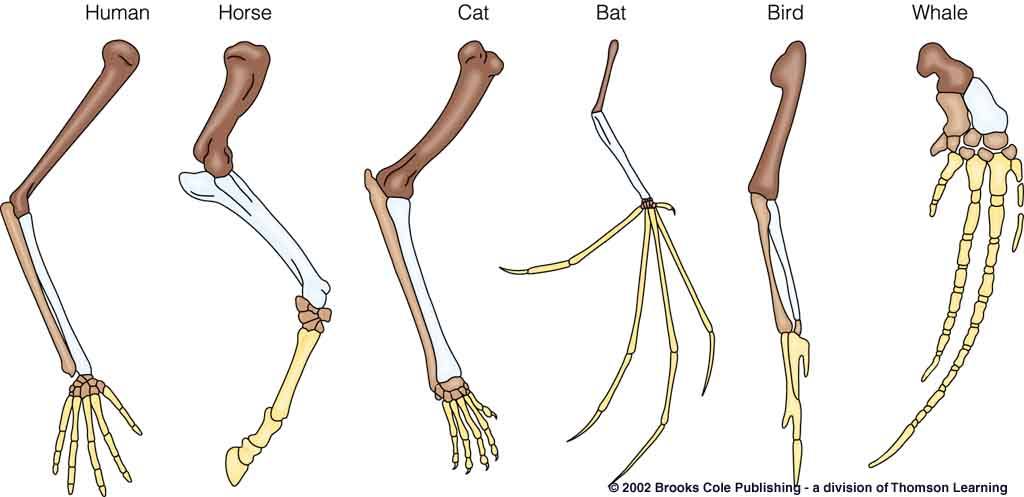
Example: Human arm and whale fin​

​Homologous

Evolution Anatomical Structures

3

Structures that no longer serve its purpose

Example: appendix, tonsils, widom teeth​

Vestigial

Evolution Anatomical Structures

4

Multiple Choice

Question image
The structures shown are_________
1
homologous
2
heterologous
3
analogous
4
vestigial

5

Multiple Choice

Humans, birds, whales, and lizards all have similar arm bones. What is the reason for this?
1
The function of these bones is the same in all animals
2
They live in similar environments
3
They have a common ancestor
4
All organisms resemble humans

6

Multiple Choice

Which of the following pieces of evolution evidence deals with comparing similar structures in various species?
1
fossil record
2
comparing embryology
3
comparing biochemistry
4
comparing anatomy

7

Classification

** Be familiar with 6 kingdoms of life chart

​Kingdoms and what are characteristics of the kingdoms:

Kingdom list:

ARCHEABACTERIA, EUBACTERIA, PROTISTA, FUNGI, PLANTAE,

ANIMALIA​

8

Multiple Choice

Structures are similar in appearance but not in structure
1
Vestigial 
2
Homologous 
3
Analogous Structures 
4
Embryonic 

9

Classification

Domain: Archea

  • Prokaryotic

  • Harsh environment

  • Anaerobic

  • First to evolve

  • Kingdom: Archeabacteria

10

Classification

Domain: Bacteria

  • Prokaryotes

  • Unicellular

  • Live everywhere

  • Kingdom: Eubacteria

11

Classification

Domain: Eukarya

  • Eukaryotes

  • Aquatic and terrestrial

  • Examples: people, fish, yeast, algae

  • Kingdoms: Protista, Fungi, Plantae, Animalia

12

Multiple Choice

What kingdom-Prokaryotic-lives in hot,salts environments

1

plants

2

animals

3

archaebacteria

4

eubacteria

13

Multiple Choice

What kingdom- prokaryotic-single celled-found on humans & other surfaces

1

eubacteria

2

archaebacteria

3

protists

4

fungi

14

Multiple Choice

Autotroph is when..
1
An organism makes it's own food
2
An organism has to eat other things

15

Speciation Isolation

​Replace with sub-header

Behavioral: actions that species do to their specific mating

Temporal: times of year that species mate

Geographical: location affects mating patterns​

16

Multiple Choice

A flash flood carried a raft of Amazon ants away from their original population. There is enough distance between the two groups, that they will never meet in nature again. What type of reproductive barrier is this?
1
behavioral isolation
2
temporal isolation 
3
gametic isolation
4
geographic isolation 

17

Multiple Choice

Some female peacocks prefer males with large, colorful tales while other female peacocks prefer males with no tail at all. Females are beginning to only mate with the type of males with the tail they prefer. What type of reproductive barrier is this?
1
behavioral isolation
2
hybrid sterility 
3
temporal isolation
4
mechanical isolation 

18

Multiple Choice

The flowers of pink tulips open in the morning, while the flowers of lavender tulips open in the early afternoon. The bees that pollinate these tulips cannot carry pollen back & forth between the two types of tulips because of their flowers being closed at different times of day. What type of reproductive barrier is this?
1
behavioral isolation
2
hybrid sterility 
3
temporal isolation
4
mechanical isolation 

19

Types of Selection

There are 3 types (remember the graphs):

Disruptive: 2 phenotypes are favored (not the average)

Directional: one of the extremes (high or low) phenotype is favored

Stabilizing​: the average phenotype is favored

20

Multiple Choice

Question image
What type of selection is depicted in the picture? 
1
stabilizing 
2
directional 
3
disruptive 
4
the answer is not here

21

Multiple Choice

Robins typically lay fours eggs. If more then four eggs are produced then the baby chicks are malnourished while smaller egg numbers result in no viable (able to live) baby chicks. This is an example of
1
stabalizing
2
disruptive
3
direction
4
none of the above

22

Multiple Choice

Question image
What type of selection?
1
Directional 
2
Stabilizing
3
Disruptive

23

Multiple Choice

If finches with large beaks and finches with small beaks increase in a population while finches with average sized beaks decreases, which pattern of natural selection has occurred?
1
Directional selection
2
Disruptive selection 
3
Stabilizing selection

24

Multiple Choice

Human babies don't do well if they are born too small. If they are too big complications can occur during birth. Baby size should then be selected for by which method?
1
stabilizing
2
directional
3
disruptive
4
Beyonce is having twins

25

Multiple Choice

Question image
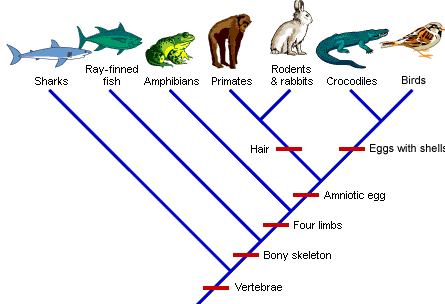
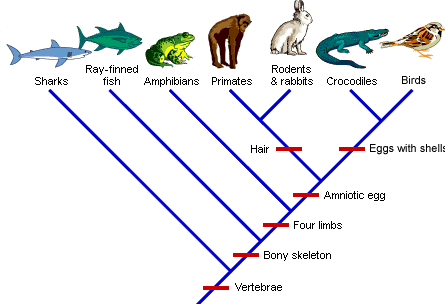
According to this cladogram, sharks are MOST closely related to which organism? 
1
Amphibians
2
Ray finned fish
3
Crocodiles
4
Birds

26

Multiple Choice

Question image
Which two orgainsms have hair? 
1
Sharks & Ray Finned Fish
2
Primates & Rodents
3
Birds & Crocodiles
4
Rabbits & Birds

27

Multiple Choice

Question image

Which species is most closely related to species C?

1

A

2

B

3

D

28

Multiple Choice

Question image
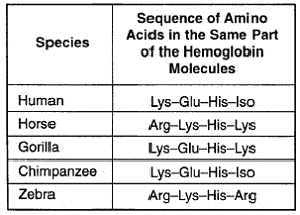
You look at two species and see very similar amino acid sequences. What does this likely tell you?
1
These are the same animal.
2
These animals have a common ancestor.
3
These animals are not likely related.
4
These animals are likely becoming one species.

29

Multiple Choice

Question image

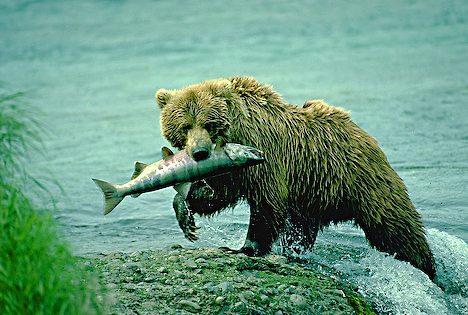
A grizzly bear survives because he is well-adapted to his environment. When he reproduces he passes on those traits to his offspring. this process is called

1

Natural Selection

2

Selective Breeding

3

Random mutations

4

Variations in a species

30

Multiple Choice

What word describes the process of having the advantageous traits that helps an organism survive  and reproduce?
1
natural selection
2
adaptation
3
mutation
4
genetic engineering
pattern-tertiary
Evolution and Classification

By Virginia Moulder

Show answer

Auto Play

Slide 1 / 30

SLIDE