

Human evolution pt 2

Presentation
•
Biology, Science
•
8th - 10th Grade
•
Medium
+5
Standards-aligned

Nikkole Wowaka
Used 31+ times
FREE Resource
38 Slides • 25 Questions
1
By Nikkole Wowaka
2
Multiple Choice
3

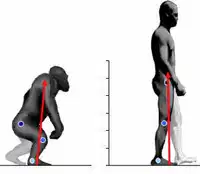
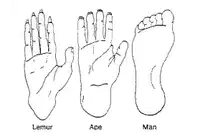
B. The Early Hominins
● Until recently, science thought that the climate changed
forests in to savannas; there is little evidence of a shift in
vegetation at 6 MYA.
● Additional advantages of bipedalism
○ reduction of heat stroke
○ carrying food back to females.
● While still living in trees, the first hominids may have walked
upright on two feet (bipedalism) to collect overhead fruit.
4
Multiple Choice
Homo Sapiens are a part of a tribe of primates called hominins. All hominins share the following characteristics EXCEPT:
reduced canine (teeth) size
increased brain size
bipedalism
making stone tools
5
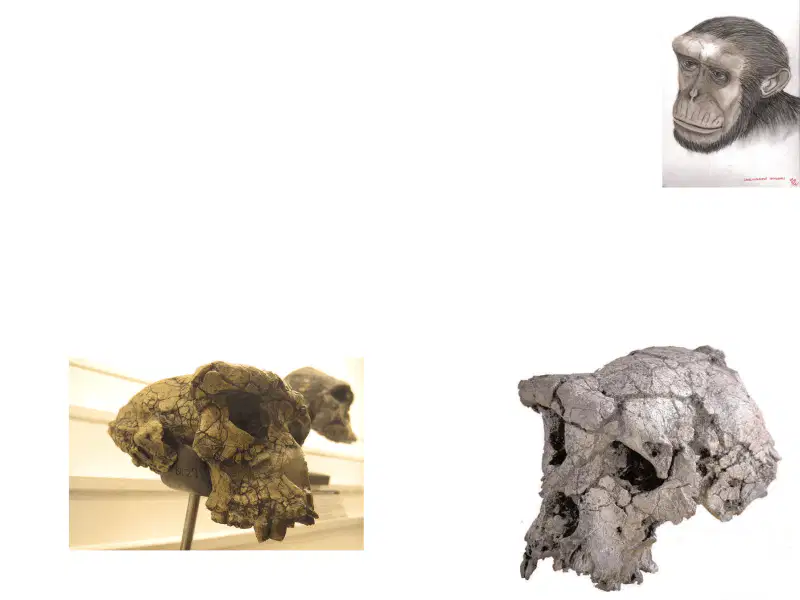
B. The Early Hominins
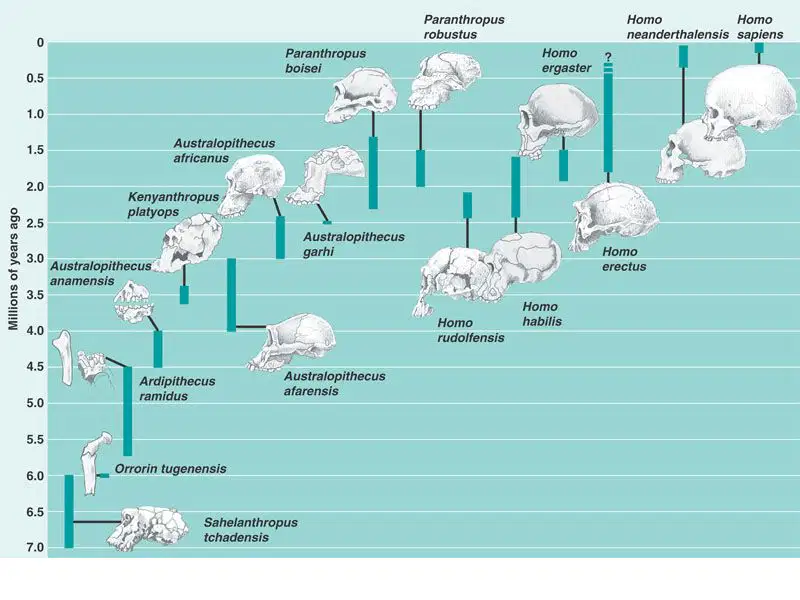
● Sahelanthropus tchadensis
○ current oldest fossil at 6-7 million years ago.
■ Reduced canine teeth
■ Flatter faces
■ More upright and bipedal than other hominoids
○ Fossils discovered in 2002
■ The braincase has been dated at 7 MYA.
6

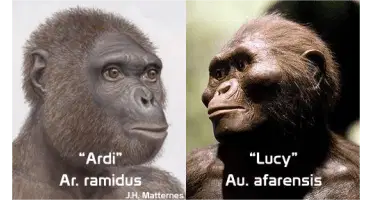
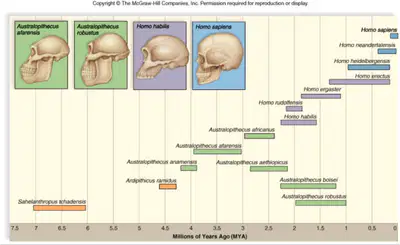
Skull fragments from
Ardipithecus ramidus
have been found; it was
likely bipedal.
7
Multiple Choice
If the bones of a number of hominids were found in one location, what can scientists conclude?
The hominid made tools.
The hominid died in wars.
The hominid had a language.
The hominid lived in groups.
8
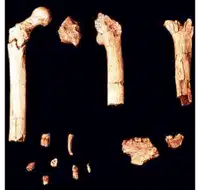
Orrorin tugenensis
Dates to 6.1-5.8 MYA
Discovered in 2000
Thought to be in evergreen
forest, not open grassland
Oldest bipedal fossils
Fossilized bones from 5
individuals
Only a few femurs and teeth
Teeth
Neck bones
Leg
bones
9

10
Multiple Choice
11
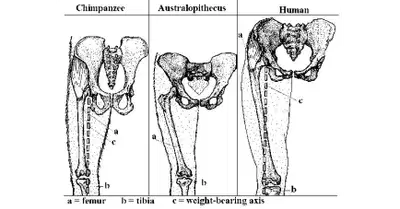
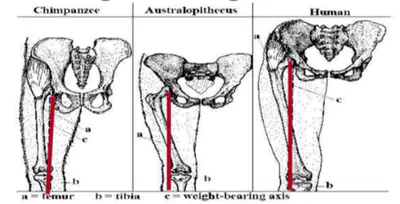
Australopithecus
First “humans”: Australopithecus, about 4.4 MYA.
● Walked fully upright with humanlike teeth and hands.
● Skull, capacity about 1/3 modern human size.
● lasted 3 MY.
● All fossils from Eastern and Southern Africa
Weight bearing on knees
•
Zihlman, Simmons 2000
12
Multiple Choice
13
14
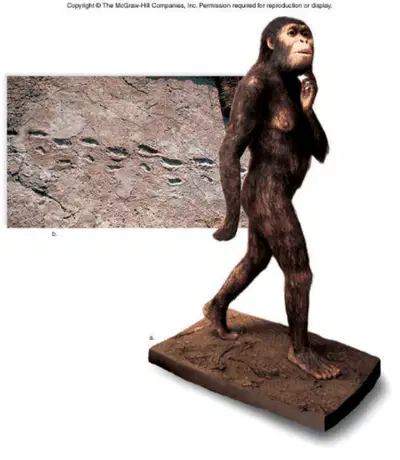
● Australopithecines evolved in
Africa: 4 MYA.
○
Expanding fossil records
show it is not an orderly
sequence between forms.
○
evolved and diversified in
Africa with slender and
robust forms with varied
diets;
■
they show adaptations
to different ways of life.
Evolution of Later Hominids (Hominin)
15

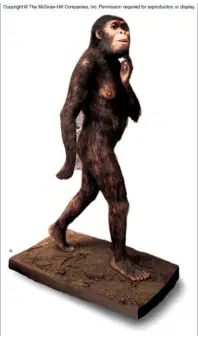
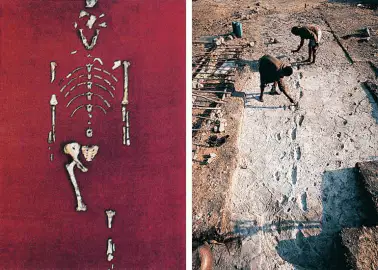
Australopithecines (genus
Australopithecus) evolved in Africa 4 MYA.
Australopithecus africanus, date about
2.8 MYA.
Australopithecus robustus was a robust
type; dated from 2 to 1.5 MYA.
Australopithecus afarensis is based on
many skeletal fragments (Lucy) dated at
3.2 MYA.
“Lucy” Australopithecus
afarensis
3.24 million years old
16
Multiple Choice
17
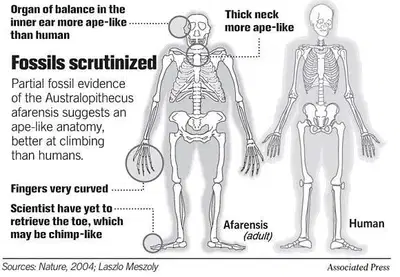
● Africanus had a larger brain and is the best candidate as ancestor to early Homo.
● Australopithecus afarensis is based on many skeletal fragments (Lucy) dated at 3.2 MYA.
Its brain was small at 400 cc.
This may have been ancestral to the robust types, A. aethiopicus and A. boisei, that later died out.
18
Multiple Choice
What is one way that "Lucy" and modern humans are similar?
They are both about the same height.
They can both speak a language and read symbols.
They both made tools that helped them hunt and gather food.
They are both biped, meaning they walk on two legs.
19
Multiple Choice
Homo is which level of classification?
species
family
order
genus
20

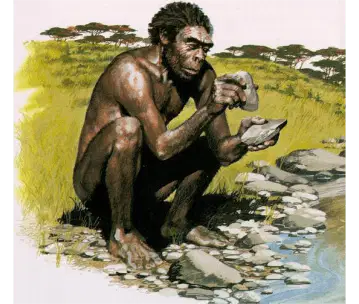
Evolution of Early Homo
1. Fossils are assigned to the genus Homo based on the following traits:
a. brain size 600 cc or greater;
b. jaw and teeth are human-like;
c. tool use seems evident.
21
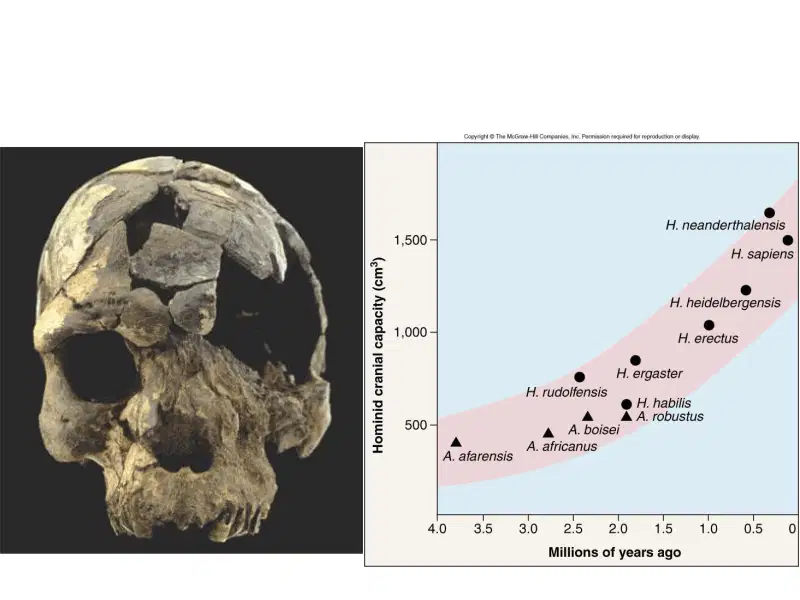
Oldest Homo sapiens fossil
22
Multiple Choice
What does a culture consist of?
members of the community
languages spoken and relious beliefs
customs and traditions
all of the above
23

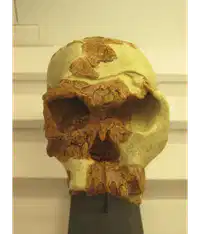
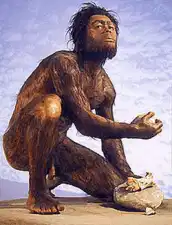
2. Homo habilis and Homo rudolfensis
The oldest fossils to be classified in the genus Homo are dated at around 2 mya.
H. habilis and H. rudolfensis had a brain size as large as 8oo cc
Cut marks on bones suggest the use of tools
Skulls indicate that this hominid may have
had speech
Culture is dependent on the ability to speak and transmit knowledge;
it is thought that the advantages of a culture to these hominids may have hastened the extinction of the
australopithecines.
24
Multiple Choice
25

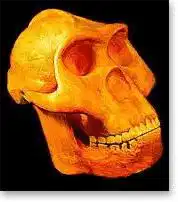
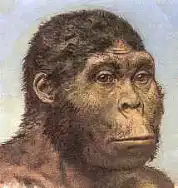
Homo habilis
• Homo habilis fossils from 2.5 to 1.6 MYA.
• After walking upright for 2 MY these hominids now
used their brains and fashioned simple stone tools.
• Co-existed with smaller-brained Australopithecus
for nearly 1 MY.
• Australopithecus africanus was a dead end, no new
lineages.
• Homo habilis lead to H. erectus, to H. sapiens.
26

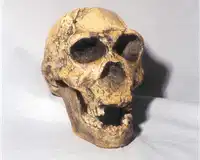
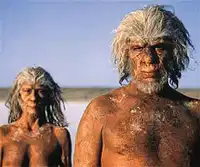
3. Homo ergaster and Homo erectus
● Eugene DuBois, a Dutch anatomist,
unearthed the first H. erectus bones
in Java (Indonesia) in 1891.
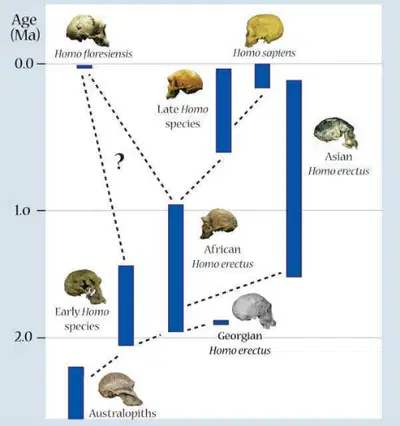
● Fossils found in Africa, Asia, and
Europe date between 1.9 and 0.3
million years ago.
● The African and Asian types may be
different species.
○ *H. ergaster and H. erectus are
very similar, the locations of the
fossils differ but they may be the
same species
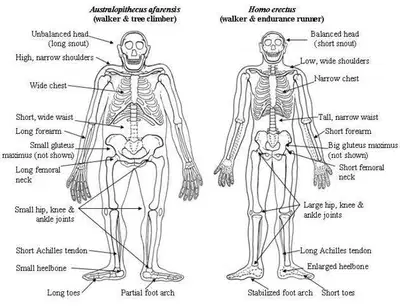
Homo ergaster was tall and muscular.
Slim hips and long legs enabled this
species to walk long distances. Their
skin was smooth to cool themselves
through sweating.
27
Multiple Choice
Distinct difference in size or appearance between the sexes of an animal.
Sexual Reproduction
Polymorphism
Sexual Dimorphism
Heterozygous
28

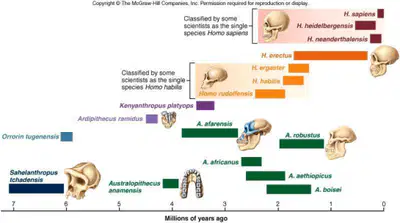
Homo ergaster
•
Less sexual dimorphism, more pair bonding
•
Larger brain
•
Slender legs, distance walking
•
Short straight fingers. No longer climbing trees
•
Smaller teeth, foods more prepared less hard chewing
•
More advanced tools
•
More habitats
•
1.9 - 1.6 MYA
29
Multiple Choice
30

Homo heidelbergensis
– Descended from H. ergaster in africa, spread out.
– Northern populations in Europe under
Ice Age conditions became The
Neanderthals 200,000 -40,000 years ago
in Europe
– Reaming population in Africa adapted to
drought conditions
● became homo sapiens, spread out
to rest of world.
31

32

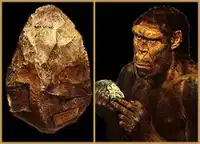
Homo erectus
• Homo erectus was the first to migrate out of
Africa, Evolving in Asia, and spreading to other
areas (Europe).
• 1.8 MYA - 300,000 YA.
• brain capacity of 1000 cc
• taller than H. habilis
• striding gait.
• gave rise to larger populations
– had to continually expand to find food
– hunt farther out.
33
Multiple Choice
34

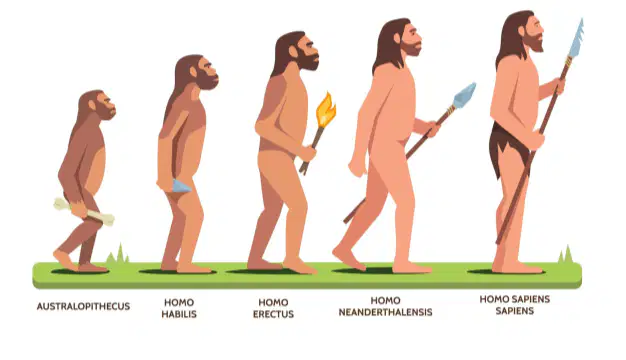
● These are the first hominids to use fire, fashion
more advanced tools, to be systematic game
hunters, and possibly to use home bases.
Homo erectus
35

36
Multiple Choice
Homo Erectus was the first hominid to use...
fire.
their hands.
fish hooks.
stone tools.
37

Hobbit Article at
ScienceDaily
38
Multiple Choice

Place these four skulls in the correct order, dating from the most primitive to the most advanced.
D, A, B, C
D B A C
A, C, B,D
39

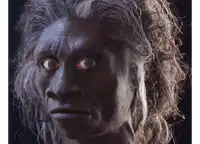
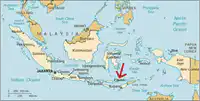
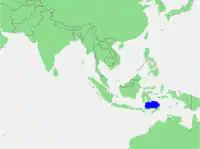
Homo floresiensis
● Fossil remains of Homo
floresiensis were discovered in
2004 on the island of Flores in the
South Pacific
● it was the size of a three-year-old
human being but with a braincase
only one-third the size.
● Researchers believe this species
evolved from normal sized H.
erectus, but underwent “island
dwarfing.”
40
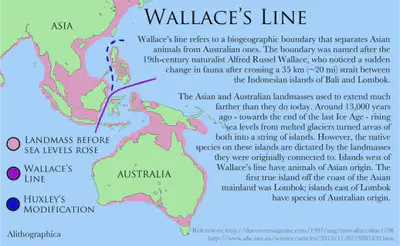
Flores has been described (in the journal Nature) as "a kind of Lost
World", where archaic animals, elsewhere long extinct, had
evolved into giant and dwarf forms through allopatric speciation,
due to its location East of the Wallace Line.
★ Allopatric Speciation: ancestral population evolve into
separate species due to a period of geographical separation
Wallace Line:
Biogeographic
boundary that
separates Asian
animals from
Australian ones.
41
Multiple Choice
What is allopatric speciation?
When a flood occurs and wipes out an entire population of species
When there is a geographic barrier and no species can evolve
When a population is separated by a geographic barrier and evolves differently
42


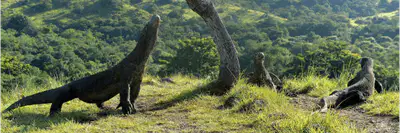
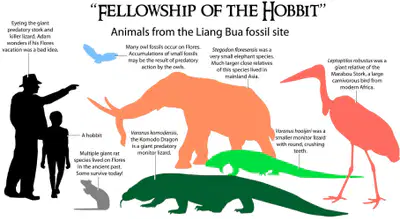
The island had dwarf elephants and giant monitor lizards akin to the
Komodo dragon, as well as H. floresiensis, which can be considered a
species of diminutive human.
FUN FACT: The discoverers have called
members of the diminutive species
"hobbits", after J.R.R. Tolkien's fictional
race of roughly the same height.
43
Multiple Choice
A new river forms and splits two populations, causing ______________ speciation
Sympatric
Allopatric
Extreme
Convergent
44
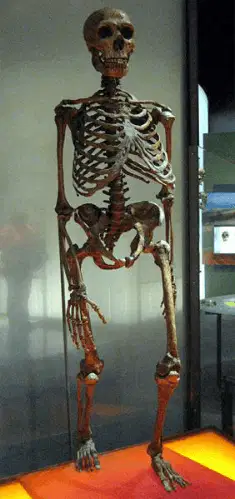
Homo neanderthalensis
• The Neanderthals
• 200,000 -40,000 years ago in
Europe
• Brain as large or larger than
present day humans
• Buried their dead
• Made hunting tools from stone
and wood
• Carnivorous
45
Multiple Choice
46
Multiple Choice

Study the skulls below and answer the questions that follow. Which one of these skulls does not belong to a hominin?
A
D
B
C
47


Comparison of 3 hominid species
48

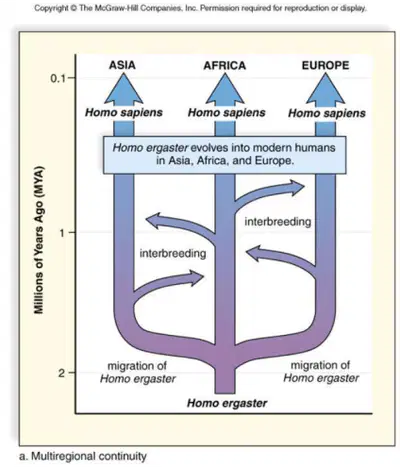
Evolution of Later Homo
Two contradicting hypotheses are
suggested about the origin of
modern humans
1. The multiregional continuity
hypothesis proposes that modern humans originated separately in Asia, Europe, and Africa.
a. Evolution of modern humans would be essentially similar in
several different places.
49

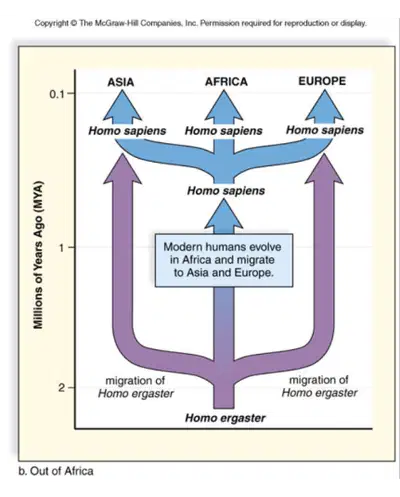
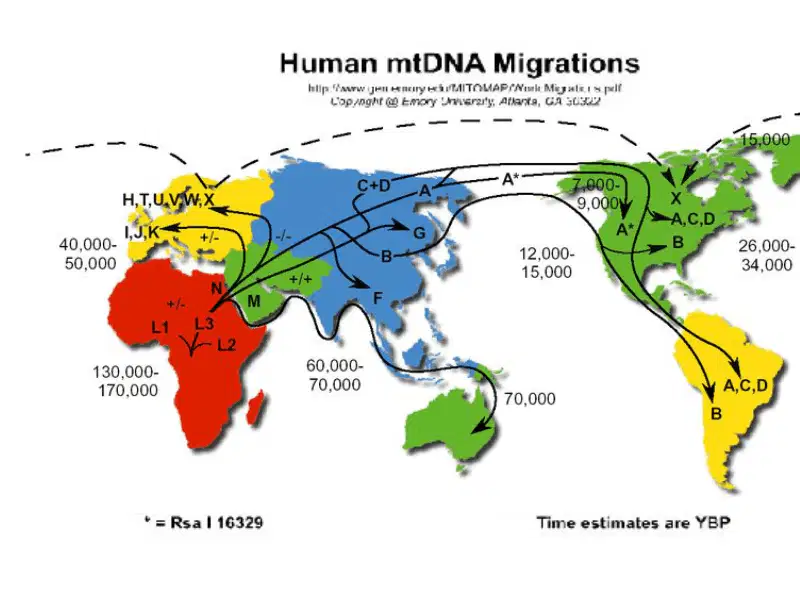
2. The out-of-Africa hypothesis states that modern humans originated only in Africa and after migrating into Europe and Asia, they replaced the archaic
Homo species found there;
current evidence leans toward
this hypothesis.
a. All extant humans are descended from a few individuals from about 100,000 years ago.
b. Mitochondrial DNA analyses
indicate a close genetic relationship among all Europeans;
although the first analysis
was flawed, the molecular data tend to support the out-of-Africa
hypothesis.
50
Multiple Choice
What continent did humans evolve from?
the Americas
Asia
Africa
many places all at once
51
52
Multiple Choice

During what time period do historians believe people crossed over the Bering Strait from Asia into North America?
The Middle Ages
The "Ice" Age
"Ancient Times"
The Age of "Mankind"
53

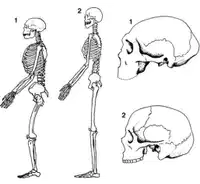
A. Neanderthals
1. Neanderthals were named for Neander Valley in Germany, where skeletons were dated as early as 200,000 years ago.
2. Neanderthals are classified as Homo neanderthalensis.
3. Classic Neanderthal anatomy includes:
massive brow ridges;
a nose, jaws, and teeth that protrude forward;
a low sloping forehead;
a lower jaw sloping back without a chin;
a longer pubic bone;
a slightly larger brain than that of modern humans;
shorter and thicker limb bones;
and heavier muscles in the shoulder and neck.
54

4. It is speculated that a larger brain than that of modern humans was required to control the extra musculature.
5. The sturdy build of Neanderthals was likely an adaptation to
cold climate; they lived in Eurasia during the last Ice Age.
Genetic research shows that most people outside of
Africa have about 2-3% Neanderthal DNA
modern humans
who spread into
Asia around 60,000
years ago interbred
with the Neanderthals.
55
Multiple Choice
Most people (Out side of Africa) have what percentage of Neanderthal DNA?
0%
10-20%
2-3%
45-50%
56

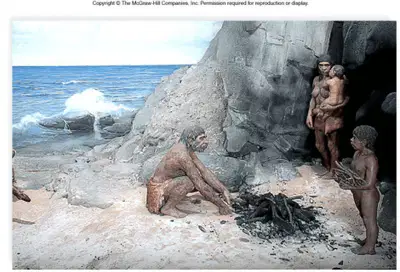
The Neanderthals give evidence of being culturally
advanced.
a. Most lived in caves, but those who lived in the
open may have built houses.
b. They manufactured a variety of stone tools,
including spear points, scrapers, and knives.
c. They used and could control fire, which probably
helped in cooking frozen meat and in keeping warm.
d. They buried their dead with flowers and tools and
may have had a religion.
57
Multiple Choice
Homo sapiens sapiens had the largest brain of any Homo species
True
False
58

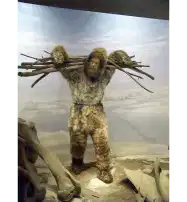
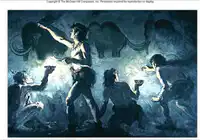
Cro-Magnons
1. Cro-Magnons are the oldest fossils to be designated H. sapiens; they
were found in Eurasia 100,000 years ago.
2. named for a fossil location in France and had a thoroughly modern
appearance.
3. They had advanced stone tools and may have been the first to throw
spears.
4. They hunted cooperatively, and perhaps were the first to have had a
language.
5. They may have been responsible for the extinction of large
mammals during the late Pleistocene.
6. Cro-Magnon culture included figurines carved out of bone and
antler, and cave paintings.
59

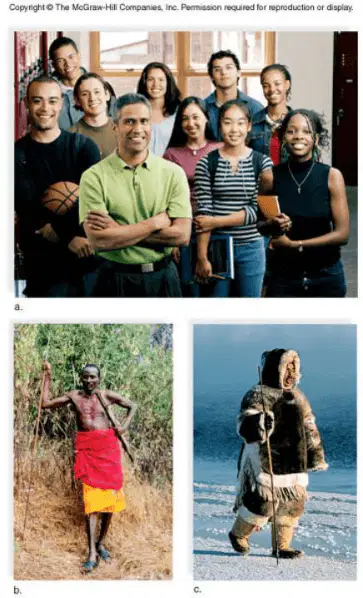
Human Variation
● Some human variation evolved as
adaptation to local environmental
conditions:
○darker skin to protect from UV light,
○lighter skin for vitamin D production, etc.
○colder regions = a bulkier body
○hot climates = a slight build and
longer limbs.
● Hair texture, eyelid fold, and other traits
are not explained as adaptations.
● Variation among modern populations is
considerably less than among archaic
human populations of 250,000 years
ago.
● Comparative studies of mDNA indicate
that human populations had a common
ancestor no more than a million years
ago.
60
Multiple Choice

Early humans evolved dark skin because..
melanin protects the body from harmful UV rays
dark skin helps humans to camouflage
dark skin can be used to scary away predators
melanin helps to absorb more UV rays
61

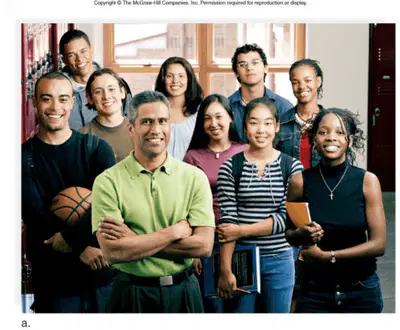
Figure 32.13a
Differences not necessarily adaptations
Possibly explained by genetic drift
Genetic Drift: the
change in
frequency of an
existing gene
variant in the
population due to
random chance.
62
Multiple Choice
A change in a gene pool due to chance.
Genetic drift
gene pool
Natural Selection
Hardy Weinberg event
63

● The multiregional hypothesis suggests that different
human populations came into existence as long as a
million years ago, giving time for ethnic differences to
accumulate despite gene flow.
● The out-of-Africa hypothesis suggests that modern
humans have a relatively recent common ancestor who
evolved in Africa then spread to other regions.
By Nikkole Wowaka
Show answer
Auto Play
Slide 1 / 63
SLIDE
Similar Resources on Wayground

56 questions
Photosynthesis PPT
Presentation
•
9th Grade
60 questions
Listening Sample CEFR SPM F4 2021
Presentation
•
9th Grade
61 questions
Physical Science Semester II Exam Review
Presentation
•
8th - 11th Grade
60 questions
Willowridge Genetic Mutations
Presentation
•
8th - 10th Grade
58 questions
Digestive System
Presentation
•
9th - 11th Grade
55 questions
8.5BC Reteach
Presentation
•
8th - 10th Grade
60 questions
Movement into and out of Cells
Presentation
•
8th - 10th Grade
55 questions
Ecology 2 2022 - Symbiosis, Ecosystems, Cycles
Presentation
•
9th - 10th Grade
Popular Resources on Wayground
10 questions
Safety Day 2026 – Student Review

Quiz
•
9th Grade
21 questions
Continents and Oceans
Quiz
•
6th Grade
20 questions
Parts of Speech
Quiz
•
5th Grade
16 questions
Subject & Predicate
Quiz
•
5th Grade
25 questions
Multiplication Facts
Quiz
•
5th Grade
12 questions
Map Skills
Quiz
•
3rd Grade
22 questions
Continents and Oceans
Quiz
•
5th Grade
15 questions
Rounding Decimals
Quiz
•
5th Grade
Discover more resources for Biology
20 questions
Cell organelles and functions
Quiz
•
10th Grade
20 questions
Cell Transport
Quiz
•
9th - 12th Grade
25 questions
photosynthesis and cellular respiration
Quiz
•
9th Grade
20 questions
Cell Cycle
Quiz
•
9th Grade
8 questions
DNA vs. RNA
Presentation
•
9th - 12th Grade
14 questions
Ecological Succession: Primary and Secondary
Quiz
•
9th Grade
20 questions
Macromolecules
Quiz
•
10th Grade
20 questions
Characteristics of Life
Quiz
•
9th - 10th Grade