

Cognitive Psychology Chapter 2 Reviewer

Presentation
•
Other
•
Professional Development
•
Hard

Macon D
FREE Resource
13 Slides • 101 Questions
1
By Macon D
2

Brains - a central processing unit for
everything we do.
- the organ in our bodies that most
directly controls our thoughts,
emotions, and motivations
Cognitive neuroscience is the field of study linking the brain and other aspects of the nervous system to cognitive processing and, ultimately, to behavior.
Localization of function refers to the specific areas of the brain that control specific skills or behaviors.
Chapter 2
3
Nervous system is the basis for our ability to perceive, adapt to, and interact with the world around us.
It is the system we receive, process, and then respond to information from the environment
Cerebral cortex, which controls many of our thought processes.
Some text Chapter 2 about the topic of discussion
4
Development of Human Brain
Initially, the forebrain is generally the farthest forward, toward what becomes the face. The midbrain is next in line. And the hindbrain is generally farthest from the forebrain, near the back of the neck. In development, the relative orientations change so that the forebrain is almost a cap on top of the midbrain and hindbrain. Nonetheless, the terms are still used to designate the fully developed brain areas.
Show the changing locations and relationships of the forebrain, the midbrain, and the hindbrain throughout the development of the brain. You can see how they develop, from an embryo a few weeks after conception to a fetus of seven months of age.
Subject | Subject
Chapter 2

5
Forebrain
The forebrain is the region of the brain located toward the top and front of the brain. It comprises the cerebral cortex, the basal ganglia, the limbic system, the thalamus, and the hypothalamus. The cerebral cortex is the outer layer of the cerebral hemispheres. It plays a vital role in our thinking and other mental processes.
Chapter 2

6
Basal Ganglia
It is the collection of neurons crucial to motor function. Dysfunction of the basal ganglia can result in motor deficits. These deficits include tremors, involuntary movements, posture and muscle tone changes, and slowness of movement. Deficits are observed in Parkinson’s disease and Huntington’s disease. Both these diseases entail severe motor symptoms
Cognitive Psychology
Chapter 2

7
Lymbic System
is important to emotion, motivation, memory, and learning. Animals such as fish and reptiles, which have relatively undeveloped limbic systems, respond to the environment almost exclusively by instinct. Mammals and especially humans have relatively more developed limbic systems. Our limbic system allows us to suppress instinctive responses (e.g., the impulse to strike someone who accidentally causes us pain). Our limbic systems help us to adapt our behaviors flexibly in response to our changing environment. The limbic system comprises three central interconnected cerebral structures: the septum, the amygdala, and the hippocampus.
Cognitive Psychology
Chapter 2

8
Lymbic System
is important to emotion, motivation, memory, and learning. Animals such as fish and reptiles, which have relatively undeveloped limbic systems, respond to the environment almost exclusively by instinct. Mammals and especially humans have relatively more developed limbic systems. Our limbic system allows us to suppress instinctive responses (e.g., the impulse to strike someone who accidentally causes us pain). Our limbic systems help us to adapt our behaviors flexibly in response to our changing environment. The limbic system comprises three central interconnected cerebral structures: the septum, the amygdala, and the hippocampus.
Cognitive Psychology
Chapter 2
9
Korsakoff’s syndrome
It a disease that produces loss of memory function Other symptoms include apathy, paralysis of muscles controlling the eye, and tremor. This loss is believed to be associated with deterioration of the hippocampus and is caused by a lack of thiamine (Vitamin B-1) in the brain. The syndrome can result from excessive alcohol use, dietary deficiencies, or eating disorders.
Cognitive Psychology
Chapter 2
10
The forebrain, midbrain, and hindbrain contain structures that perform essential functions for survival as well as for high-level thinking and feeling.
Cognitive Psychology
Chapter 2

11
The Midbrain
Cognitive Psychology
Chapter 2
Superior colliculi (on top): Involved in vision (especially visual reflexes)
Inferior colliculi (below): Involved in hearing
Reticular activating system (also extends into the hindbrain): Important in controlling consciousness (sleep arousal), attention, cardiorespira- tory function, and movement
Gray matter, red nucleus, substantia nigra, ventral region: Important in controlling movement
12
The Hindbrain
Cognitive Psychology
Chapter 2
Cerebellum: Essential to balance, coordination, and muscle tone
Pons: Involved in consciousness (sleep and arousal); bridges neural transmissions from one part of the brain to another; involved with facial nerves
Medulla oblongata: Serves as juncture at which nerves cross from one side of the body to opposite side of the brain; involved in cardiorespiratory function, digestion, and swallowing
13
Receptors and Drugs
Cognitive Psychology
Chapter 2
Receptors in the brain that generally are occupied by the common neurotransmitters can be hijacked by psychopharmacologically active drugs, legal or illegal. In such cases, the molecules of the drugs enter into receptors that generally would be for neurotransmitter substances endogenous in (originating in) the body.
When people stop using the drugs, withdrawal symptoms arise. Once a user has formed narcotic dependence, the form of treatment differs for acute toxicity (the damage done from a particular overdose) versus chronic toxicity (the damage done by long-term drug addiction). Acute toxicity is often treated with naloxone or related drugs. Naloxone (as well as a related drug, naltrexone) occupies opiate receptors in the brain better than the opiates themselves occupy those sites; thus, it blocks all effects of narcotics. Naloxone has such a strong affinity for the endorphin receptors in the brain that it actually displaces molecules of drugs already in these receptors and then moves into the receptors. Naloxone is not addictive, however. Even though it binds to receptors, it does not activate them. Although naloxone can be a life-saving drug for someone overdosed on opiates, its effects are short-lived. Thus, it is a poor long-term treatment for drug addiction.
In narcotic detoxification, methadone often is substituted for the narcotic (typically, heroin). Methadone binds to endorphin receptor sites similar to naloxone and reduces the heroin cravings and withdrawal symptoms of addicted persons. After the substitution, gradually decreasing dosages are administered to the patient until they are drug-free. Unfortunately, the usefulness of methadone is limited by the fact that it is addictive.
14
Multiple Choice
15
Open Ended
What imaging does this describe?
"electric stimulation of one part of the brain causes specific sensations in the body"
16
Open Ended
What imaging does this describe?
"combines PET and MRI, real time log of brain activity"
17
Multiple Choice
What is the purpose of the corpus callosum?
Send information from one hemisphere of the brain to the other hemisphere.
Production of language.
Allows you to see.
Processes your glands.
18
Multiple Choice
What does Broca's area do?
Processing language understanding.
Allows production of speech.
Makes associations between a place and name.
Makes associations between a name and a face.
19
Multiple Choice
Paul Broca studied a case study named "Tan." Tan was interesting because
his personality changed due to a stroke.
damage to his brain limited him to only say Tan
Due to a stroke, Tan had a difficult time in forming new long term memories.
Tan had a stroke and damaged an area of the brain that produced melatonin and Tan could not go to sleep.
20
Multiple Choice
This theory states that some behavior has specific place in the brain.
Loci of Focus
Localization of Function
Loci of Corti
Locus Pocus
21
Multiple Choice
22
Multiple Choice
This structure of neurons connects the two hemispheres.
Thalamus
Hippocampus
Corpus Callosum
Limbic System
23
Multiple Choice
24
Multiple Choice
Paul Broca discovered Broca's area in the brain. What is this part of the brain responsible for?
Speech comprehension
Speech articulation
Speech comprehension and speech articulation
Planning
25
Multiple Choice
26
Multiple Choice
27
Multiple Choice
28
Multiple Choice
How many sections is the cortex divided into?
3
5
2
4
6
29
Multiple Choice
30
Multiple Choice
31
Multiple Choice
32
Multiple Choice
Which lobe(s) is (are) involved in processing auditory information?
Temporal lobe
Occipital lobe
Frontal lobe
Parietal lobe
33
Multiple Choice
34
Multiple Choice
35
Multiple Choice
36
Multiple Choice
37
Multiple Choice
38
Multiple Choice
39
Multiple Choice
40
Multiple Choice
41
Multiple Choice
42
Multiple Choice
43
Multiple Choice
44
Multiple Choice
45
Multiple Choice

46
Multiple Choice
47
Multiple Choice
What are the 4 lobes?
cerebral cortex, limbic system, fusiform gyrus, Wernik's area
frontal, temporal, occipital, pareital
hippocampal lobe, amygdala lobe, prefrontal lobe, corpus callosum lobe
occipital lobe
48
Multiple Choice

49
Multiple Choice
50
Multiple Choice
51
Multiple Choice
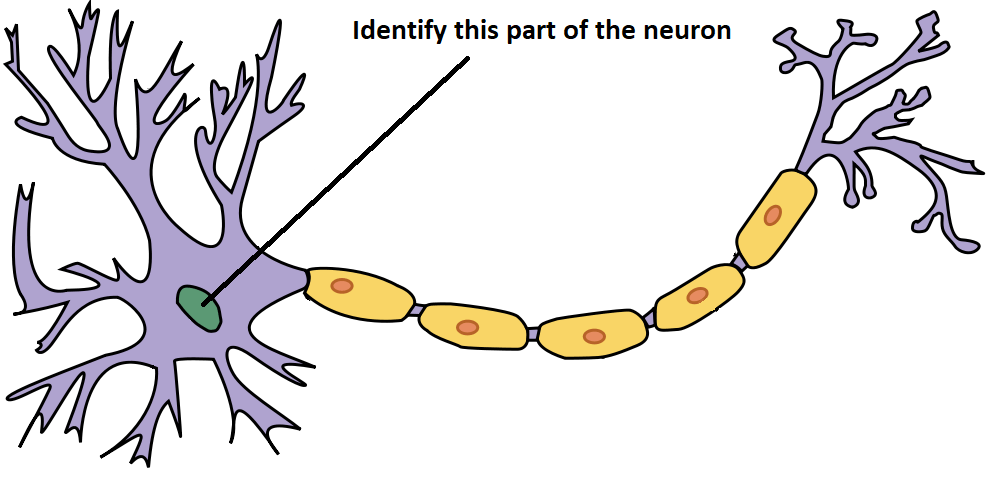
Nucleus
Cell Body
Axon
Node of Ranvier
52
Multiple Choice
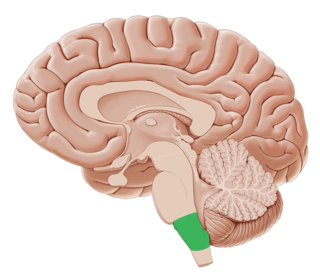
53
Multiple Choice
What does Electroencephalography do?
Track anatomical structure
Examines neurons to track electrical signals in the brain
Detect lesions early
Make images of the brain
54
Multiple Choice
These use radioactive sugar injected into the bloodstream to tract the activity of brain cells, which is enhanced and color-coded by a computer.
PET
MRI
fMRI
EEG
55
Multiple Choice
This technology is the LEAST helpful to look at the brain's tissues.
EEG
PET
fMRI
MRI
56
Multiple Choice
Which of the following scans does not use a harmful form of radiation that could mutate cells?
Xrays
PET
CT
MRI
57
Multiple Choice

This image was produced by
EEG
MRI
fMRI
PET
58
Multiple Choice
Which of the following images is a PET scan?
59
Multiple Choice

This is a direct measure of brain function, has a very high temporal resolution, has excellent spatial resolution; sources can be localized with millimeter precision.
fMRI
EEG
MEG
PET
60
Multiple Choice
This is a technique for measuring and mapping brain activity that is noninvasive and safe.
EEG
X-Ray
fMRI
CAT scan
61
Multiple Choice
Which of these is a degenerative brain disease?
Parkinson's
Prosopagnosia
Synesthesia
Epilepsy
62
Multiple Choice
What is the brain disorder that causes face blindness?
Synesthesia
Alzheimer's
Parkinson's
Prosopagnosia
63
Multiple Choice
Which lobe of the brain did Phineas Gage damage?
Temporal
Occipital
Frontal
Parietal
64
Multiple Choice
65
Multiple Choice
66
Multiple Choice
67
Multiple Choice
68
Multiple Choice
What direction foes the electrical signal travel through the neuron?
From dendrites, down the Axon, and out Axon terminalsThis is a correct answer
From Axon terminals, down the Axon, & out of the dendrites
Any direction up or down the cell
From the Axon, to the Dendrites, and out the Axon terminals
69
Multiple Choice

70
Multiple Choice
What does the neuron's Axon do?
Controls the actions of the neuron
Produces food for the neuron
Carries information from the cell body to other neuronsThis is a wrong answer
Controls speed of electrical signal through the axon
71
Multiple Choice
What does the neuron's Myelin Sheath do?
Controls the actions of the neuron
Produces food for the neuron
Carries information from the cell body to other neuronsThis is a wrong answer
Surrounds and insulates the axon
72
Multiple Choice
What do Dendrites do?
Intakes information from other neurons
Produces fatty tissue for the Myelin Sheath
Sends information to the next cell
Controls the speed of electrical signal through the axon
73
Multiple Choice
What do Nodes of Ranvier do?
Intakes information from other neurons
Produces fatty tissue for the Myelin Sheath
Sends information to the next cell
Controls the speed of electrical signal through the axon
74
Multiple Choice
What do Schwann Cells do?
Intakes information from other neurons
Produces fatty tissue for the Myelin Sheath
Sends information to the next cell
Controls the speed of electrical signal through the axon
75
Multiple Choice
What do Axon Terminals do?
Intakes information from other neurons
Produces fatty tissue for the Myelin Sheath
Sends information to the next cell
Controls the speed of electrical signal through the axon
76
Multiple Choice
What are the Neurons?
Units that constitute the nervous system.
Units that constitute the brain tissue.
Blocks of tissue that constitute the endocrine system.
Blocks or tissues that constitute the organs of the body system.
77
Multiple Choice

What is the name of the part of the neuron that is pointed out in the image?
Cell Body (Soma)
Axon
Myelin Sheats
Dendrites
78
Multiple Choice

What is the name of the part of the neuron that is pointed out in the image?
Myelin Sheats
Axon
Dendrites
Cell Body (Soma)
79
Multiple Choice

What is the name of the part of the neuron that is pointed out in the image?
Myelin Sheats
Cell Body (Soma)
Dendrites
Axon
80
Multiple Choice
The neuron's life support that contains the nucleus is:
Soma
Dendrites
Myelin Sheaths
Axon
81
Multiple Choice
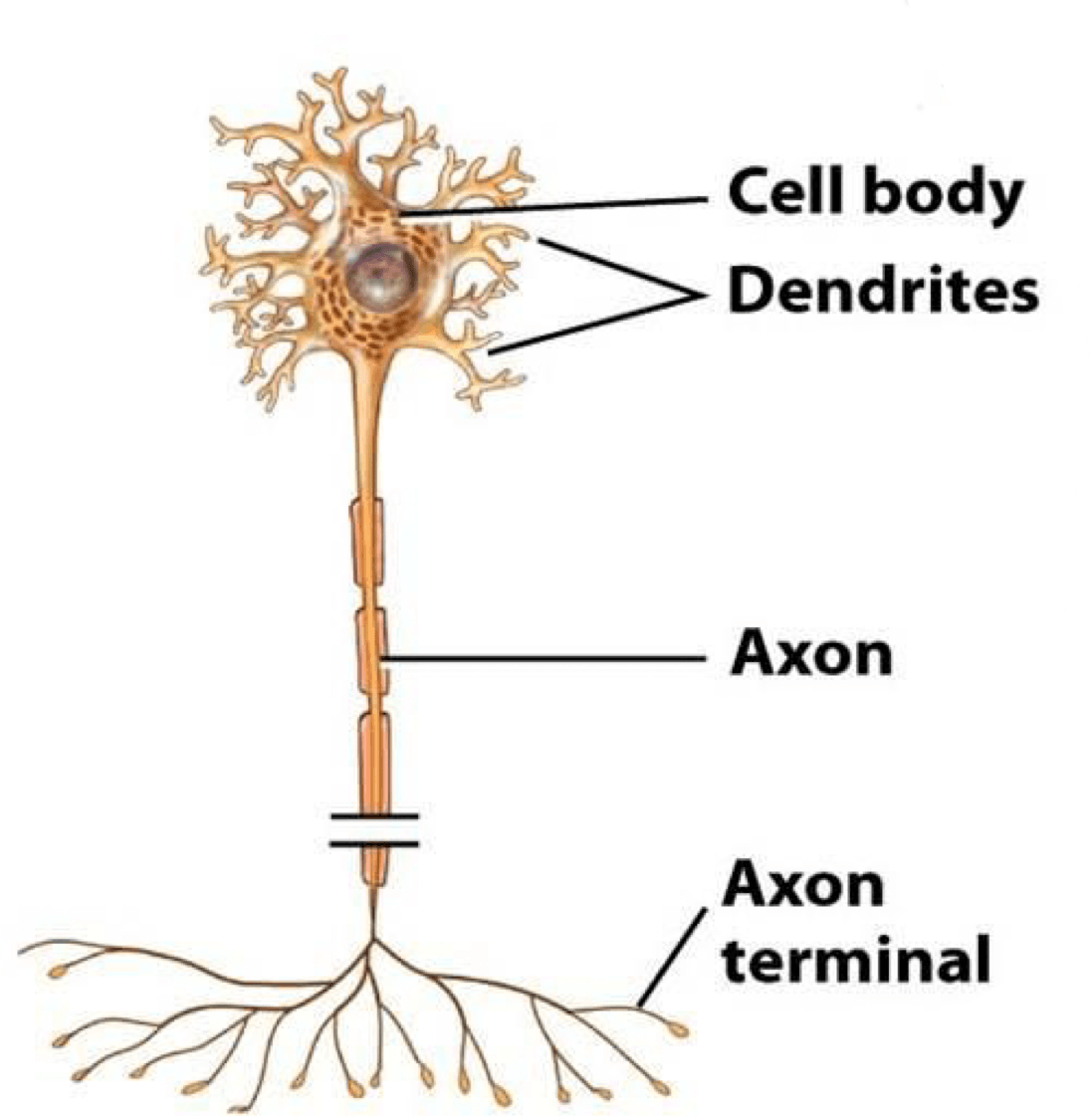
What type of neuron is represented on the image?
Motor Neuron
Interneuron
Sensory Neuron
82
Multiple Choice
83
Multiple Choice
84
Multiple Choice
What is not a function of pons?
Facial expressions
Blood pressure
Both
85
Multiple Choice
What is the function of Cerebellum?
control respiration
store memory
both (a) and (b)
only (b)
86
Multiple Choice
Which one is the lowest part of the brain?
Pons
Cerebellum
Medulla oblongata
All of these
87
Multiple Choice
What is the main function of cerebellum?
Eye movement
Coordination of muscular movements
Bladder control
88
Fill in the Blanks
Medulla oblongata is known as
Type answer...
89
Fill in the Blanks
A necleus of pons receives auditory signals relayed by our
Type answer...
90
Multiple Choice
State True or False:
In Cerebellum the Hindbrain can be easily recognized by its wrinkled surface.
True
Flase
91
Multiple Choice
Cerebellum maintains _____________ and ______________ of the body.
sleep mechanism and sleep characterized by dreaming
Equilibrium and Controls posture
None of these
92
Multiple Choice
Pons contain neural centers, which regulate basic life supporting activities.
True
False
93
Fill in the Blanks
Essential to balance, coordination, and muscle tone
Type answer...
94
Fill in the Blanks
The part of the mibrain that are important in controlling movement
Type answer...
95
Fill in the Blanks
The part of the mibrain that Involved in hearing
Type answer...
96
Fill in the Blanks
The part of the mibrain that important in controlling consciousness (sleep arousal), attention, cardiorespiratory function, and movement
Type answer...
97
Fill in the Blanks
The part of the mibrain that involved in vision (especially visual reflexes)
Type answer...
98
Multiple Choice
Which is NOT one of the 3 major parts of the Brain?
Forebrain
Midbrain
Pons
Hindbrain
99
Multiple Choice
What is NOT in the limbic system?
Hippocampus
Thalamus
hypothalamus
temporal lobe
100
Fill in the Blanks
regulates behavior related to species survival: fighting, feed- ing, fleeing, and mating.
Type answer...
101
Fill in the Blanks
It relays incoming sensory information through groups of neurons that project to the appropriate region in the cortex
Type answer...
102
Fill in the Blanks
How human brain developed?
Type answer...
103
Fill in the Blanks
disease that produces loss of memory function Other symptoms include apathy, paralysis of muscles controlling the eye, and tremor. This loss is believed to be associated with deterioration of the hippocampus and is caused by a lack of thiamine (Vitamin B-1) in the brain. The syndrome can result from excessive alcohol use, dietary deficiencies, or eating disorders.
Type answer...
104
Fill in the Blanks
The forebrain is the region of the brain located toward the top and front of the brain. It comprises the
Type answer...
105
Fill in the Blanks
How human brain developed?
Type answer...
106
Fill in the Blanks
- a central processing unit for everything we do.
- the organ in our bodies that most directly controls our thoughts,
Type answer...
107
Fill in the Blanks
It is the basis for our ability to perceive, adapt to, and interact with the world around us.
It is the system we receive, process, and then respond to information from the environment
Type answer...
108
Fill in the Blanks
It refers to the specific areas of the brain that control specific skills or behaviors.
Type answer...
109
Fill in the Blanks
It is the field of study linking the brain and other aspects of the nervous system to cognitive processing and, ultimately, to behavior.
Type answer...
110
Multiple Choice
It is involved in anger and fear.
septum
amygdala
Hypocampus
Thalamus
111
Multiple Choice
plays an important role in emotion as well, especially in anger and aggression
septum
amygdala
Hypocampus
Thalamus
112
Fill in the Blanks
Damage to (lesions in) or removal of the amygdala can result in
Type answer...
113
Multiple Choice
plays an essential role in memory formation
septum
amygdala
Hypocampus
Thalamus
114
Fill in the Blanks
Dysfunction of the basal ganglia can result in
Type answer...
By Macon D
Show answer
Auto Play
Slide 1 / 114
SLIDE
Similar Resources on Wayground

104 questions
Apartheid
Presentation
•
KG - University
104 questions
Network + Module 1
Presentation
•
University
103 questions
Asian Culture
Presentation
•
KG - University
109 questions
unidad 8 lesson1 and 2 2021-1
Presentation
•
University
112 questions
unit 6 level 2 2024
Presentation
•
University
108 questions
NE Chat Training
Presentation
•
KG
109 questions
67 67
Presentation
•
KG
114 questions
Module 2 Project Identification
Presentation
•
Professional Development
Popular Resources on Wayground
10 questions
Safety Day 2026 – Student Review

Quiz
•
9th Grade
21 questions
Continents and Oceans
Quiz
•
6th Grade
20 questions
Parts of Speech
Quiz
•
5th Grade
16 questions
Subject & Predicate
Quiz
•
5th Grade
25 questions
Multiplication Facts
Quiz
•
5th Grade
12 questions
Map Skills
Quiz
•
3rd Grade
22 questions
Continents and Oceans
Quiz
•
5th Grade
15 questions
Rounding Decimals
Quiz
•
5th Grade