Search Header Logo
Astronomy Lessons Review

Astronomy Lessons Review

Assessment

Presentation

•

Science

•

9th Grade

•

Medium

•
NGSS
MS-ESS1-1, MS-PS2-4, MS-ESS2-4

+1

Standards-aligned

Created by

Kurt RolesvilleHS

Used 40+ times

FREE Resource

0 Slides • 27 Questions

1

Multiple Choice

Question image

At what angle is the earth tilted?

1

22.3 degrees

2

32.5 degrees

3

23.5 degrees

4

 25.3 degrees

2

Multiple Choice

Question image

What causes tides?

1

gravity of the Moon

2

Solar Wind

3

gravity of the Sun

4

gravity of the Moon and Sun

3

Multiple Choice

Question image
A[n] ___________ tide occurs when the sun, Earth, and the moon are nearly in a line. 
1
spring
2
high
3
low
4
neap

4

Multiple Choice

Question image
A[n] ______________ tide occurs when the sun is at right angles to the line between Earth and the moon. 
1
high
2
neap
3
low
4
spring

5

Multiple Choice

Question image
Which body has the greater effect on Earth's tides?
1
Sun
2
Saturn
3
Moon 
4
Venus

6

Multiple Choice

Question image
If tides alternate from high to low and there are two of each type of tide a day, about how many hours will generally be between each different tide?
1
2 hours
2
6 hours
3
12 hours
4
24 hours

7

Multiple Choice

Question image

The diagram below shows the alignment of the sun, the moon, and Earth. In which locations are neap tides taking place?

1

1 and 2

2

1 and 3

3

2 and 4

4

3 and 4

8

Multiple Choice

Question image
As the moon's shape appears to get smaller, we say that the moon is _.
1
swelling
2
waxing
3
waning
4
disappearing

9

Multiple Choice

Phases of the moon in which the moon appears to be getting larger are referred to as _.
1
waxing
2
waning
3
new
4
eclipse

10

Multiple Choice

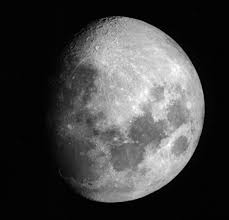
Question image
Name the moon phase
1
waning crescent
2
waxing crescent
3
waning gibbous
4
waxing gibbous

11

Multiple Choice

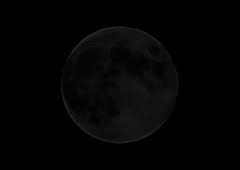
Question image
Name the moon phase
1
First Quarter
2
Last Quarter
3
New Moon
4
Full Moon

12

Multiple Choice

Question image

Which of the following causes the Earth’s four seasons?

1

The amount of energy released by the sun. 

2

Earth's axial tilt rotation relative to earth's revolution around the sun.

3

Earth's orbit around the sun.

4

Earth's 24-hour rotation

13

Multiple Choice

Question image

Why does the northern hemisphere experience the coldest temperature during winter?

1

Because it points away from the sun and the days are shorter.

2

Because it is pointing towards the sun.

3

Because it is facing towards the sun and the days are longer.

4

Because it is tilting towards the equator.

14

Multiple Choice

Question image

If the Southern Hemisphere experiences summer, what will be the season in the Northern Hemisphere?

1

Autumn

2

Fall

3

Spring

4

Winter

15

Multiple Choice

Question image

 It is an imaginary straight line that runs through the North and South Pole.

1

Equator

2

Latitude

3

Orbit

4

Axis

16

Multiple Select

Question image

What causes seasons?

1

How close or far away Earth is from the sun.

2

The tilt of Earth's axis.

3

Earth's revolution around the sun.

17

Multiple Choice

Question image

Which of the following is caused by the moon?

1

seasons

2

sunrise

3

tides

4

daylight

18

Multiple Choice

Question image

Day and night on Earth occurs due to _____.

1

the rotation of the Earth

2

the tilt of the Earth's axis as it revolves around the Sun

3

the revolution of the moon around Earth

4

the rotation of our moon

19

Multiple Choice

Question image

What do the Earth, Moon, and Sun have in common?

1

They all produce light.

2

They all have a rocky composition.

3

They all rotate.

4

They all are primarily composed of gases.

20

Multiple Choice

The sun is made up of____.

1

solid rock

2

hot gases

3

lava

4

metal

21

Fill in the Blank

Question image

What is the sun?

It is a ....

22

Fill in the Blank

Question image

The central region of the Sun is called the ....

23

Multiple Choice

Question image

What layer of the sun can be seen in a total solar eclipse?

1

corona

2

photosphere

3

chromosphere

24

Multiple Choice

What interior layer of the sun has hot gas rising and cool gas falling?

1

convection zone

2

radiation zone

3

core

4

corona

25

Multiple Choice

Question image

What layer of the sun do we see from Earth on a normal day?

1

corona

2

photosphere

3

radiation zone

4

core

26

Multiple Choice

Question image

What are the dark spots on the sun that are cooler than the area around them?

1

sunspots

2

prominences

3

solar flare

4

age spots

27

Multiple Choice

True or False: The sun's mass is 99.8% of the total mass of our solar system.

1

True

2

False

Question image

At what angle is the earth tilted?

1

22.3 degrees

2

32.5 degrees

3

23.5 degrees

4

 25.3 degrees

Show answer

Auto Play

Slide 1 / 27

MULTIPLE CHOICE