

Cell Compartmentalization AP

Presentation
•
Biology
•
9th Grade - University
•
Medium
+2
Standards-aligned

Ashley Wiehl
Used 3+ times
FREE Resource
21 Slides • 10 Questions
1
membrane separated/barriered stuff!
2
the way organelles in eukaryotic cells live and work in separate areas within the cell in order to perform their specific functions more efficiently.
3
But only eukaryotes have membrane bound organelles

4

Plasma membranes are made mostly of PHOSPOLIPIDS and embedded with Proteins and Carbs
Internal membranes facilitate cellular processes by minimizing competing interactions and by increasing surface areas where reactions can occur
What are membranes?
5

But many parts of the cell may be compartmentalized with plasma membranes
6
Draw
Draw: Which structures are enclosed in plasma membranes?
7
8

They are small and rather basic
Prokaryotes generally lack internal membrane-bound organelles but have internal regions with specialized structures and functions
9

they are WAY MORE COMPLEX
Eukaryotic cells maintain internal membranes that partition the cell into specialized regions
10

11
Multiple Choice
Which one has a larger SURFACE AREA to VOLUME RATIO?
Eukaryotic Cell
Prokaryotic Cell
12

Surface area-to-volume ratios affect the ability of a biological system to obtain necessary resources, eliminate waste products, acquire or dissipate thermal energy, and otherwise exchange chemicals and energy with the environment.
Cell Size is relative to SURFACE AREA
13

14
The surface area of the plasma membrane must be large enough to adequately exchange materials—
a. These limitations can restrict cell size and shape. Smaller cells typically have a higher surface area-to-volume ratio and more efficient exchange of materials with the environment.
b. As cells increase in volume, the relative surface area decreases and the demand for internal resources increases.
c. More complex cellular structures (e.g. membrane folds) are necessary to adequately exchange materials with the environment.
d. As organisms increase in size, their surface area-to-volume ratio decreases, affecting properties like rate of heat exchange with the environment.
15
Multiple Choice
Which of the following will have more efficient exchange of materials?
A smaller cell b/c it has a smaller surface area to volume ratio
A smaller cell b/c it has a bigger surface area to volume ratio
A larger cell b/c it has a smaller surface area to volume ratio
A larger cell b/c it has a bigger surface area to volume ratio
16

Organisms have evolved highly efficient strategies to obtain nutrients and eliminate wastes. Cells and organisms use specialized exchange surfaces to obtain and release molecules from or into the surrounding environment.
17
18
SA = Surface Area
V= Volume
r = radius
l = length
h = height
w = width
s = length of one side of a cube
19
20
Multiple Choice

Find the surface area of the figure formed by the net with 2 cm , 3 cm, and 4 cm edges below.
40 cm2
48 cm2
52 cm2
62 cm 2
21
Multiple Choice
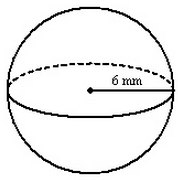
Find the surface area of the sphere.
48π mm2
144π mm2
72π mm2
134π mm2
22
23
Multiple Choice

A standard die is a cube with sides measuring 15 mm. What is the volume of the die?
30 mm3
45 mm3
225 mm3
3375 mm3
24
Fill in the Blanks

What is the volume of this cuboid?
Type answer...
25
Match
Match the following
Theory Name with components:
Cell Theory
Endosymbiotic Theory
Evolutionary Theory
Gene Theory
Spontaneous Generation Theory
Cells are the basic unit of life, all cells come from pre-existing cells
Prokaryotes joined to form Eukaryotes
All species change over time
Traits are passed from parents to offspring
Living creatures could arise from nonliving matter
Cells are the basic unit of life, all cells come from pre-existing cells
Prokaryotes joined to form Eukaryotes
All species change over time
Traits are passed from parents to offspring
Living creatures could arise from nonliving matter
26
27

28
Multiple Select
What evidence supports ENDOSYMBIOTIC THEORY?
Prokaryotes are the size of Eukaryotic Organelles
Mitochondria and Chloroplasts have unique plasmid DNA
Trends show that life becomes more complex over time
Cells have been observed to engulf other cells
Microscopic evidence shows that prokaryotes can change into Eukaryotes at will
29
30
Open Ended
Describe similarities and/or differences in compartmentalization between prokaryotic and eukaryotic cells.
31
membrane separated/barriered stuff!
Show answer
Auto Play
Slide 1 / 31
SLIDE
Similar Resources on Wayground

24 questions
Metric System
Presentation
•
9th - 12th Grade
22 questions
Parts of a Cell Lesson
Presentation
•
9th - 12th Grade
22 questions
Lactose and Lactase
Presentation
•
9th - 12th Grade
26 questions
Properties of Life LESSON
Presentation
•
10th - 12th Grade
22 questions
DNA structure
Presentation
•
10th - 12th Grade
26 questions
Quizizz: Transcription
Presentation
•
9th Grade - University
23 questions
Biomes
Presentation
•
KG - University
27 questions
Meiosis Lesson
Presentation
•
9th - 12th Grade
Popular Resources on Wayground
10 questions
Safety Day 2026 – Student Review

Quiz
•
9th Grade
21 questions
Continents and Oceans
Quiz
•
6th Grade
20 questions
Parts of Speech
Quiz
•
5th Grade
16 questions
Subject & Predicate
Quiz
•
5th Grade
25 questions
Multiplication Facts
Quiz
•
5th Grade
12 questions
Map Skills
Quiz
•
3rd Grade
22 questions
Continents and Oceans
Quiz
•
5th Grade
15 questions
Rounding Decimals
Quiz
•
5th Grade
Discover more resources for Biology
20 questions
Cell organelles and functions
Quiz
•
10th Grade
20 questions
Cell Transport
Quiz
•
9th - 12th Grade
25 questions
photosynthesis and cellular respiration
Quiz
•
9th Grade
20 questions
Cell Cycle
Quiz
•
9th Grade
8 questions
DNA vs. RNA
Presentation
•
9th - 12th Grade
14 questions
Ecological Succession: Primary and Secondary
Quiz
•
9th Grade
20 questions
Macromolecules
Quiz
•
10th Grade
20 questions
Characteristics of Life
Quiz
•
9th - 10th Grade