Search Header Logo
Words of the Wiser- Notice and Note & Building a Reading Life

Words of the Wiser- Notice and Note & Building a Reading Life

Assessment

Presentation

Other

3rd - 4th Grade

Medium

Created by

Jen Palmer

Used 1+ times

FREE Resource

21 Slides • 29 Questions

1
media

2

Multiple Choice

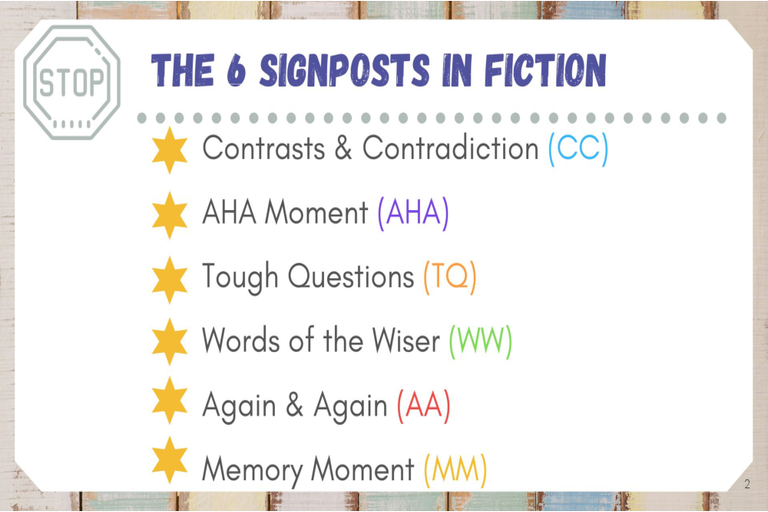
How many Notice and Note Signposts are there?

1

10

2

6

3

4

4

5

3

media

4

Video Response

Name the Notice and Note strategies.

video
Open Video Recorder

5

media

6

media

7

media

8

Video Response

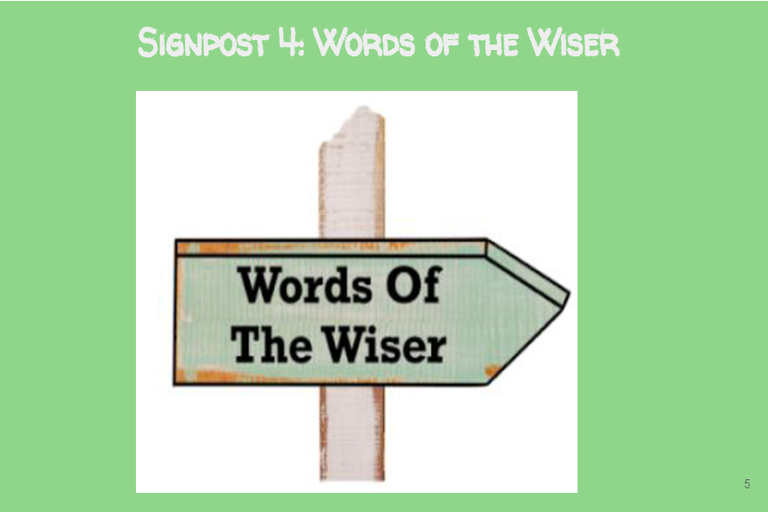
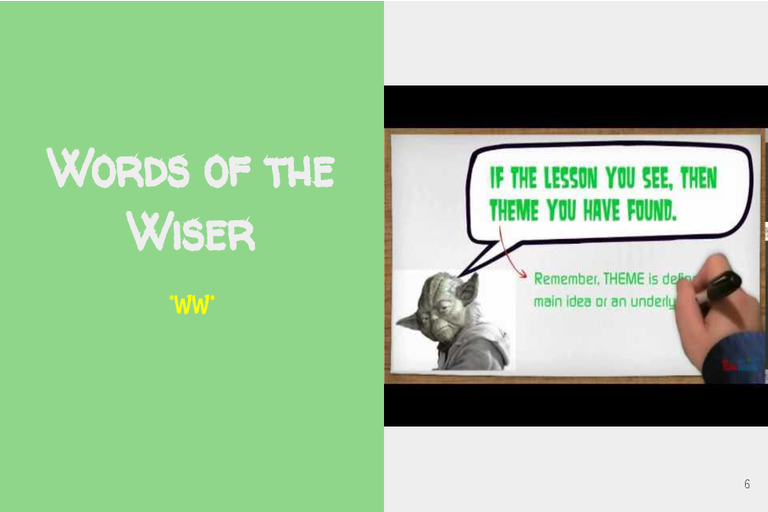
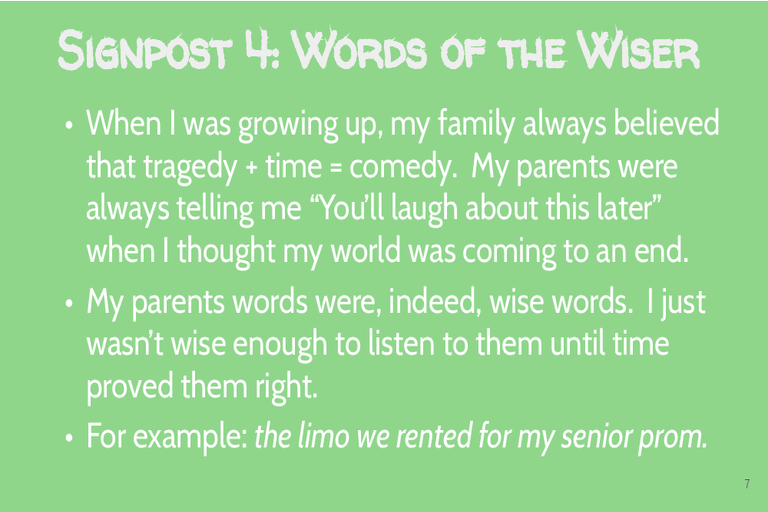
What is signpost 4?

video
Open Video Recorder

9

media

10

Multiple Choice

What is a protagonist?

1

A protagonist (from Ancient Greek prōtagōnistḗs) 'one who plays the first part, chief actor') is the main character of a story.

2

A protagonist (from Ancient Greek ( 'one who plays the first part, chief actor') is the secondary character of a story.

3

A protagonist (from Ancient Greek πρωταγωνιστής) 'one who plays the first part, chief actor') is the villian of a story.

4

A protagonist (from Ancient Greek) 'one who plays the first part, chief actor') is the flat character of a story.

11

Multiple Choice

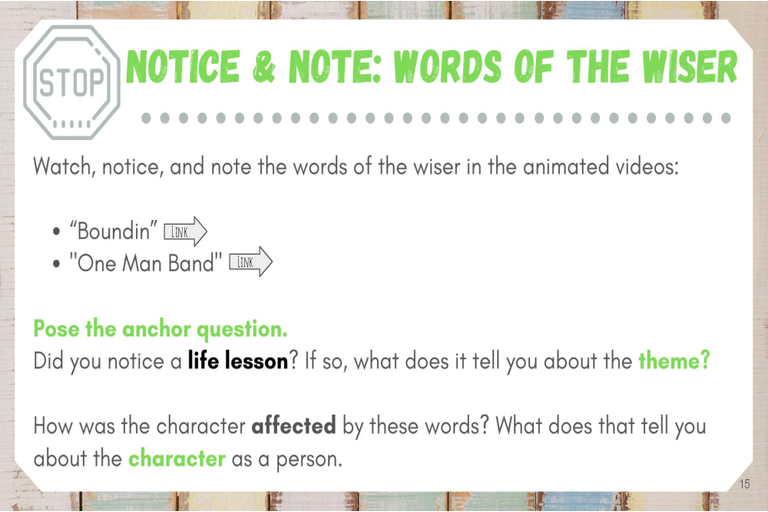
When you are reading and a wiser (usually older) character takes the character aside and offers advice, you should....

1

Tell your teacher.

2

Annotate it.

3

Stop and note it.

4

Show your partner.

12

Multiple Choice

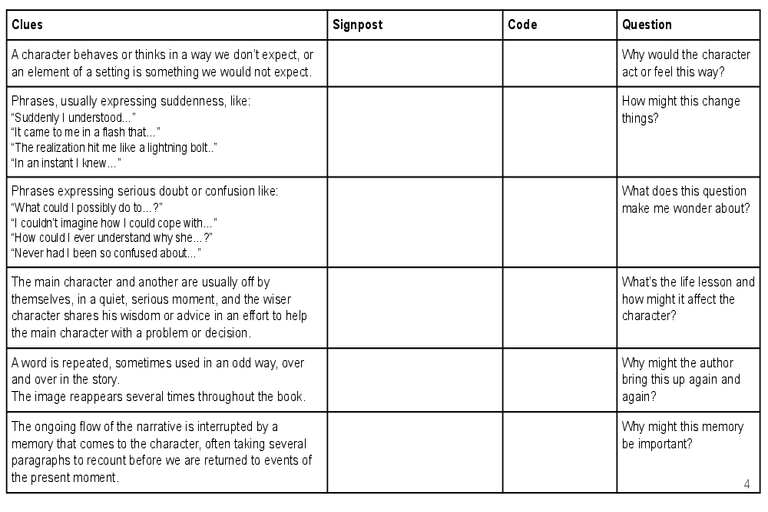
After you stop and note that an older character is offering advice, you should ask yourself:

1

Why is the character doing that?

2

How does this change things?

3

What is the lesson being offered and how will it affect the protagonist throughout the story?

4

Why does this keep showing up?

13

Multiple Choice

After you ask yourself about the lesson the older character is offering, you may have discovered the:

1

theme

2

plot

3

conflict

4

exposition

14

Multiple Choice

After you ask yourself about the lesson the older character is offering, you may have discovered the:

1

theme

2

plot

3

conflict

4

exposition

15

Multiple Choice

According to the video, authors put everything in their books...

1

to help you know figurative language.

2

on purpose.

3

to teach you figurative language.

4

to teach you theme

16

media

17

media

18

Multiple Choice

Question image

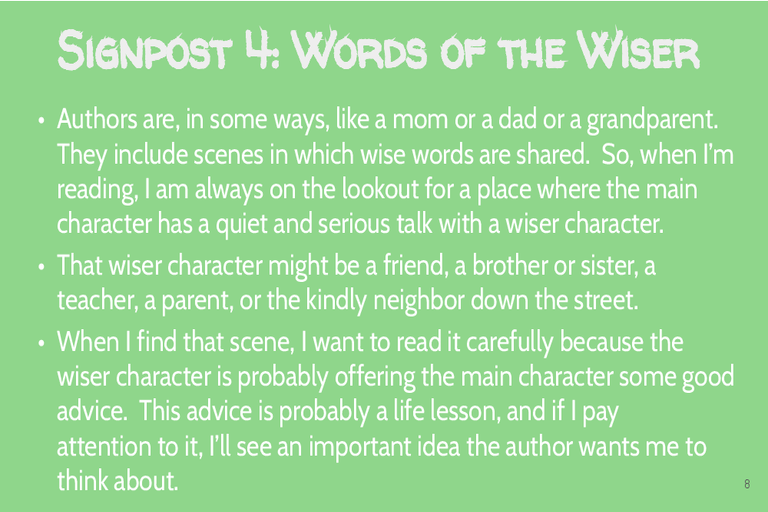
According to the slide, authors are like a mom, dad, or grandparent because...

1

they include plot structure.

2

they include figurative language.

3

they include allusions.

4

they include scenes in which wise words are shared.

19

Multiple Choice

Question image

According to the slide, when you are reading, always be on the lookout for...

1

a place where the main character has a quiet and serious talk with a wiser character.

2

a place where the main character goes on an adventure.

3

a place where the flat character has a quiet and serious talk with a wiser character.

4

a place where the main character goes on a quest.

20

Multiple Select

Question image

According to the slide, the wiser character could be...

[there is more than one answer]

1

a friend

2

a sibling

3

a teacher

4

a parent

21

Multiple Choice

Question image

According to the slide, if you pay attention to the wise words...

1

you can discover a life lesson.

2

you can discover figurative language.

3

you can discover allusions.

4

you can discover plot structure.

22

media

23

Multiple Choice

Question image

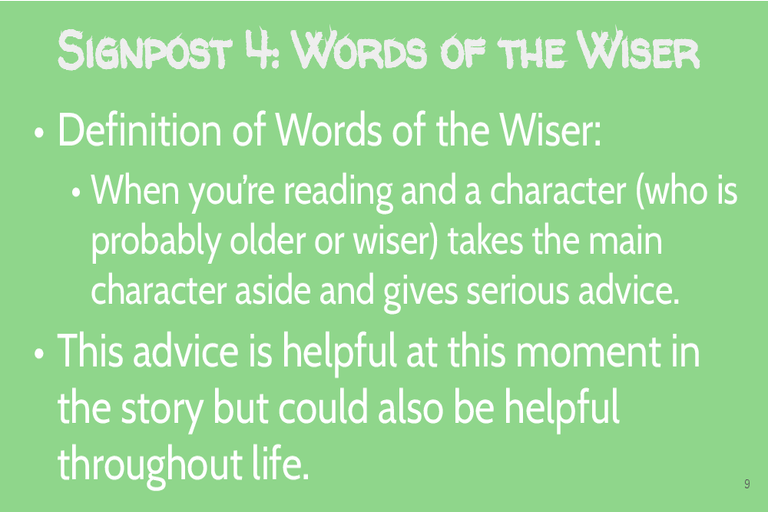
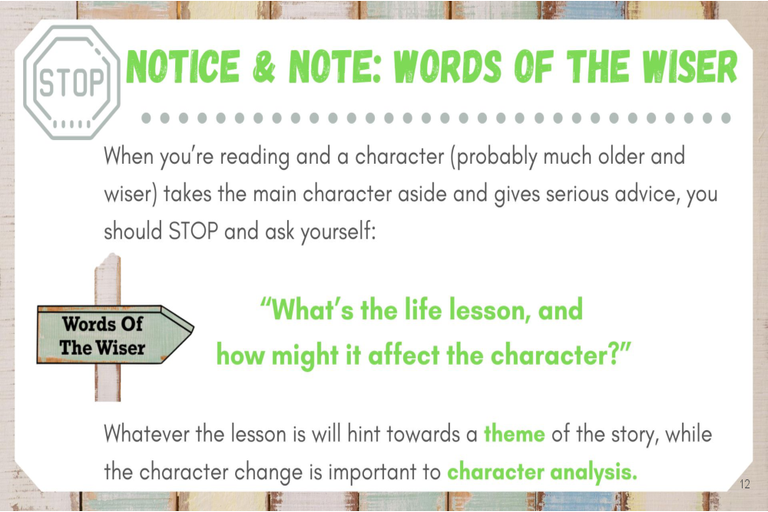
According to the slide, the definition of words of the wiser is...

1

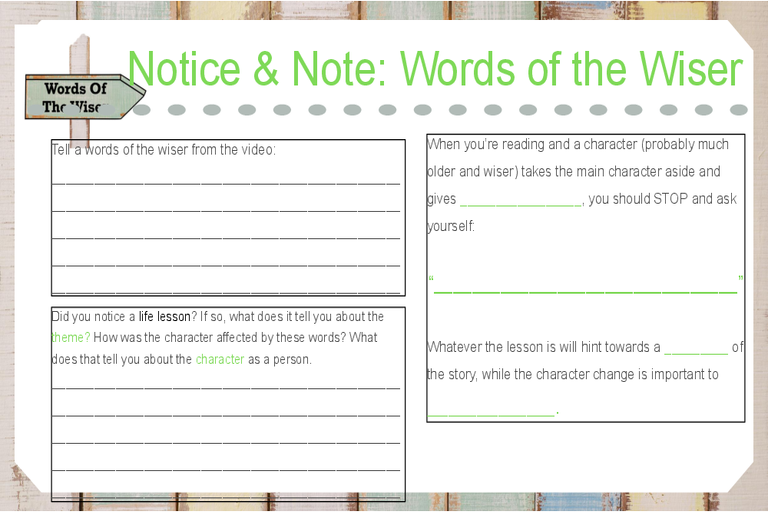
when you are reading and a character takes the main character aside and gives them serious advice.

2

when you are reading and a character takes the main character aside and gives them plot structure.

3

when you are reading and a character takes the main character aside and gives them onomatopoeia.

4

when you are reading and a character takes the main character aside and gives exposition.

24

Multiple Select

Question image

According to the slide, advice from a wiser character is...

[more than one answer]

1

helpful at that moment in the story.

2

helpful throughout life.

3

helpful for the exposition.

4

helpful for allusions.

25

media

26

Multiple Choice

Question image

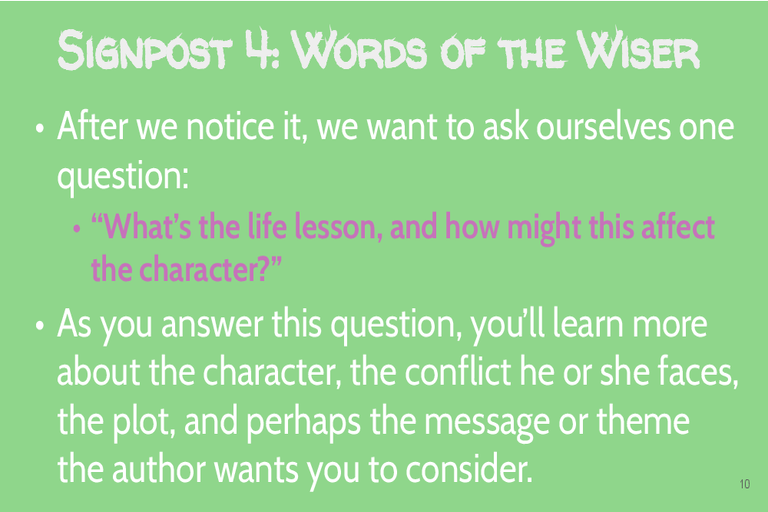
According to the slide, after we notice wise words, we should ask ourselves:

1

What's the life lesson and how might this affect the character?

2

How does this change things?

3

Why is the character doing that?

4

How does this affect the plot structure

27

Multiple Select

Question image

According to the slide, if you answer the question about the life lesson, you'll learn more about...

[more than one answer]

1

the plot

2

the conflict

3

the message/theme

4

idioms

28

media

29

Multiple Select

Question image

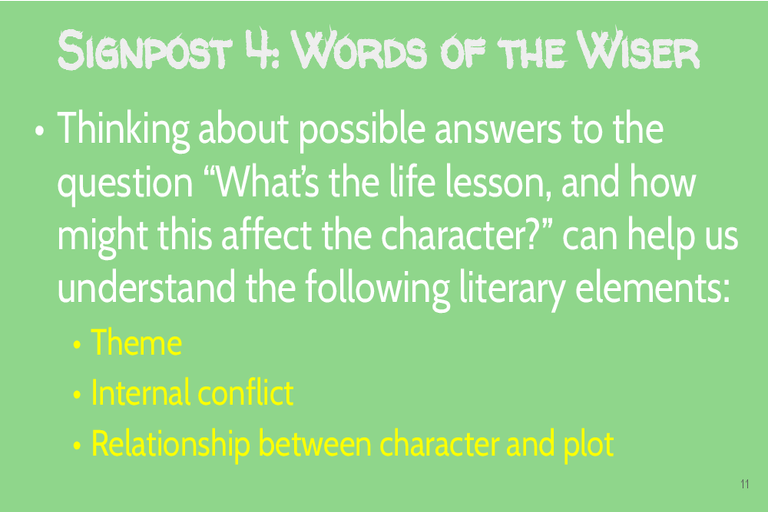
According to the slide, thinking about the life lesson can help us understand the following literary elements...

[more than one answer]

1

theme

2

internal conflict

3

relationship between character and plot

4

secondary characters

30

media

31

Multiple Choice

Question image

According to the slide, when you are reading and another character gives advice, you should ask yourself....

1

What's the life lesson and how might it affect things?

2

Why is the character doing that?

3

What's the life story and how doesn't it affect things?

4

How does this change things?

32

media

33

Draw

Fill in the first blank.

34

media

35

Draw

Fill in the last two blanks.

36

media

37

Video Response

Question image

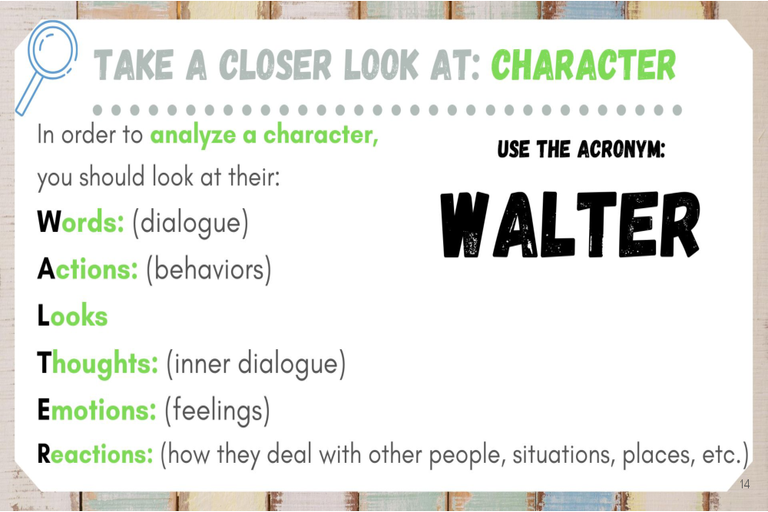
Why should you use "WALTER"?

video
Open Video Recorder

38

Video Response

Question image

What does "WALTER" stand for?

video
Open Video Recorder

39

media

40

41

42

media

43

Audio Response

Question image

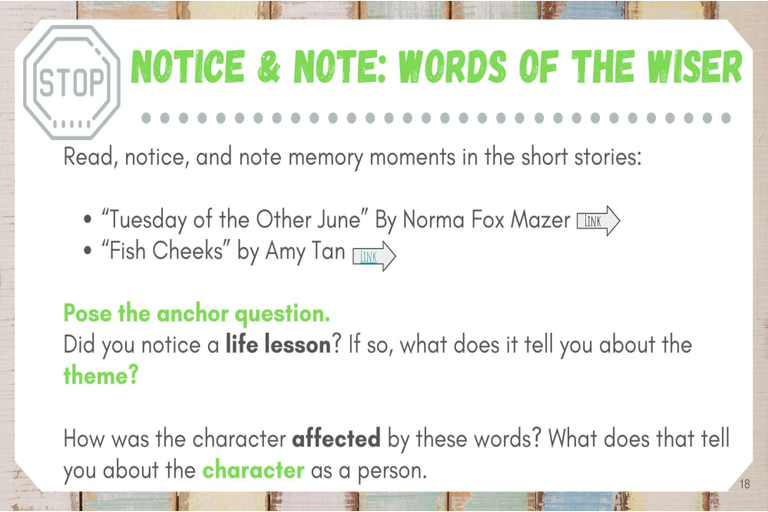
Pick one of the digital shorts. Tell about a situation where a character offered a life lesson:

audio
Open Audio Recorder

44

Audio Response

Question image

Use that same digital shorts. Tell about how the character's advice helps us understand the conflict and the theme:

audio
Open Audio Recorder

45

media

46

Audio Response

Question image

Think about "Fish Cheeks." Tell about a situation where a character offered a life lesson:

audio
Open Audio Recorder

47

Audio Response

Question image

Think about "Fish Cheeks." Tell about how the character's advice helps us understand the conflict and the theme:

audio
Open Audio Recorder

48

media

49

Video Response

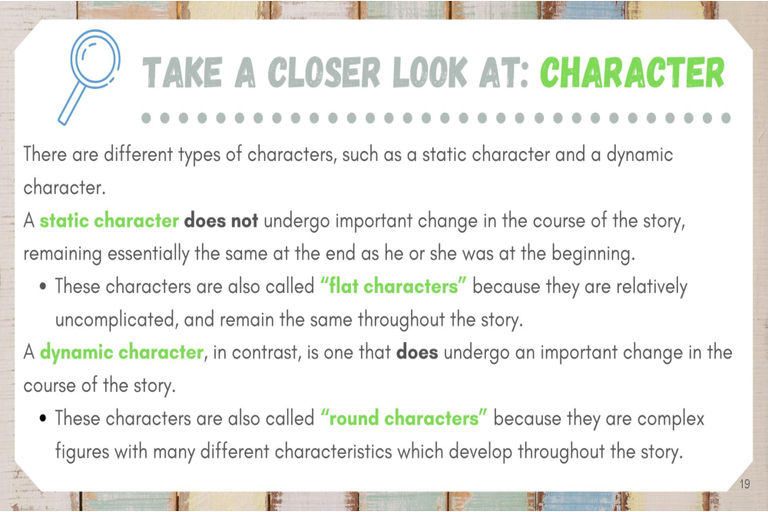
Use your own words, tell what a static or flat character is.

video
Open Video Recorder

50

Video Response

Use your own words, tell what a dynamic or round character is.

video
Open Video Recorder
media

Show answer

Auto Play

Slide 1 / 50

SLIDE