Search Header Logo
Interim Assessment #2 Point Recovery

Interim Assessment #2 Point Recovery

Assessment

Presentation

Science

9th - 10th Grade

Medium

NGSS
HS-LS1-5, HS-LS1-7, HS-LS1-4

+5

Standards-aligned

Created by

Christy Rodriguez

Used 6+ times

FREE Resource

8 Slides • 32 Questions

1

media

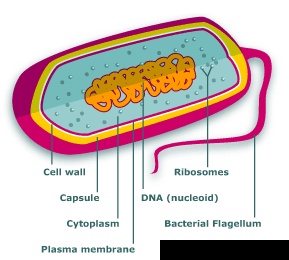
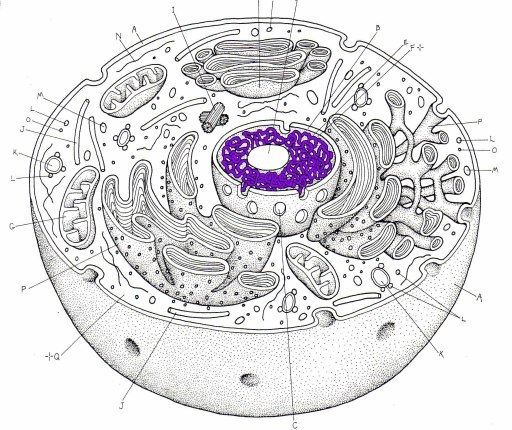
​Pro = NO

(no nucleus or membrane bound organelles)

Eu = DO

(do have a nucleus & membrane bound organelles

ALL CELLS HAVE:

​cytoplasm, cell membrane, DNA, and ribosomes

2

Multiple Choice

ALL cells (prokaryotic and eukaryotic) have:

1

mitochondria

2

DNA

3

chloroplasts

4

golgi apparatus

3

Multiple Choice

ALL cells (prokaryotic and eukaryotic) have:

1

cell membrane

2

lysosomes

3

cytoskeletons

4

flagella

4

Multiple Choice

ALL cells (prokaryotic and eukaryotic) have:

1

endoplasmic reticulum

2

vacuoles

3

nuclear membrane

4

cytoplasm

5

Multiple Choice

Both prokaryotes and eukaryotes have a nucleus.
1
True
2
False

6

Multiple Choice

Question image
Which type of cell?
1
Prokaryote
2
Eukaryote

7

Multiple Choice

Question image
What kind of cell is this?
1
Eukaryotic
2
Prokaryotic

8

media

​Observe the cell membrane below & the types of transport occuring:

9

media

10

Multiple Choice

Question image
_______ regulates what enters and leaves a cell.  
1
Cell Membrane
2
Nucleus
3
Mitochondria
4
Cytoplasm

11

Multiple Choice

What is diffusion?
1

The movement of particles from low concentration to high concentration in a given space

2

The movement of particles from high concentration to low concentration in a given space

12

Multiple Choice

When both inside and outside of a cell have the same amount of water it is said that the cell has reached a state of
1
Osmosis
2
Diffusion
3

Homeostasis

13

Multiple Choice

What is the difference between active and passive transport?
1
Active does not need energy and passive uses ATP (energy)
2
Active uses ATP (energy) and passive does not need energy
3
Active stores transport proteins and passive releases 
4
Active uses hormones and passive does not 

14

media
media

15

Multiple Choice

What is the process in which plants capture the energy in sunlight and use it to make food?

1

cellular respiration

2

carbon dioxide

3

glucose

4

photosynthesis

16

Multiple Choice

What is the process in which glucose is broken down to release ATP energy?

1

photosynthesis

2

cellular respiration

3

chloroplasts

4

glucose

17

Multiple Choice

Plants make their own food called

1

glucose

2

oxygen

3

carbon dioxide

4

chloroplast

18

Multiple Choice

When does photosynthesis occur?

1

With sunlight

2

At night

3

All the time

19

Multiple Select

In cellular respiration, what are the reactants (input)?

1

oxygen

2

water

3

glucose

4

carbon dioxide

20

Multiple Select

In cellular respiration, what are the products (the output)?

1

water

2

carbon dioxide

3

ATP energy

4

glucose

21

media

​Remind yourself of the details of the cell cycle.

Interphase consists of G1, S, and G2​ phases.

Mitosis comes after Interphase (more info on next slide)

Cytokinesis occurs after Mitosis-- it is where the cell divides into 2 new daughter cells. ​

22

media

23

Multiple Select

Question image

What part of the cell cycle is considered interphase? Select all that apply.

1

G1

2

G2

3

S

4

M

24

Multiple Choice

Put the following stages of mitosis in order: anaphase, prophase, metaphase, and telophase. 
1
prophase, metaphase, telophase, anaphase
2
prophase, anaphase, metaphase, telophase
3
prophase, metaphase, anaphase, telophase
4
prophase, telophase, metaphase, anaphase

25

Multiple Choice

Question image
Why would it be important to replicate DNA before a cell divides in mitosis or meiosis?
1
In order for genetic information to be transferred into daughter cells.
2
In order for the cell to be able to increase in size.
3
In order for the DNA to be contained in the nucleus.
4
In order for the cell to re-order the DNA sequencing in the new cells.

26

Multiple Choice

Question image
What phase is this cell in?
1
Cytokinesis
2
Mitosis
3
Prophase
4
Metaphase

27

Multiple Choice

In which stage of the cell cycle does the DNA replicate?

1

G1

2

S

3

G2

4

Mitosis

28

media

DNA Base Pairing Rules:

Apples in the Tree (A <--> T)

Cars in the Garage ​ (C <--> G)

media

​The monomer (building block of DNA) is a nucleotide:

​The enzyme helicase unzips the DNA, then DNA polymerase adds complimentary base pairs

29

Multiple Choice

Adenine bonds with ______________.
1
Guanine
2
Thymine
3
Cytosine
4
Adenine

30

Multiple Choice

Guanine bonds with ______________.
1
Adenine
2
Guanine
3
Cytosine
4
Thymine

31

Multiple Choice

Which of the following monomers are repeatedly joined together to form a strand of DNA?

1
amino acids
2
nucleotides
3
fatty acids
4
polysaccharides

32

Multiple Choice

Which enzyme is responsible for adding nucleotides?
1
Topoisomerase
2
DNA Polymerase
3
Ligase
4
Primase

33

media

​Protein Synthesis

TransCription:

1st step; occurs in the nucleus.

DNA transcribes into mRNA​

TransLation:

2nd step; occurs at a ribosome out in the cytoplasm. mRNA codes for amino acids brought in by tRNA. ​

34

Multiple Choice

In what process is mRNA synthesized?

1

Transcription

2

Translation

3

DNA Replication

4

Mitosis

35

Multiple Choice

Question image
The mRNA leaves the ________ to find the ribosome to make proteins.
1
cell
2
nucleotide
3
nucleus

36

Multiple Select

How are DNA and RNA different? (CHECK ALL THAT APPLY)

1

Only DNA can leave the nucleus

2

RNA contains Thymine; DNA contains Uracil

3

DNA is double stranded, RNA is a single stranded

4

DNA contains Thymine, RNA contains Uracil

37

Multiple Choice

Question image

What brings the amino acids to the ribosome to assemble a protein?

1
mRNA
2
tRNA
3
rRNA
4

DNA

38

Multiple Choice

How many nucleotides code for 1 amino acid?

1

1

2

2

3

3

4

4

39

Multiple Choice

Question image

Which anticodon would be placed in spot #2

1

GGC

2

CCA

3

GGA

4

GGT

40

Multiple Choice

How can a mutation in the DNA sequence result in NO change to the protein that is made?

1

There are multiple codons that can code for the same amino acid and result in the same protein

2

There is always a change in the protein when a mutation occurs

3

Only the mRNA is used in protein synthesis so a mutation in the DNA would have no effect on the protein

media

​Pro = NO

(no nucleus or membrane bound organelles)

Eu = DO

(do have a nucleus & membrane bound organelles

ALL CELLS HAVE:

​cytoplasm, cell membrane, DNA, and ribosomes

Show answer

Auto Play

Slide 1 / 40

SLIDE