11/29 Force & Motion Review
Presentation
•
Science
•
8th Grade
•
Easy
+3
Standards-aligned
Sarah Montelongo
Used 8+ times
FREE Resource
21 Slides • 55 Questions
1
​11/29 Force & Motion Review
Replace this with a sub-header that can be in multiple lines. ​
2
Speed, Velocity and Acceleration
by Kimberly Molina
3
​Speed
​Speed is the measure of how fast the distance changes in a given a amount of time.
4
​Velocity
​Velocity is the speed and direction that an object is moving.
​
​If you know the speed then you only need to figure out what direction the object is moving.
5
​Acceleration
​Acceleration is the measure of how velocity (speed and direction) changes.
​
​Objects can accelerate when they speed up, slow down, or change direction.
6
Multiple Choice
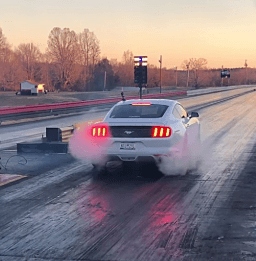
What is this?
"This car is speeding up"
Speed
Velocity
Acceleration
7
Multiple Choice
What is this?
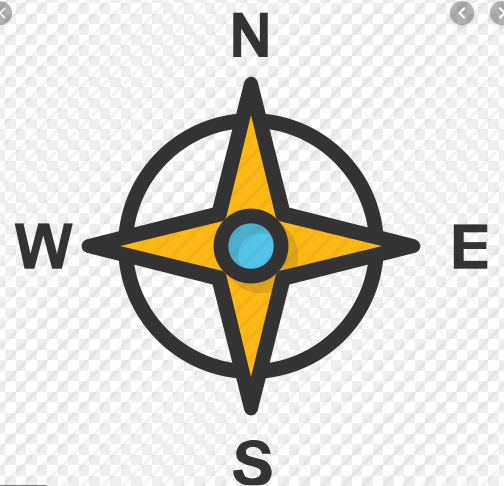
"This airplane is traveling at 500 mph, West"
Speed
Velocity
Acceleration
8
Multiple Choice
What is this?
"Rocky is running 8mph North"
Speed
Velocity
Acceleration
9
Multiple Choice
What is this?
"The car has to go from 40mph to 60mph when entering the freeway"
Speed
Velocity
Acceleration
10
Multiple Choice
What is this?
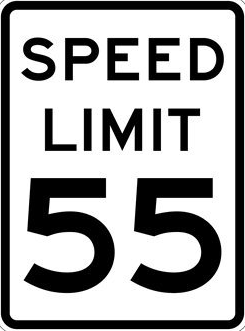
"The car is traveling at 150 kilometers per hour"
Speed
Velocity
Acceleration
11
Multiple Choice
What is this?
Speed
Velocity
Acceleration
12
Multiple Choice
What is this?
Speed
Velocity
Acceleration
13
Multiple Choice
If the speed includes this picture what is it?
Speed
Velocity
Acceleration
14
Multiple Choice
Usian Bolt can run at a top speed of 28 mph.
Speed
Velocity
Acceleration
15
Multiple Choice
Post Malone's Velociraptor goes from 0 to 60 in 4.1 seconds.
Speed
Velocity
Acceleration
16
Multiple Choice
An object that is traveling east at a constant rate has —
speed, but neither velocity nor acceleration
speed and velocity, but no acceleration
velocity, but neither acceleration nor speed
acceleration and speed, but no velocity
17
Multiple Choice
A high school baseball team in Dallas travels south to Austin to participate in a tournament. The trip from Dallas to Austin is about 322 kilometers. The trip requires about 3.5 hours to complete on a school bus. Which of the following best represents the VELOCITY of the bus?
92 km/h South
112.7 km/h South
18
​Speed Triangle
​The formula for speed is:
​
​Speed = Distance/Time
​
​The formula can be
rearranged to find distance
or time.
19
Multiple Choice
A runner races in the 100 meter dash. It takes her 10 seconds to finish. What is her average speed?
10 m/s
1000 m/s
100 seconds
20
Multiple Choice
5km/hr
10km/hr
50km/hr
20km/hr
21
Multiple Choice
71km/hr
52km/hr
17km/hr
90km/hr
22
Multiple Choice
What is the speed of an object that travels 60 meters in 4 seconds?
240 m/s
15 m/s
0.067 m/s
23
Multiple Choice
Kermit rides his bike at a constant speed of 12 miles per hour. How far can he travel in 2 hours?
1/2 mile
6 miles
24 miles
24
Multiple Choice
If a boat travels at 22 km/hr for 10 hrs, what distance will it travel?
22 km
2.2 km
220 km
25
Multiple Choice
If the man and the ball travels 90 m in 9 seconds, what is their average speed?
10 m/s
180 m/s
99 m/s
26
Multiple Choice
If a lizard can run 8 m across the water in 4 seconds, how fast is he traveling?
32 m/s
2 m/s
34 meters
27
Multiple Choice
A block is pulled 0.90 m to the right in 2.5 s. What is the block’s average speed?
0.36
2.25
28
Multiple Choice
10 cm/m
25 cm/m
250 cm/m
1 cm/m
29
•Graphs can be used to represent motion
•Graphs have an X and a Y axis
​
​
•Distance: Tells us where the object is. How NEAR or FAR from 0.
•Time: Tells how long the object has been traveling.
Graphing Motion:
30
Multiple Choice
Describe the motion in the graph:
Constant Speed (positive slope)
Stopped (at rest)
Acceleration (increasing speed)
Return Home (negative slope)
31
Multiple Choice
Describe the motion in the graph:
Constant Speed (positive slope)
Stopped (at rest)
Acceleration (increasing speed)
Return Home (negative slope)
32
Multiple Choice
Describe the motion in the graph:
Constant Speed (positive slope)
Stopped (at rest)
Acceleration (increasing speed)
Return Home (negative slope)
33
Multiple Choice
Describe the motion in the graph:
Constant Speed (positive slope)
Stopped (at rest)
Acceleration (increasing speed)
Return Home (negative slope)
34
Multiple Choice
Describe the motion in the graph:
Constant Speed (positive slope)
Stopped (at rest)
Acceleration (increasing speed)
Return Home (negative slope)
35
Multiple Choice
Describe the motion in the graph:
Constant Speed (positive slope)
Stopped (at rest)
Acceleration (increasing speed)
Return Home (negative slope)
36
Multiple Choice
Describe the motion in the graph:
Constant Speed (positive slope)
Stopped (at rest)
Acceleration (increasing speed)
Return Home (negative slope)
37
Multiple Choice
Describe the motion in the graph:
Constant Speed (positive slope)
Stopped (at rest)
Acceleration (increasing speed)
Return Home (negative slope)
38
Multiple Choice
Describe the motion in the graph:
Constant Speed (positive slope)
Stopped (at rest)
Acceleration (increasing speed)
Return Home (negative slope)
39
Multiple Choice
Describe the motion in the graph:
Constant Speed (positive slope)
Stopped (at rest)
Acceleration (increasing speed)
Return Home (negative slope)
40
Multiple Choice
Using the table, which graph shows the motion of the lizard as it looks for food?
41
What is a force, and how does it act on an object?
A force is a push or a pull.
All forces have both size and direction.
42
Balanced vs Unbalanced Forces
Forces can be balanced or unbalanced. When the forces on an object produce a net force of 0 N, the forces are balanced. Balanced forces do not cause a change in the motion of a moving or nonmoving object.
Balanced forces do not cause a change in the motion of a moving or nonmoving object.
43
Balanced vs Unbalanced Forces
When the net force on an object is not 0 newtons, the forces are unbalanced. Unbalanced forces produce a change in an object’s motion.
44
Multiple Choice
It won't move.
It will move to the right.
It will move to the left.
It will move in both directions.
45
Multiple Choice
40 N left
0 N Balalnced
400 N right
40 N right
46
Multiple Choice
10 N
0 N
25 N
1 N
47
Multiple Choice
These forces are...
Balanced
Unbalanced
48
Multiple Choice
The net force is...
50 N
0 N
100 N
2500 N
49
Multiple Choice
50
Multiple Choice
unbalanced
weak
balanced
Hulk Smash!
51
Multiple Choice
What is true about this image?
It shows unbalance forces.
It shows balanced forces, no motion
The people on the right are winning.
The people on the left are winning.
52
Multiple Choice
The net force is...
50 N
0 N
100 N
2500 N
53
Multiple Choice
65 N left
65 N right
35 N left
35 N right
54
Multiple Choice
What direction will the object move?
left
right
up
no movement
55
Multiple Choice
What direction will the object move?
left
right
up
no movement
56
Multiple Choice
What direction will the object move?
left
right
down
no movement
57
Multiple Choice
What direction will the object move?
left
right
down
no movement
58
Multiple Choice
What direction will the object move?
left
right
north
south
59
Multiple Select
Which of the objects experienced unbalanced forces?
Select TWO correct answers.
Object 1 - speed increases
Object 2 - Speed is constant
Object 3 - speed decreases
Object 4 - object is motionless
60
61
62
Multiple Choice
Which point in the roller coaster do you experience the greatest kinetic energy?
On top of the track
climbing up the track
the bottom of the track
stopping at the track
63
Multiple Choice
Which point in the pendulum has the greatest potential energy?
A
B
C
A and C
64
Multiple Choice
1
2
3
4
65
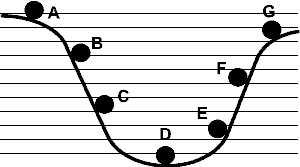
Multiple Choice
G
f
b
a
66
Multiple Choice
the red vase on the second shelf
the blue vase on the top shelf
the white box on the bottom shelf
67
Multiple Choice
At which point is Marshall's potential energy the greatest?
Point A
Point B
Point C
Point D
68
Energy Transformations
69
70
Mechanical Energy -
Energy that is MOVING
71
Electrical Energy -
Energy from the flow of electrons
(Ex. anything you plug into an outlet)
72
Chemical Energy -
Energy stored in chemical bonds
(Ex. Food, Batteries, and Plants)
73
Thermal Energy -
Energy given off as heat (friction)
74
Nuclear Energy -
Energy stored in atomic particles
75
Sound Energy -
Energy caused by vibrations and that moves through air or water
76
Electromagnetic Energy -
Energy that travels through space in invisible waves
​11/29 Force & Motion Review
Replace this with a sub-header that can be in multiple lines. ​
Show answer
Auto Play
Slide 1 / 76
SLIDE

Similar Resources on Wayground
71 questions
Ensci_ midterm review_ fall 2024
Lesson
•
9th Grade
72 questions
La música en mi vida
Lesson
•
8th Grade
71 questions
critical thinking
Lesson
•
KG
74 questions
Chapter 5 Lesson 2 - Threats to Biodiversity
Lesson
•
9th Grade
72 questions
F2_Zoom_Final Exam Preparation 1
Lesson
•
8th Grade
71 questions
Minerals and Rocks
Lesson
•
8th Grade
71 questions
Minerals and Rocks Lesson
Lesson
•
8th Grade
72 questions
MUSIC 8
Lesson
•
8th Grade
Popular Resources on Wayground
8 questions
Spartan Way - Classroom Responsible
Quiz
•
9th - 12th Grade
15 questions
Fractions on a Number Line
Quiz
•
3rd Grade
14 questions
Boundaries & Healthy Relationships
Lesson
•
6th - 8th Grade
20 questions
Equivalent Fractions
Quiz
•
3rd Grade
3 questions
Integrity and Your Health
Lesson
•
6th - 8th Grade
25 questions
Multiplication Facts
Quiz
•
5th Grade
9 questions
FOREST Perception
Lesson
•
KG
20 questions
Main Idea and Details
Quiz
•
5th Grade
Discover more resources for Science
22 questions
Phases of the moon
Quiz
•
8th Grade
20 questions
Waves and Wave Properties
Quiz
•
6th - 8th Grade
8 questions
Amoeba Sister Asexual vs Sexual Reproduction
Interactive video
•
8th Grade
10 questions
Exploring the Rock Cycle: Types and Formation
Interactive video
•
6th - 8th Grade
20 questions
8th Grade Science STAAR Review
Quiz
•
8th Grade
22 questions
Newton's Laws of Motion
Lesson
•
8th Grade
9 questions
Seasons and Earth's Tilt
Lesson
•
6th - 8th Grade
10 questions
Exploring the Evolution of the Peppered Moth
Interactive video
•
6th - 10th Grade