

The North PowerPoint

Presentation
•
Social Studies
•
8th Grade
•
Practice Problem
•
Easy

Brody Moore
Used 14+ times
FREE Resource
22 Slides • 9 Questions
1
The North
2
Lesson One: The Industrial Revolution
Textile Industry:
The first breakthrough in the Industrial Revolution was in how textiles, or cloth goods, were made.
Richard Arkwright, an Englishman, invented a spinning machine in 1769 called the water frame, which replaced hand spinning.
The water frame used flowing water as a source of power.
Could produce dozens of cotton threads at the same time
Lowered the cost of cotton production and increased the speed of textile production
Merchants built textile mills near rivers and streams.
Great Britain soon built the world’s most productive textile manufacturing industry.
3
Lesson One: New Machines & Processes
Main Idea 2: The development of new machines and processes brought the Industrial Revolution to the United States.
Slater and His Secrets
Samuel Slater brought the secrets of textile mill manufacturing from Great Britain to the United States.
The textile industry arose in the Northeast, introducing the Industrial Revolution to the United States.
4
Lesson One: New Machines & Processes
A Manufacturing Breakthrough
U.S. factories needed better technology, or tools, to manufacture muskets.
Inventor Eli Whitney developed musket factories using water-powered machinery.
Whitney introduced the idea of interchangeable parts, or parts of a machine that are identical, to make musket manufacturing easier.
Interchangeable parts sped up the process of mass production.
5
Lesson One: New Machines & Processes
Main Idea 3: Despite a slow start in manufacturing, the United States made rapid improvements during the War of 1812.
Lower British prices on manufactured goods made it difficult for American manufacturing to grow.
American manufacturing was limited to cotton goods, flour milling, weapons, and iron products.
The War of 1812 cut off trade with Great Britain, allowing manufacturing in the United States to prosper and expand.
Americans realized that the United States had been relying too heavily on foreign goods.
6
Multiple Choice

What was the first industry to begin to use machines to manufacture goods?
Farm Indsutry
Automobile Industry
Textile Industry
Railroad Industry
7
Open Ended

How did Eli Whitney influence American manufacturing?
8
Lesson Two:
Big Idea: The introduction of factories changed working life for many Americans.
Main Ideas:
The spread of mills in the Northeast changed workers’ lives.
The Lowell system revolutionized the textile industry in the Northeast.
Workers organized to reform working conditions.
9
Lesson Two: Mills Change Workers' Lives
Main Idea 1: The spread of mills in the Northeast changed workers’ lives.
Factory jobs usually involved simple, repetitive tasks done for low pay.
Could produce dozens of cotton threads at the same time
The mill industry jobs by hiring whole families and paying children low wages.
Built housing for workers and provided a company store
Samuel Slater’s strategy of hiring families and dividing factory work into simple tasks was called the Rhode Island system.
10
Lesson Two: The Lowell System
Main Idea 2: The Lowell system revolutionized the textile industry in the Northeast
Francis Cabot Lowell created a new system of mill manufacturing in 1814, called the Lowell system.
The Lowell system involved
Employing young, unmarried women, who were housed in boardinghouses
Providing clean factories and free-time activities for its employees
Having mills that included both spinning thread and weaving in the same plant
11
Lesson Two: Workers Organize
Main Idea 3: Workers organized to reform working conditions
Employees worked 12-to-14 hour days in unhealthy conditions.
Craftsmen’s wages dropped in competition against cheap manufactured goods.
Wages of factory workers dropped as they competed for jobs.
12
Lesson Two: The Beginning of Trade Unions
Craftsmen formed trade unions to gain higher wages and better working conditions.
Factory workers also formed trade unions.
Labor unions staged protests called strikes, refusing to work until employers met their demands.
13
Lesson Two: Labor Reform Efforts
Millworker Sarah G. Bagley helped lead the union movement in Massachusetts.
Bagley’s union campaigned to reduce the 12-to 14-hour workday to a 10-hour workday.
Several states passed 10-hour workday laws, giving Union workers some victories.
In other states, the workday remained long and child labor prevailed.
14
Multiple Choice

Who had a strong voice in the union movement?
Martha Washington
Eli Whitney
Laura T. Stanley
Sarah G. Bagley
15
Open Ended

What was life like for mill workers in the Lowell System?
16
Lesson Three:
Big Idea: New forms of transportation improved business, travel, and communication in the United States.
Main Ideas:
The Transportation Revolution affected trade and daily life.
The steamboat was one of the first developments of the Transportation Revolution.
Railroads were a vital part of the Transportation Revolution.
The Transportation Revolution brought many changes to American life and industry.
17
Lesson Three: Trade and Daily Live
Main Idea 1: The Transportation Revolution affected trade and daily life.
The 1800s gave rise to a Transportation Revolution: a period of rapid growth in new means of transportation.
Transportation Revolution created boom in business by reducing shipping costs and time.
Two new forms of transportation were steamboat and steam-powered trains.
Goods, people, and information were able to travel rapidly and efficiently across the United States.
18
Lesson Three: Steamboats
Main Idea 2: The steamboat was one of the first developments of the Transportation Revolution.
Robert Fulton invented the steamboat, testing the Clermont in 1807.
Steamboats increased trade by moving goods more quickly and more cheaply.
More than 500 steamboats were in use by 1840.
Gibbons v. Ogden (1824): The Supreme Court reinforced the federal government’s authority to regulate trade between states.
Gibbons argued that a federal license meant he could use New York waterways without another license. The Supreme Court agreed with Gibbons.
19
Lesson Three: American Railroads
Main Idea 3: Railroads were a vital part of the Transportation Revolution
Steam-powered trains had been developed in Great Britain, but it took 30 years for the idea to catch on in the United States.
Peter Cooper raced his Tom Thumb locomotive against a horsedrawn railcar in 1830, proving its power and speed despite losing because of a breakdown near the end of the race.
About 30,000 miles of railroads linked American cities by 1860.
The U.S. economy surged as railroads moved goods cheaply to distant markets.
20
Lesson Three: Transportation Revolution
Main Idea 4: The Transportation Revolution brought many changes to American life and industry.
People in all areas of the nation had access to products made and grown far away.
Railroads contributed to the expansion of the nation’s borders.
Cities and towns grew up along railroad tracks.
Growing prosperity of the nation encouraged Americans to take pride in their country
21
Lesson Three: Impact of Railroads
Coal replaced wood as a source of fuel as trains grew bigger.
Railroads helped create the coal industry.
Coal, shipped cheaply on trains, became the main fuel in homes and in the emerging steel industry.
Railroads helped the lumber industry grow, leading to large-scale deforestation.
Railroads caused cities to grow, including Chicago, which became a transportation hub.
22
Multiple Choice

Which of these forms of transportation was invented during the 1800s and led to a rapid growth in the speed and convenience of travel?
Airplanes
Steamboats
Submarines
Automobiles
23
Multiple Choice

Which of the following became the main source of power as faster locomotives were built?
Wood
Coal
Gasoline
Oil
24
Open Ended

What effect did the Transportation Revolution have on the United States?
25
Lesson Four:
Big Idea: Advances in technology led to new inventions that continued to change daily life and work.
Main Ideas:
The telegraph made swift communication possible from coast to coast.
With the shift to steam power, businesses built new factories closer to cities and transportation centers.
Improved farm equipment and other labor-saving devices made life easier for many Americans.
New inventions changed lives in American homes.
26
Lesson Four: Telegraph Speeds Communication
Main Idea 1: The telegraph made swift communication possible from coast to coast.
In 1832, Samuel F. B. Morse perfected the telegraph—a device that could send information over wires.
The device did not catch on until the 1844 Democratic National Convention, when the nomination was telegraphed to Washington.
A Morse associate created Morse code to communicate messages over the wires.
Morse code turned pulses of electric current into long and short clicks.
Clicks, also called dots and dashes, were arranged in patterns representing letters of the alphabet.
The telegraph grew with the railroad; the first transcontinental telegraph line was completed in 1861.
27
Lesson Four: Steam Power and New Factories
Main Idea 2: With the shift to steam power, businesses built new factories closer to cities and transportation centers.
The shift from water power to steam power allowed owners to build factories anywhere.
Factories were shifted closer to cities and transportation centers.
Cities became centers of industrial growth.
28
Lesson Four: Improved Farm Equipment
Main Idea 3: Improved farm equipment and other labor-saving devices made life easier for many Americans.
John Deere designed a steel plow in 1837 that replaced the less efficient iron plow.
Cyrus McCormick developed a mechanical reaper in 1831, which quickly and efficiently harvested wheat.
McCormick used a new method to encourage sales, advertising.
He also allowed people to buy on credit and provided repairs and spare parts for his machines.
These inventions allowed farmers to plant and harvest huge crop fields, helping the country prosper.
29
Lesson Four: Changing Life At Home
Main Idea 4: New inventions changed lives in American homes
The sewing machine, invented by Elias Howe and improved by Isaac Singer, made home sewing easier.
Ice boxes and iron cookstoves improved household storage and preparation of food.
Mass-produced goods, such as clocks, matches, and safety pins, were more affordable and added convenience to households.
30
Multiple Choice
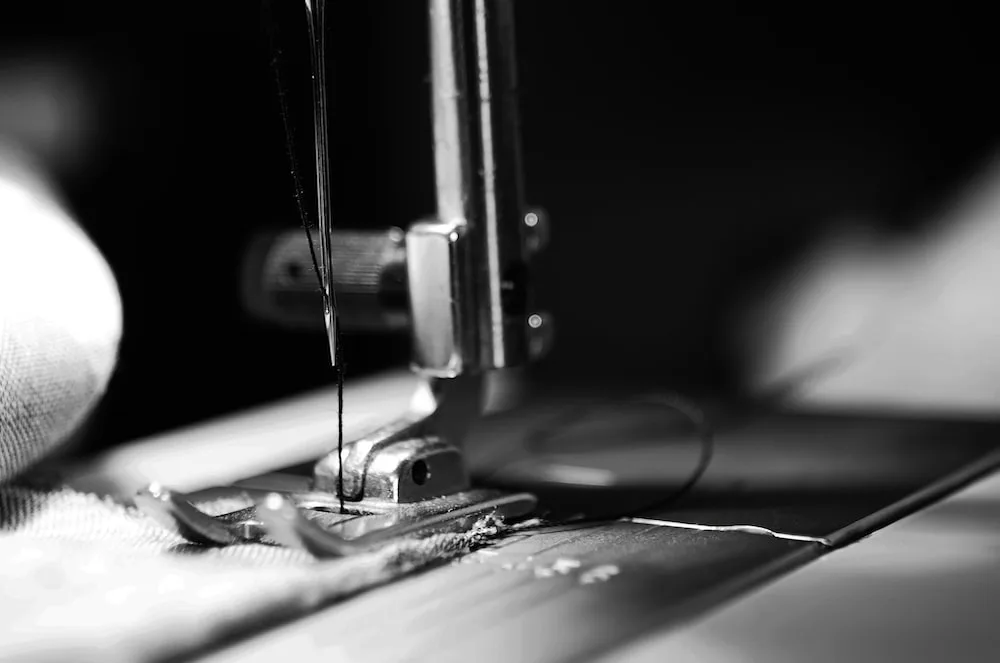
What was the invention that improved daily life at home?
Sewing Machine
Blender
Deep Fryer
Freezer
31
Open Ended

What effect did new inventions have on agriculture in the United States?
The North
Show answer
Auto Play
Slide 1 / 31
SLIDE
Similar Resources on Wayground

21 questions
w.5.2.1 Polska państwem demokratycznym
Presentation
•
8th Grade
26 questions
Chapter 17: Lesson 5
Presentation
•
8th Grade
22 questions
George Washington
Presentation
•
8th Grade
20 questions
3.3 The Middle Colonies
Presentation
•
8th Grade
24 questions
Africa: Environmental Issues
Presentation
•
7th Grade
22 questions
7.7 The War Ends
Presentation
•
8th Grade
23 questions
Unit 7: Effects of Physical & Human Geographic Factors 8.10c
Presentation
•
8th Grade
24 questions
Revolutionary War Battles
Presentation
•
8th Grade
Popular Resources on Wayground
6 questions
PRIDE Always and Everywhere
Presentation
•
12th Grade
20 questions
Lab Safety Quiz

Quiz
•
6th Grade
26 questions
KOR Review Kahoot Questions
Quiz
•
8th Grade
21 questions
Continents and Oceans
Quiz
•
6th Grade
12 questions
Unit Zero lesson 2 cafeteria
Presentation
•
9th - 12th Grade
20 questions
Parts of Speech
Quiz
•
5th Grade
10 questions
Riddles Riddles fun Riddles
Quiz
•
6th - 12th Grade
16 questions
Subject & Predicate
Quiz
•
5th Grade
Discover more resources for Social Studies
17 questions
SS8H1 Quiz
Quiz
•
8th Grade
10 questions
Exploring the Age of Exploration: Key Events and Figures

Interactive video
•
6th - 10th Grade
20 questions
Regions of the 13 Colonies
Quiz
•
8th Grade
17 questions
Primary vs. Secondary Sources
Quiz
•
8th Grade
13 questions
The French and Indian War
Interactive video
•
6th - 8th Grade
20 questions
Georgia Government Quiz
Quiz
•
8th Grade
20 questions
Exploration and Colonization
Quiz
•
8th Grade
45 questions
13 Colonies Review
Quiz
•
8th Grade