

Cladograms and Cytochrome C

Presentation
•
Biology
•
9th Grade
•
Medium
•
NGSS
MS-LS4-2, MS-LS3-1
Standards-aligned

ABEL CAVAZOS
Used 15+ times
FREE Resource
3 Slides • 6 Questions
1
2
3
Multiple Choice
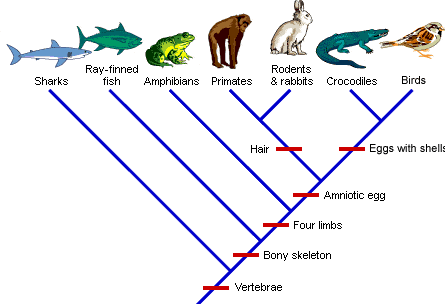
According to this cladogram, sharks are MOST closely related to which organism?
4
Multiple Choice

What characteristic do all the organisms on this cladogram share?
5
Multiple Choice

Which organism's DNA will differ the most from the bird?
6
Multiple Choice

What separates rodents and primates from crocodiles on this cladogram?
7
Fill in the Blanks

Which organism will have DNA most similar to the bird?
Type answer...
8

9
Multiple Choice

The Table below shows the # of differences in amino acids in a protein called “Cytochrome C” when comparing humans to other organisms. The protein is used by many plants and animals to convert energy in cells.
List the 4 closest human relatives based on this biochemical comparison.
List the 4 closest human relatives based on this biochemical comparison.
Show answer
Auto Play
Slide 1 / 9
SLIDE


