
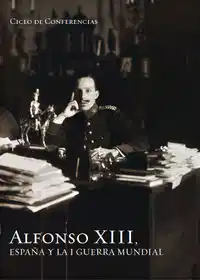
Alfonso XIII. Segundo epígrafe

Presentation
•
History
•
7th Grade
•
Practice Problem
•
Easy

Wolfert Torrente
Used 3+ times
FREE Resource
18 Slides • 2 Questions
1

2

3

Poca influencia a nivel político.
Más poder a nivel cultural e intelectual.
Los problemas del sistema y las divisiones de los partidos
dinásticos favorecen su reorganización.
PARTIDO RADICAL DE
ALEJANDRO LERROUX
Carácter populista.
Anticlerical.
Partido de masas.
PARTIDO REFORMISTA
DE MELQUÍADES
ÁLVAREZ Y
GUMERSINDO
AZCÁRATE
Moderados.
Defendían
reformas
sociales y políticas para
renovar
el
sistema
político.
4
Multiple Choice
Líder del Partido Republicano Radical
Lerroux
Melquíades Álvarez
Azcárate
Maura
5

Intentaron incorporar al republicanismo al PSOE de Pablo
Iglesias.
Coalición: Conjunción Republicano-Socialista que permitió que
en las elecciones de 1910 Pablo Iglesias consiguiera acta como
diputado.
El PSOE se integró en el sistema, con vocación reformista en
el marco de una monarquía parlamentaria.
6

NACIONALISMO
CATALÁN
NACIONALISMO
VASCO
NACIONALISMO
GALLEGO
• Participación en la vida política.
• Modernización de la política
• Apoyado por la burguesía industrial y
comercial.
• Lliga Regionalista. Francesc Cambó
• Disputas internas en el PNV entre
independentismo, autonomismo y
catolicismo.
• Importancia por el auge económico.
• No tuvo importancia a nivel político
• Importancia cultural
• Campesinado
7

8

Fractura entre el
liberalismo oligárquico y
el democrático
Fractura entre centralismo y diversidad
regional
FRACASO DEL
REGENERACIONISMO
SE EVITAN LOS CAMBIOS
9

PRIMERA GUERRA MUNDIAL
• División entre aliadófilos y germanófilos
FRAGMENTACIÓN DE LOS PARTIDOS
DINÁSTICOS
• Enfrentamientos entre posibles líderes. Imposibilidad del turno.
• Intervención continua del rey.
DEBILIDAD DE LAS FUERZAS ALTERNATIVAS
• Republicanos
• Nacionalistas
• Socialistas
INESTABILIDAD
POLÍTICA.
GOBIERNOS DE
CONCENTRACIÓN
10

11

12

Estallido de la
IGM.
Eduardo Dato,
presidente del
gobierno.
ESPAÑA,
NEUTRAL
Posibles motivaciones reales: « El país no tenía ni el poder político ni
el militar para ser un socio deseable »
La clase política se dividió en dos grupos:
Aliadófilos – Ej. el liberal Conde de Romanones – Neutralidades que matan.
Germanófilos – Mauristas.
13

14

Posibles motivaciones reales: « El país no tenía ni el poder
político ni el militar para ser un socio deseable »
La clase política se dividió en dos grupos:
Aliadófilos – Ej. el liberal Conde de Romanones – Neutralidades que
matan.
Germanófilos – Mauristas.
15

Exportación a países
en guerra de
productos industriales
y agrarios
Negocios para
industriales vascos y
catalanes,
espcialmente.
BALANZA DE PAGOS
POSITIVA
16

EXPORTACIÓN
DE PRODUCTOS
ESPECULACIÓN,
NO INVERSIÓN
SUBIDA DE
PRECIOS
NO HAY SUBIDA
DE SALARIOS
CARESTÍA DE
ALIMENTOS Y
PROTESTAS
CRISIS DE 1917
17

18

•La economía española se
vio favorecida por la Gran
Guerra,
obteniendo
grandes
beneficios
la
industria y el comercio.
•Sin
embargo,
los
precios
subieron mucho, por encima de
los salarios, lo que hizo bajar el
nivel de vida de la clase obrera
y aumentar la conflictividad
social.
Portada del diario ABC
del 4 de agosto de
1914: "El emperador
Francisco José I de
Austria-Hungría
estudiando sobre el
mapa las posibles
complicaciones de la
conflagración
europea”.
19

FINAL DE LA GUERRA CESE DE EXPORTACIONES
CRISIS ECONÓMICA (1920-1923)
MUCHAS EMPRESASTUVIERON QUE CERRAR.
FAMILIAS, APARTE DE LA CARESTÍA DURANTE LA GUERRA
POR LA INFLACIÓN, AHORA TAMBIÉN SE ENFRENTAN AL
DESEMPLEO.
DESCONTENTO SOCIAL.
20
Open Ended
Resume la Crisis de 1917
Show answer
Auto Play
Slide 1 / 20
SLIDE
Similar Resources on Wayground

16 questions
Deterioro Ambiental
Presentation
•
7th Grade
17 questions
INGENIERÍA Y ARQUITECTURA INCA
Presentation
•
KG
17 questions
Orígenes del hombre
Presentation
•
7th Grade
15 questions
Geografia de America
Presentation
•
6th - 8th Grade
15 questions
Algebraic Expressions Review
Presentation
•
7th Grade
16 questions
Constant Rate of Change
Presentation
•
7th Grade
10 questions
Une première expérience de démocratie
Presentation
•
7th Grade
13 questions
Graphing on a Coordinate Plane
Presentation
•
7th Grade
Popular Resources on Wayground
10 questions
Safety Day 2026 – Student Review

Quiz
•
9th Grade
21 questions
Continents and Oceans
Quiz
•
6th Grade
20 questions
Parts of Speech
Quiz
•
5th Grade
16 questions
Subject & Predicate
Quiz
•
5th Grade
25 questions
Multiplication Facts
Quiz
•
5th Grade
12 questions
Map Skills
Quiz
•
3rd Grade
22 questions
Continents and Oceans
Quiz
•
5th Grade
15 questions
Rounding Decimals
Quiz
•
5th Grade
Discover more resources for History
25 questions
The American Revolution
Quiz
•
7th - 10th Grade
30 questions
Foundations of Gov. Test Review
Quiz
•
7th Grade
15 questions
Ancient Rome
Quiz
•
7th - 10th Grade
16 questions
Students of Civics Unit 2: The Constitution
Quiz
•
7th - 11th Grade
14 questions
Lawmaking (CE.2b)
Quiz
•
7th Grade
10 questions
Exploring the 7 Principles of the Constitution

Interactive video
•
6th - 10th Grade
10 questions
Significance of the Declaration of Independence
Interactive video
•
6th - 10th Grade
20 questions
Quiz on Spanish and Mexican Colonization
Quiz
•
7th Grade