

Agreement in Number Review

Presentation
•
English
•
8th Grade
•
Practice Problem
•
Easy
+4
Standards-aligned

Travis Schoonover
Used 13+ times
FREE Resource
12 Slides • 16 Questions
1
Agreement in number, Indefinite Pronouns, Compound Subjects, and Unusual order Review
2
Agreement in Number
A verb must agree with its subject in number. Number refers to whether a word is singular or plural.
A singular subject takes a singular verb.
Example: Jon enjoys adventure. (singular subject, singular verb
A plural subject takes a plural verb.
Example: Adventurous people enjoy travel. (plural subject, plural verb)
3
Multiple Choice
Volcanoes ____ in countries all over the world. (erupts, erupt)
erupts
4
Multiple Choice
In, addition, watchers (gathers, gather) information for scientists.
gathers
5
Multiple Choice
The author (analyze, analyzes) the text.
analyze
analyzes
6
Multiple Choice
The closest towns' residents (moves, move) to a safer area.
moves
7
Multiple Choice
The watchers (warns, warn) the people who live near by.
warns
8
Compound Subjects
A compound subject is made up of two or more simple subjects joined by a conjunction such as and, or, or nor.
The radio and the CD player are both playing.
9
Multiple Choice
Making Verbs Agree with Compound Subjects
Neither the night buses nor the subway (go, goes) to the school.
goes
10
Multiple Choice
Either the trumpeters or the tuba player (leaves, leave) the stage last.
leaves
11
Multiple Choice
Students and teachers (is, are) already anticipating next year's concert.
is
12
Multiple Choice
The violin and cello (is, are) orchestra instruments.
is
are
13
Multiple Choice
Strings and percussion ( make, makes) am interesting combination.
makes
14
Multiple Choice
The parents and relatives (are, is) applauding loudest.
is
15
Always singular: another, each, everything, nothing, something, anybody, either, neither, one, anyone, everybody, nobody, somebody
Always Plural: both, few, many, several
It does not refer to a definite, or specific, person, place, thing, or idea.
Indefinite Pronouns as Subjects
16
Indefinite Pronouns as Subjects
Singular indefinite pronouns take singular verbs.
Each of the phones was ringing.
Plural indefinite pronouns take plural verbs.
A few of the calls were wrong numbers.
17
Multiple Choice
Someone (were, was) supposed to bring the net.
was
were
18
Multiple Choice
Most of the children (have, has) brought lunches.
has
19
Multiple Choice
Does the verb agree with the subject?
None of the students (are, is) absent.
are
is
20
Multiple Choice
Each of the parents (send, sends) care packages during the two weeks.
send
sends
21
Multiple Choice
Everyone (want, wants) to be a winner.
want
wants
22
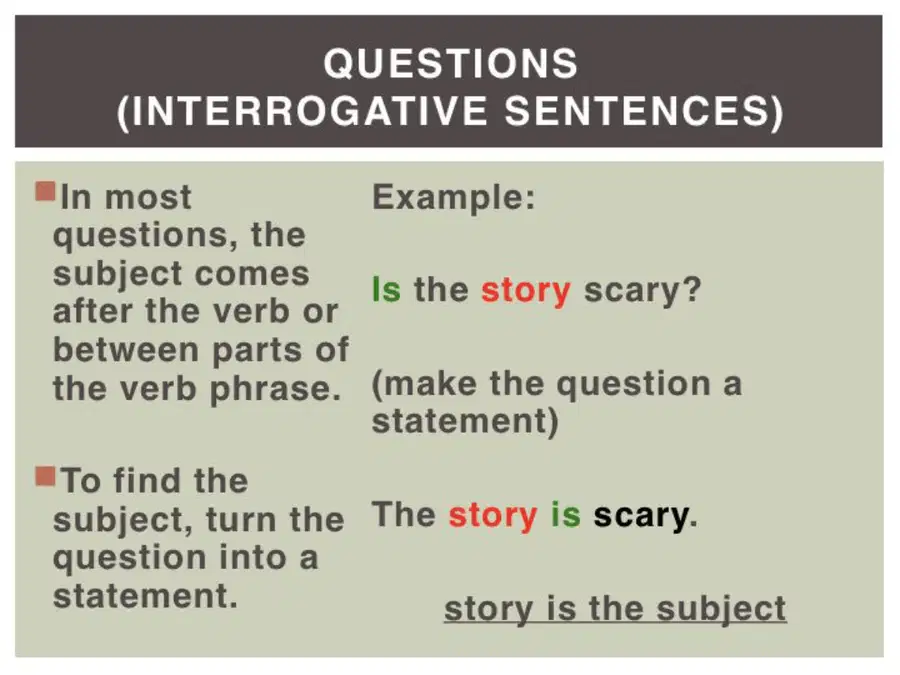
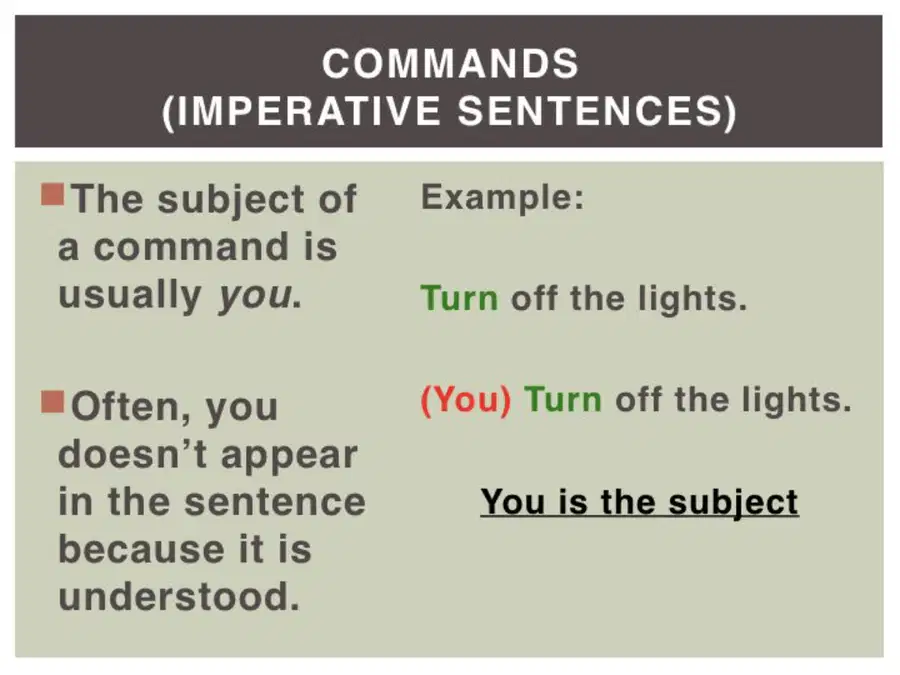
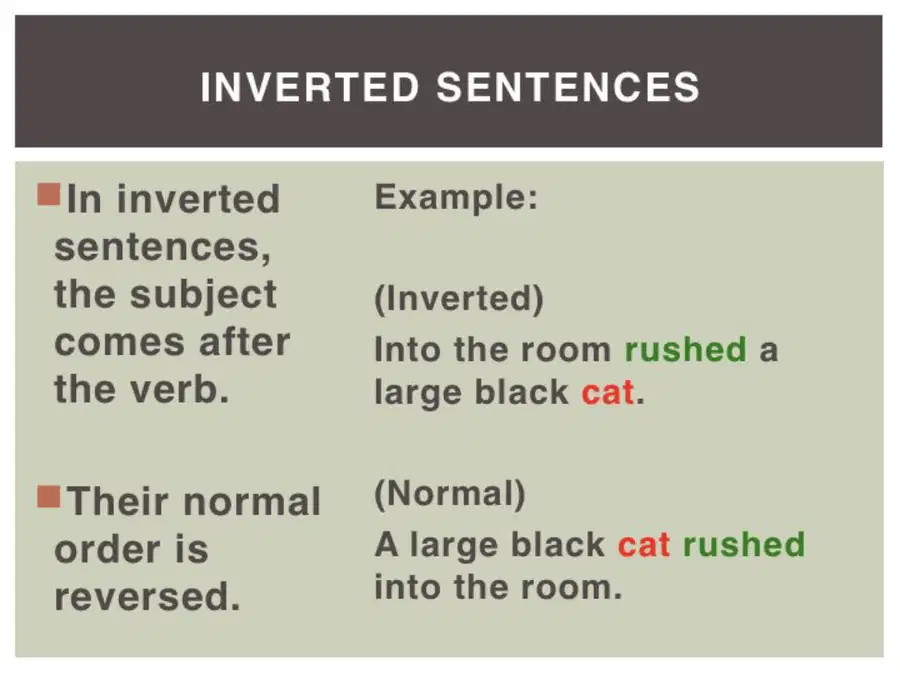
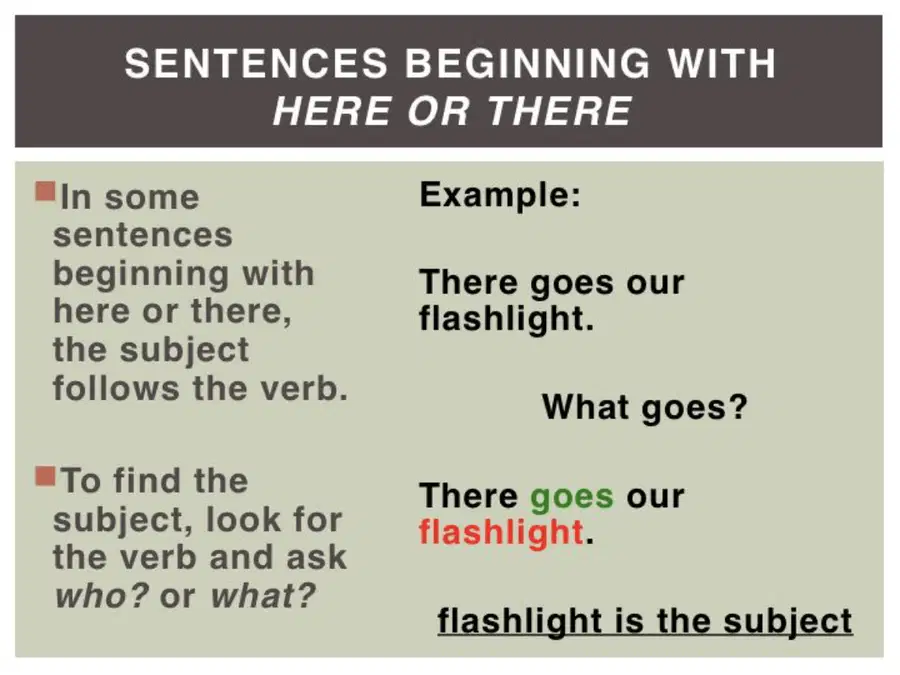
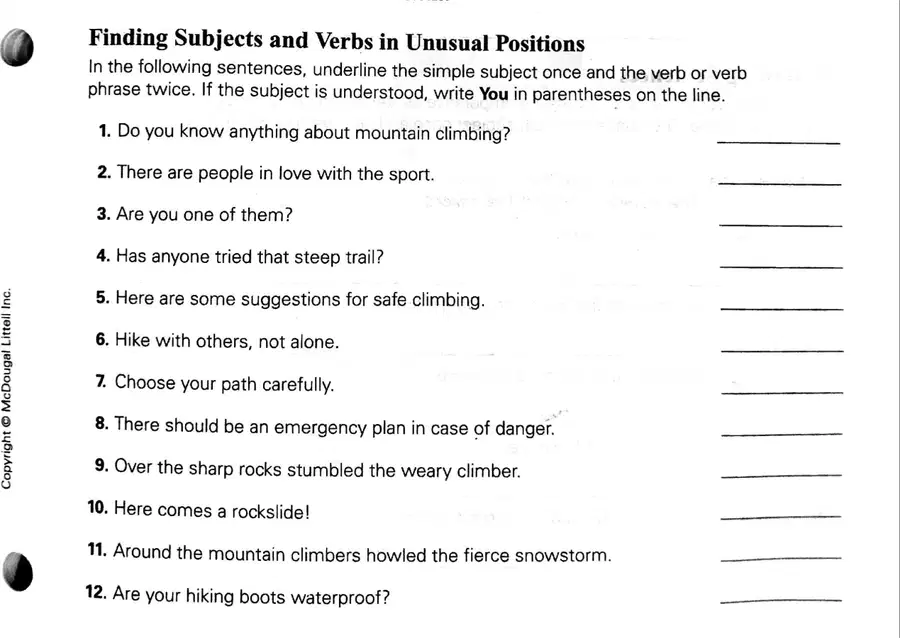
Subjects in Unusual Order
It is a sentence where the subject is not before the verb where you would expect to find it.
23
Four Categories of these "unusual" Sentences
Questions
Commands
Inverted sentences
Sentences that start with "here" or "there"
24

25

26

27

28

Agreement in number, Indefinite Pronouns, Compound Subjects, and Unusual order Review
Show answer
Auto Play
Slide 1 / 28
SLIDE
Similar Resources on Wayground

19 questions
Direct and Indirect Objects
Presentation
•
8th Grade
19 questions
Recount Text
Presentation
•
8th Grade
21 questions
Topics, Main Ideas, Details, Summaries
Presentation
•
8th Grade
23 questions
Short Story Elements Diagnostic Quiz
Presentation
•
8th - 9th Grade
22 questions
Reading Focus: Text Evidence to Support Responses
Presentation
•
8th Grade
21 questions
Present perfect: yet, already & just
Presentation
•
8th Grade
22 questions
Simple past - regular and irregular verbs
Presentation
•
8th Grade
20 questions
Claims & Evidence
Presentation
•
8th Grade
Popular Resources on Wayground
6 questions
PRIDE Always and Everywhere
Presentation
•
12th Grade
20 questions
Lab Safety Quiz

Quiz
•
6th Grade
26 questions
KOR Review Kahoot Questions
Quiz
•
8th Grade
21 questions
Continents and Oceans
Quiz
•
6th Grade
12 questions
Unit Zero lesson 2 cafeteria
Presentation
•
9th - 12th Grade
20 questions
Parts of Speech
Quiz
•
5th Grade
10 questions
Riddles Riddles fun Riddles
Quiz
•
6th - 12th Grade
16 questions
Subject & Predicate
Quiz
•
5th Grade
Discover more resources for English
20 questions
Figurative Language Review
Quiz
•
8th Grade
25 questions
Making Inferences
Quiz
•
6th - 8th Grade
15 questions
Sentence Fragment, Complete Sentence, and Run-on Sentence
Quiz
•
4th - 8th Grade
20 questions
Sentences, Fragments, and Run-ons
Quiz
•
8th Grade
15 questions
"The Storyteller" by Saki
Quiz
•
6th - 8th Grade
10 questions
Differentiating Primary and Secondary Sources in History

Interactive video
•
6th - 10th Grade
14 questions
Types of Conflict
Quiz
•
6th - 8th Grade
16 questions
Inferencing and Evidence
Quiz
•
7th - 8th Grade