Water Properties and Potability Review
Presentation
•
Science
•
8th Grade
•
Medium
Crystal Lancaster
Used 4+ times
FREE Resource
0 Slides • 45 Questions
1
Multiple Choice
1. _______ is to the amount of energy needed to create change as _________ is to the unit of measurement used for energy.
joules; adhesion
specific heat; joules
sublimation; deposition
2
Multiple Choice
2. Clouds are to ____________ as gas or vapor is to ________________
evaporation; cohesion
deposition; condensation
condensation; evaporation
3
Multiple Choice
3. Reused is to the _____________ as efficient use is to _______________________
water cycle; conservation
conservation; water cycle
water conservation; water cycle
4
Multiple Choice
4. Vaporizing Water molecules on trees is to _______________ as Vaporizing water molecules on bodies of water is to ___________
condensation; evaporation
transpiration; condensation
evaporation; condensation
5
Multiple Choice
5. Homogeneous bodies of water molecules is to __________ as Heterogeneous water and other substances are to ____________
cohesion; adhesion
adhesion; cohesion
surface tension; latent heat of fusion
6
Multiple Choice
6. Melting ice is to ________________ as 100 degrees C or 212 degrees F is to __________
melting point; boiling point
boiling point; melting point
latent heat of fusion; latent heat of vaporization
7
Multiple Choice
7. Heat in ( liquid water turning to gas) is to ___________ as Heat out ( gas turning back to liquid) is ________________
transpiration; evaporation
evaporation; condensation
melting point; boiling point
8
Multiple Choice
8. Dry Ice is to _________ as Frost is to ____________
sublimation; deposition
freezing point; melting point
deposition; sublimation
9
Multiple Choice
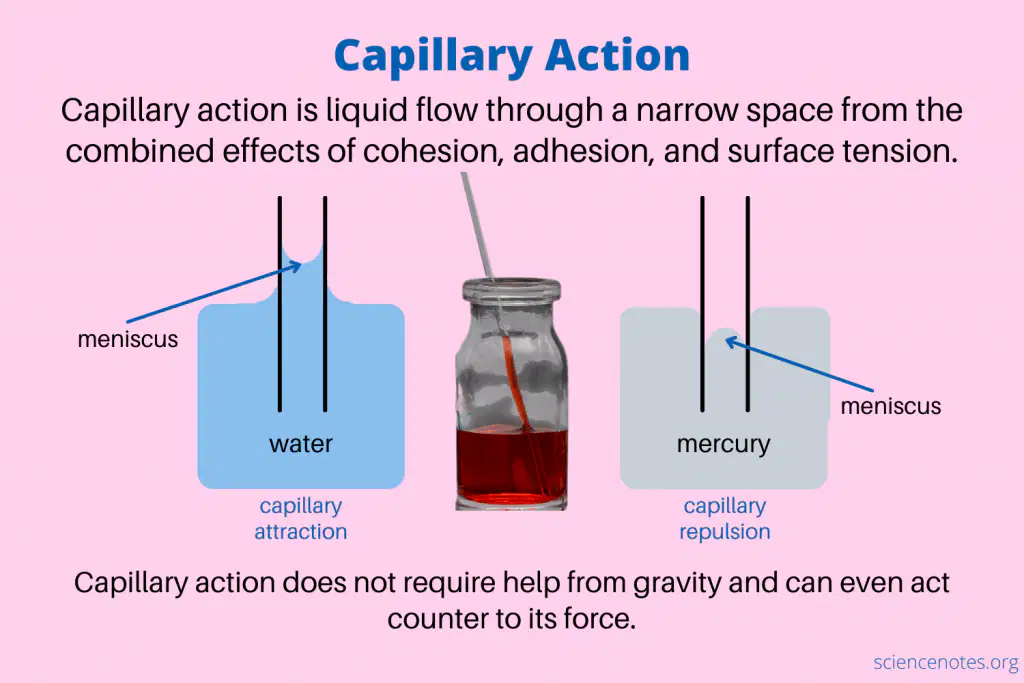
9. Climbing water is to ________ as walking on water is to ____________
surface tension; miracle
cohesion; adhesion
capillary action; surface tension
10
Multiple Choice
10. Hydrogen and Oxygen are to __________ as opposite attraction is to ___________
covalent bond; ionic bond
water molecule; polarity
ionic bond; polarity
11
Multiple Choice
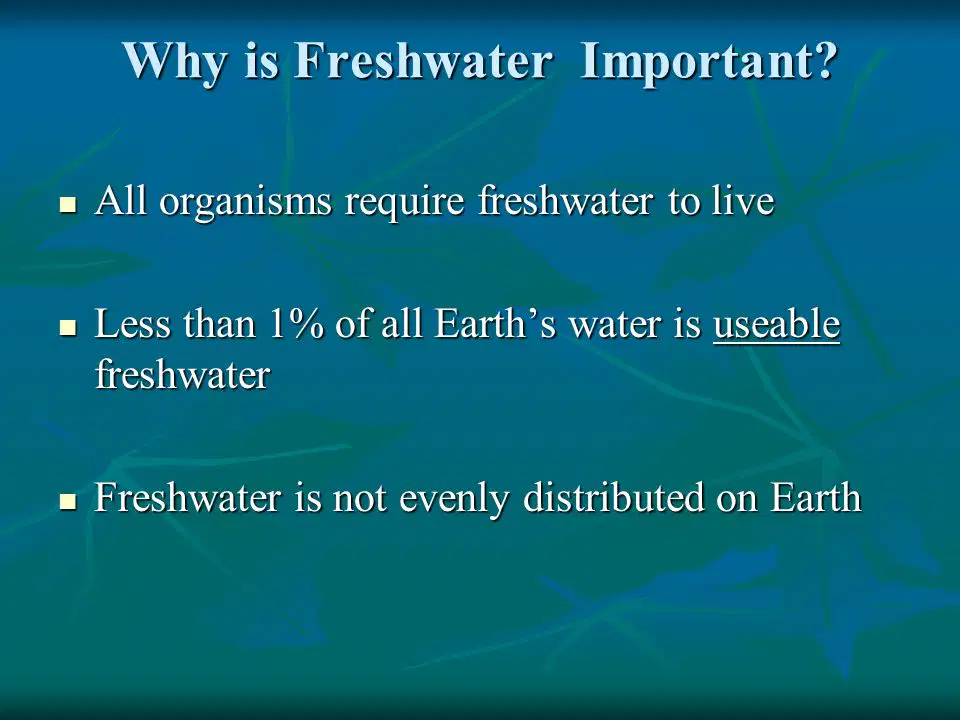
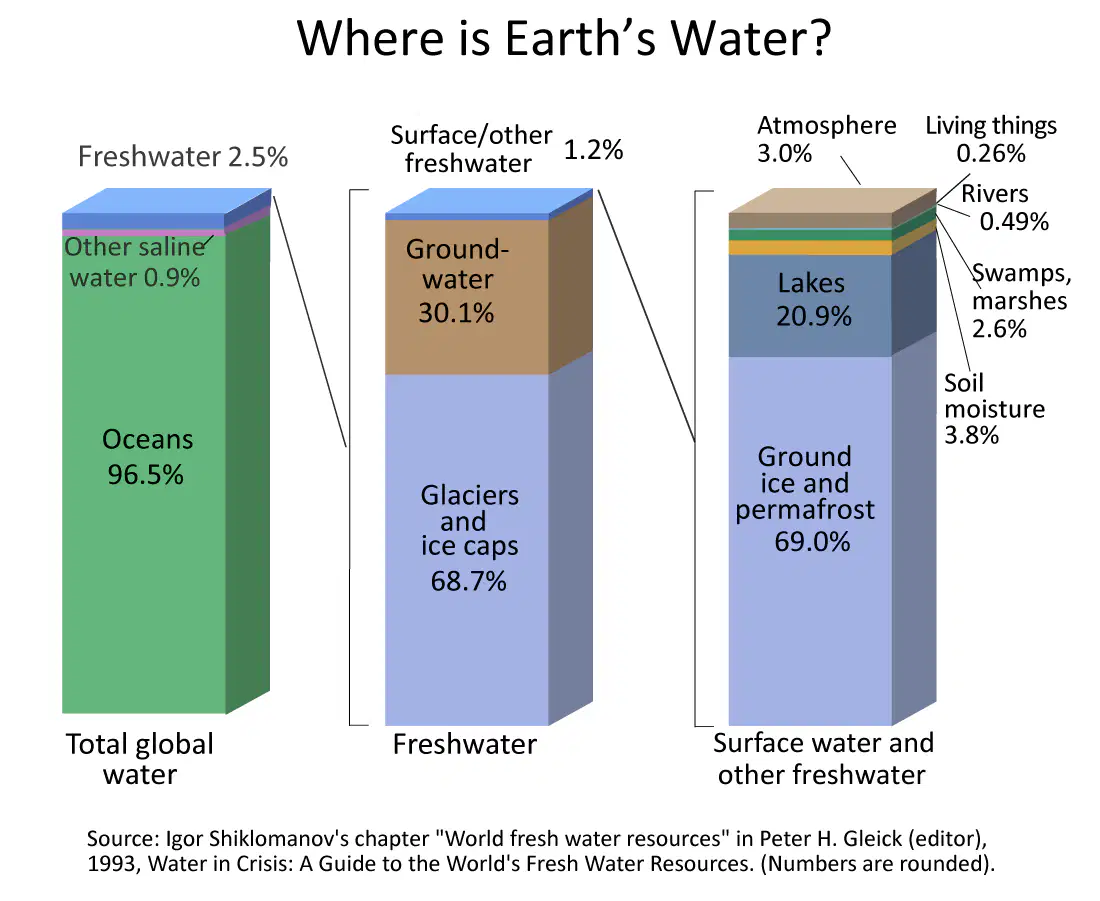
11.Which best describes the amount of Earth’s total water supply that is usable freshwater?
Less than 1%
Less than 25%
greater than 50%
greater than 75%
12
Multiple Choice
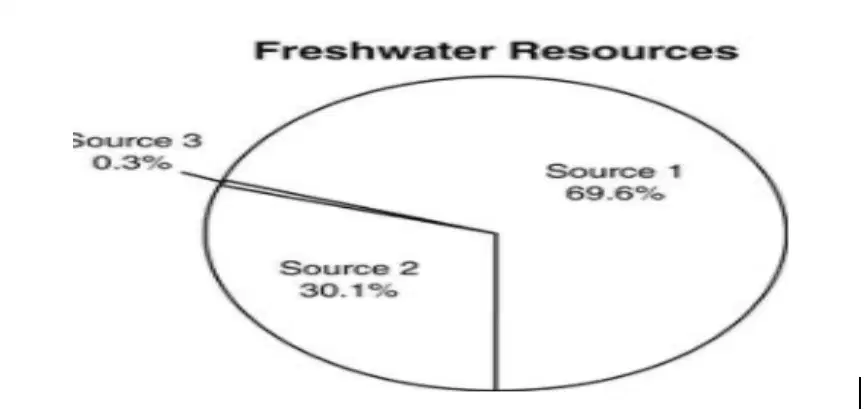
12. The graph shows the distribution of the freshwater resources of Earth.
Which of these sources of fresh water corresponds to Source 1?
Atmospheric water
Surface Water
Frozen water
groundwater
13
Multiple Choice
13. Which type of water reservoir could always provide fresh water?
Inland lakes
River Deltas
Mountain Glaciers
Tropical Seas
14
Multiple Choice
14. Which is Earth’s largest source of drinkable water?
Lakes
rivers
Oceans
Aquifers
15
Multiple Choice
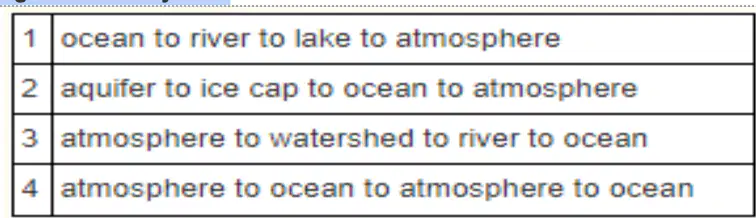
15. The water cycle has no beginning or end, but it has an order. Which of the following are the MOST likely ways that water would move through the water cycle?
1 & 2
2 & 3
3 & 4
4 & 1
16
Multiple Choice
16. Why is water from an aquifer more likely to be cleaner than water from other sources?
Because it forms where freshwater and saltwater meet
Because it receives water directly from precipitation
Because it rises to the surface near the ocean
Because pollutants are filtered by rock and soil deep within the earth
17
Multiple Choice
17. Which best describes the process of evapotranspiration in the water cycle?
Water from the ocean enters the atmosphere as water vapor
Water on the surface of the earth enters the groundwater supply
Water vapor in the atmosphere returns to the surface of the Earth as liquid water
Water on the surface of the Earth and water lost by plants enters the atmosphere as water vapor
18
Multiple Choice
18. Which most likely causes the water table to rise?
Increased evaporation
Increased Condensation
Increased Precipitation
Increased Runoff
19
Multiple Choice
19. Approximately what percent of the Earth is covered by water?
30%
50%
70%
90%
20
Multiple Choice
20. Why is the largest portion of the Earth’s water not used for drinking?
It is contaminated
It is trapped in the Polar ice caps
It is too deep in the ground to recover
It is too costly to go through desalination
21
Multiple Choice
21. Which has the highest density?
Water at 0 C
water at 6 C
Water at 4 C
Water at 8C
22
Multiple Choice
22. Which property of water is most responsible for an insect being able to walk on water
Adhesion
Cohesion
Density
Transpiration
23
Multiple Choice
23. What is the ratio of freshwater to saltwater on Earth
3:97
3:100
97:3
97:100
24
Multiple Choice
24. Which property of the molecules in ice makes ice float on water?
They are farther apart than water molecules
They are much larger than water molecules
They contain more oxygen atoms than water molecules
They move more quickly than water molecules
25
Multiple Choice
25. Which two elements make up water molecules
Hydrogen and Helium
Hydrogen and Carbon
Hydrogen and Oxygen
26
Multiple Choice
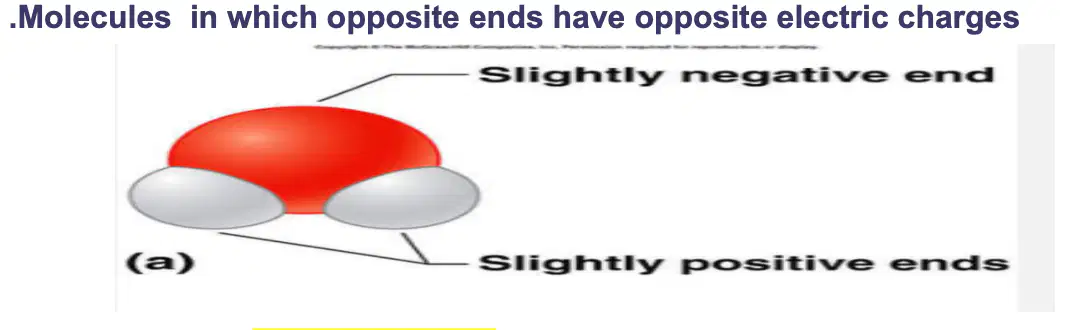
26. Molecules in which opposite ends have opposite electric charges
Cohesion
Polar Molecules
Solution
Hydrogen Bond
27
Multiple Choice
Preferred heat and AC settings are to thriving living conditions as aquatic __________ is to increased or decreased oxygen levels
Temperature
Dissolved Oxygen
Turbidity
28
Multiple Choice
28. Increased Aquatic, photosynthetic waste product is to _____________ as decreased ___________ is to dark or cloudy water.
Dissolved oxygen; turbidity
temperature; turbidity
potability; dissolved oxygen
29
Multiple Choice
29. Fertilizers, septic tank leakage, sewage and erosion of natural deposits are to ______ as human and animal waste, laundry, cleaning and industrial effluents are to __________
nitrates; turbidity
phosphates; nitrates
dissolved oxygen; temperature
30
Multiple Choice
30. High concentration of positive hydrogen ions are to ______ as high concentration of negative hydroxide ions are to ______
ph; bases
bases; acids
Acids; Bases
31
Multiple Choice
31. Alerting Alarm systems are to safe homes as the number of __________________ are to the alerting of safe water
bioindicators
ph
potability
32
Multiple Choice
32. Traceable is to _________________ as untraceable is to ____________________
non point pollution; Point source pollution
Point source pollution; non point pollution
33
Multiple Choice
33. Chemical, Physical and biological measurements of water is to __________________ as uncontaminated, unpolluted, and nonpoisonous water is to _______________
Water quality; potability
Dissolved oxygen; non-potability
potability; water quality
34
Multiple Select
34. Check all that apply to the physical variables associated with water quality
Dissolved oxygen; bioindicators
pH
Temperature; Water Movement
Salienty
turbidity
35
Multiple Select
35. Check all that apply to the chemical variables associated with water quality
Dissolved oxygen
pH
Nitrogen
Phosphorous
36
Multiple Choice
36. Circle all that apply to the biological variables associated with water quality
bioindicators
Dissolved oxygen
Salienty
ph
37
Multiple Choice
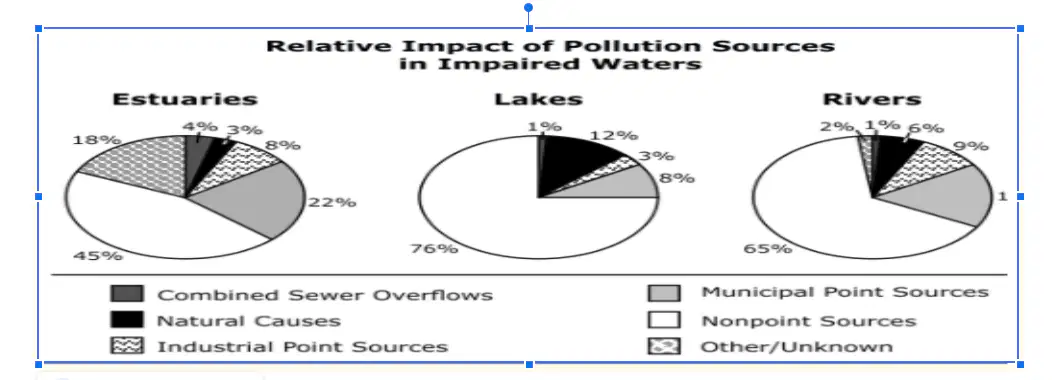
37. The diagram below shows relative impact of nonpoint source pollution. Which aquatic environment would benefit the most from reduced runoff from lawns treated with fertilizers?
Lakes
Estuaries
Rivers and Lakes
Estuaries and Lakes
38
Multiple Choice
38. Which best explains a way of protecting water for human consumption?
Ban the use of lakes and rivers for recreation
Allow dumping of some waste into rivers
Reduce the use of lakes & rivers for irrigation of crops
Improve water quality standards for industries located on Lakes & Rivers
39
Multiple Choice
39. A small city gets its drinking water from the river running through its center. This river is fed by rivers that flow down the mountains nearby. How would excessive rainfall in the mountains most likely affect the turbidity of this local water source?
Heavy rainfall would decrease the turbidity downstream
Heavy rainfall would increase the trinity downstream
Heavy rainfall would increase the turbidity upstream
Heavy rainfall would decrease the turbidity upstream
40
Multiple Choice
40. Which factors can have the greatest effect on the health of a river system?
Type of soil and salinity
Nitrite levels and Turbidity
Human consumption and pH
Natural Disasters and tidal changes
41
Multiple Choice
41. If a body of water has high turbidity levels, what can most likely be concluded?
It has a low pH
Unsafe to drink
Too hot to drink
contains a lot of chemicals
42
Multiple Choice
42. Why does fertilizer pollution stimulate the growth of algae in a pond?
Algae are producers & use the Fertilizers to rapidly multiply
Algae are producers & use fertilizer nutrients to decompose
Algae are parasites and absorb energy from the fertilizers in order to grow
Algae are herbivores that feed off the plants which grow due to excess fertilizers
43
Multiple Choice
43. After analyzing data collected from a pond, there is a significant decrease in dissolved oxygen. Which most likely caused the decline?
An increase in minerals
An increase in sediment
An increase in algae
Decrease in fish
44
Multiple Choice
44. Which would most affect the health of fish in a local pond?
The daily release of hot water into a pond from a factory
A storm temporarily stirring up sediments in a pond
The occasional erosion of sediments into the pond from a nearby field
A slight increase in the number of people who fish in the pond for food.
45
Multiple Choice
45. Which aspect of fertilizer pollution would have the greatest negative impact on an aquatic ecosystem?
Nitrates poison the water that fish breathe through their gills
Microorganisms in the water absorb all the oxygen in the water and suffocate animals
Aquatic animals increase, adding producers to the food chain and feeding fish
Algae blooms deplete the oxygen and block the sunlight from penetrating the body of water
1. _______ is to the amount of energy needed to create change as _________ is to the unit of measurement used for energy.
joules; adhesion
specific heat; joules
sublimation; deposition
Show answer
Auto Play
Slide 1 / 45
MULTIPLE CHOICE

Similar Resources on Wayground
38 questions
Transferring Thermal Energy
Presentation
•
8th - 9th Grade
40 questions
Three Types of Volcanoes
Presentation
•
7th Grade
42 questions
Energy Transformation IA#1 Review
Presentation
•
8th Grade
37 questions
Physical and Chemical Properties and Changes
Presentation
•
8th Grade
42 questions
Carbon Footprint
Presentation
•
8th Grade
39 questions
Earth and Solar Systen: Phenomena
Presentation
•
8th Grade
44 questions
Interaction of Light Waves
Presentation
•
8th Grade
41 questions
Independent and Dependent Variables
Presentation
•
7th Grade
Popular Resources on Wayground
6 questions
Secondary Safety Quiz
Presentation
•
9th - 12th Grade
10 questions
MyPath Diagnostic Overview
Presentation
•
6th - 8th Grade
20 questions
Lab Safety Quiz
Quiz
•
6th Grade
21 questions
Continents and Oceans
Quiz
•
6th Grade
20 questions
Adding and Subtracting Decimals
Quiz
•
5th Grade
20 questions
Parts of Speech
Quiz
•
5th Grade
16 questions
Subject & Predicate
Quiz
•
5th Grade
21 questions
Lab Safety
Quiz
•
10th Grade
Discover more resources for Science
10 questions
Lab Safety
Quiz
•
8th Grade
20 questions
Lab Safety
Quiz
•
5th - 8th Grade
10 questions
Lab Safety Essentials
Interactive video
•
6th - 10th Grade
20 questions
Scientific Method and Variables
Quiz
•
8th Grade
20 questions
Scientific method and variables
Quiz
•
8th Grade
27 questions
Counting Atoms - Subscripts
Quiz
•
8th Grade
22 questions
Scientific Method and Variables
Quiz
•
8th Grade
10 questions
Essential Guidelines for Science Lab Safety
Interactive video
•
6th - 10th Grade