

Classification of Living Things

Presentation
•
English
•
5th Grade
•
Practice Problem
•
Medium
+7
Standards-aligned

Yulia Golovina
Used 31+ times
FREE Resource
34 Slides • 34 Questions
1
How are organisms classified?

2
Open Ended
Why do you think scientists classify living things?
3
There are millions of living things on Earth.
Classifying allows scientist to make connections between new and discovered species.
Make connections between different living things.

4
Open Ended

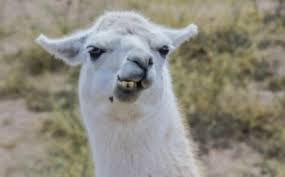
What do these living things have in common?
5
There are two ways: physical and chemical characteristics
Physical includes skeletal structures, egg development, body adaptations.
Chemical includes: DNA and RNA, mutations in the organisms' genes

6
Taxonomy is the science of describing, classifying, and naming living things.
There are 8 levels of classifying.
Domain is the largest
Species is the smallest

7
There is a riddle to remember the order of the levels.
Dear King Philip Came Over For Good Soup
8

9
Multiple Choice
What is taxonomy?
The study of naming and classifying things
Preserving dead organisms
The science of paying your taxes
My cat's name
10
Multiple Choice
Why do we classify living things
To keep information private
To make finding information easier
To confuse students
To make animals healthier
11
Multiple Choice
What is the smallest and most specific group in the classification system?
species
domain
kingdom
Genus
12
Multiple Choice
What is the largest and most general group that an organism is classified into?
Domain
Kingdom
Species
Family
13
Multiple Choice
Taxonomy is the study of plants
True
False
14
Each species has a two part scientific name.
It includes the Genus and the Species.
The Genus includes similar species.
The Species is unique to that one living thing.

15
Multiple Choice

To what genus does a Banana tree belong to?
Musa
Ficus
paradisicum
Bamboosa
16
Multiple Choice
In a scientific name, what does the SECOND name identify?
Genus
Species
Kingdom
Domain
17
Multiple Choice
In a scientific name, what group does the FIRST name identify?
Genus
Species
Kingdom
Domain
18
Tools that scientists use to identify unknown animals.
It has a series of questions that scientists use.
As you move through the key, it helps you identify the organism

19

20
Multiple Choice
The first part of a scientific name is an organism's _______________ and the second part is its ________________.
species, genus
phylum, order
class, spices
genus, species
21
Multiple Choice
What is the purpose of a dichotomous key?
to find a common ancestor
to show the evolution of organisms
to show relationships between organisms
to identify organisms
22
Multiple Choice
When using a dichotomous key to identify organisms, what do we look at?
physical features
weather patterns
environment
diet
23
Multiple Choice

What is monster # 1 ?
Alienus quadlegicus
Alienus haircus
Alienus Tritoothicus
Alienus Blobicus
24
Prep Course

25
Open Ended
How can you tell if something is alive?
26
Made of cells
Organized
Grow and develop
Respond to environment
Reproduce
Use energy

27
Multiple Choice
Which is NOT a characteristic of living things?
Made of cells
Made of muscles
Use energy
Move
28
All living things are made of cells
Unicellular Organisms
Multicellular Organisms

29
They can stay alive by itself

30
Unicellular Organisms vs Multicellular
Producers vs Consumers
Habitat (Where they live)

31
Trillions of cells
Cells work together
Different parts of different types of cells

32
Multiple Choice

Multicellular or Unicellular?
Multicellular
Unicellular
33
Multiple Choice

Unicellular or Multicellular?
Unicellular Organism
Multicellular Organism
34
Grow
Develop
Reproduce

35
Some make own food
Some eat others

36
Make own food
Convert sunlight into food (photosynthesis)
Some bacteria convert chemical into food (chemoautotrophs)

37
Get energy from other organisms
Ex. Animal and Fungi

38
Multiple Choice
What is an heterotrophs ?
Make their own food
Make their own energy
Eat others for energy
All of the above
39
Multiple Choice
What type of organisms are autotrophs?
They reproduce
They make their own food
The eat others for food
All are correct
40
Multiple Choice
What is an example of autotrophs?
Cat
Dog
Rabbit
Grass
41
Multiple Choice
What is an example of heterotroph?
tree
bugs
water
all of the above
42
Habitat: environment they live in
Food and water

43
Habitat: Deepsea

44

45
Classify things to make it easier to learn/remember/research
Living things: Eat, move, reproduce, organize, respond, use energy, grow
There are many ways to classify organisms
46
Year 7
47
- unicellular vs multicellular organisms
- differentiated cells
- organism structure
48
Multiple Choice
How are multicellular and unicellular organisms different?
Unicellular organisms have one cell and are smaller than multicellular organisms.
Multicellular organisms have one cell and are larger than unicellular organisms.
49
Multiple Choice
Which best explains how a single-celled organism can survive without other cells?
They do not need to perform more than one function to survive.
They are able to perform all necessary functions within one cell.
They do not need any substance from outside of the cell.
50
Multiple Choice
Every plant and animal starts out as a single cell. This one cell divides and multiples to form a more complex multicellular organism.
true
false
51
Unicellular = one cell
Multicellular = many cells
Many unicellular organisms have a different structure than plant or animal cells
They are often MUCH smaller, and sometimes do not contain a nucleus, mitochondria, or other organelles
They have everything they need to survive in ONE CELL

52
All started out as one cell
As you grow, your cells DIFFERENTIATE to become different types of cells to carry out all the functions of the organism
e.g. brain, skin, heart cells. These are all different, and carry out different function to keep the organism alive
53
MC takes more energy to be alive and to grow
UC is quick to reproduce
MC are more diverse
MC are more resilient (i.e. one cell can die, but the whole organism if OK)
Can you think of anymore?
54
Same type of specialised cell --> Tissue --> Organ --> System --> Organism
Example:
Brain cells --> Brain tissue (grey matter) --> Brain --> Nervous System --> Organism

55
Multiple Choice
Basic unit of life
Cell
Tissue
Organ
Organ System
56
Multiple Choice
Multicellular Organisms
Made of 1 cell
Made of more than 1 cell
57
Multiple Choice

Based on this image is the Euglena multicellular or unicellular?
1. Multicellular
2. Unicellular
58
Multiple Choice

Classify the following examples (pictures) as unicellular or multicellular
1. Unicellular
2. Multicellular
59

60
An ecosystem is a community of interacting organisms and their environment of abiotic and biotic factors.

61
A producer is a living thing that makes its own food from
sunlight, air, and soil.

62
A consumer is a living thing that cannot make its own food.

63
Decomposers are consumers that get energy from the remains of dead plants and animals.

64
Multiple Select
Which is not a consumer?
Select all that apply
65
Multiple Select
Select all that apply: Producers are?
plants
animals
trees
grass
66
Multiple Choice
Consumers are
consumers that get energy from the remains of dead plants and animals.
living things that cannot make its own food.
a living thing that makes its own food from
sunlight, air, and soil
67
Multiple Choice
A decomposer.......
makes its own food from
sunlight, air, and soil
can't make their own food
get energy from the remains of dead plants and animals.
68
Multiple Select
Which is an example of a decomposer?
Select all that apply
How are organisms classified?
Show answer
Auto Play
Slide 1 / 68
SLIDE
Similar Resources on Wayground

65 questions
NIK U9 R2 STORY VS PLAYS
Presentation
•
5th Grade
58 questions
5.1.2
Presentation
•
5th Grade
59 questions
Animal Habitat
Presentation
•
4th Grade
67 questions
Intro to STEM Words LMS
Presentation
•
6th Grade
59 questions
Kacper R.
Presentation
•
4th Grade
61 questions
Q2 M2: Types of Orchard Farms Proper Way of Planting
Presentation
•
6th Grade
65 questions
Grade 5 Chapter 5 Lesson 4
Presentation
•
5th Grade
Popular Resources on Wayground
10 questions
Safety Day 2026 – Student Review

Quiz
•
9th Grade
21 questions
Continents and Oceans
Quiz
•
6th Grade
20 questions
Parts of Speech
Quiz
•
5th Grade
16 questions
Subject & Predicate
Quiz
•
5th Grade
25 questions
Multiplication Facts
Quiz
•
5th Grade
12 questions
Map Skills
Quiz
•
3rd Grade
22 questions
Continents and Oceans
Quiz
•
5th Grade
15 questions
Rounding Decimals
Quiz
•
5th Grade
Discover more resources for English
20 questions
Parts of Speech
Quiz
•
5th Grade
16 questions
Subject & Predicate
Quiz
•
5th Grade
12 questions
Figurative Language Review

Interactive video
•
5th Grade
20 questions
4 Types of Sentences
Quiz
•
4th - 5th Grade
20 questions
Main Idea and Details
Quiz
•
5th Grade
11 questions
Quiz: Review Simple, Compound, and Complex Sentences
Quiz
•
5th Grade
10 questions
Main Idea and Supporting Details
Quiz
•
3rd - 6th Grade
20 questions
Prepositions and Prepositional Phrases
Quiz
•
5th Grade