

Sys Arch L1. The purpose of the CPU: FDE and CPU performance

Presentation
•
Computers
•
10th Grade
•
Practice Problem
•
Easy

Ben Dobson
Used 5+ times
FREE Resource
53 Slides • 7 Questions
1

2

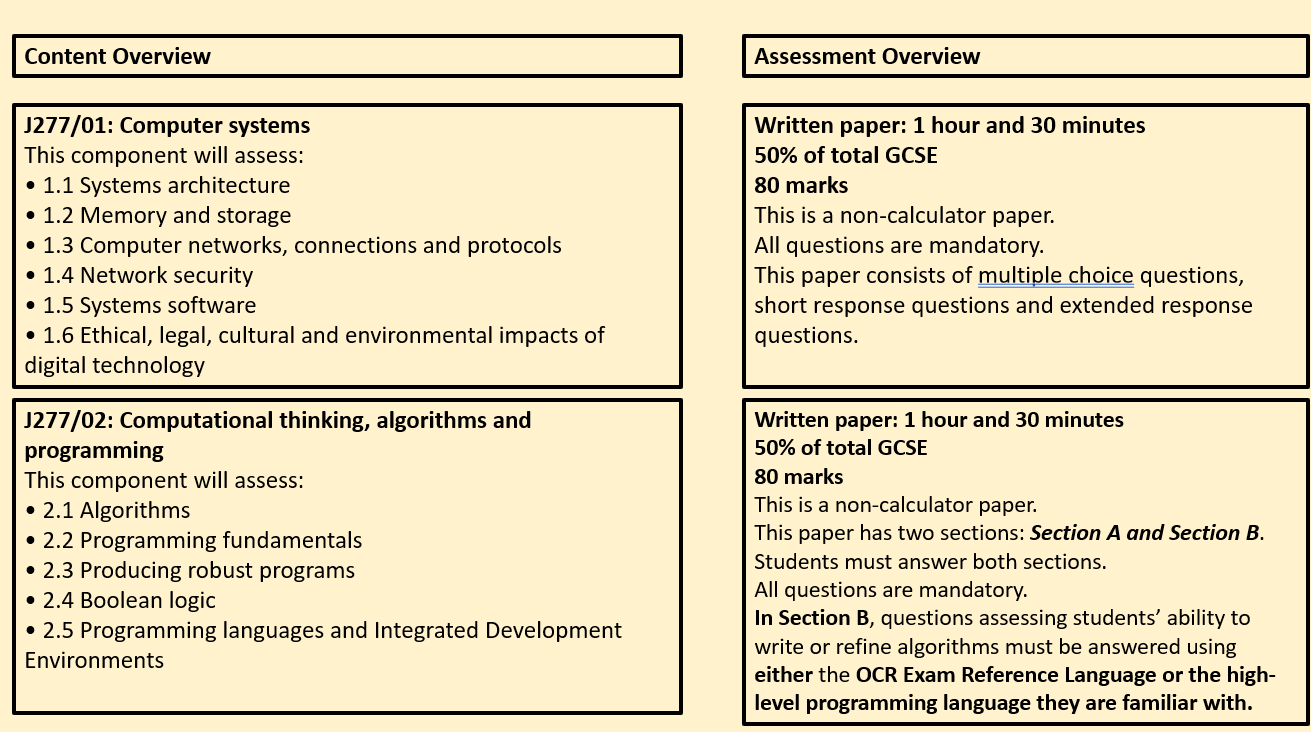
The course
Unit
Assessment
Weighting
Computer systems
Exam
80 marks
1 hour 30 minutes
(no calculators)
50%
Computational thinking,
algorithms and
programming
Exam
80 marks
1 hour 30 minutes
(no calculators)
50%
Practical programming
During the course, all students must be given the
opportunity to undertake a programming task, either
to a specification or to solve a problem.
3

4
5

6

OCR GCSE
(J277)
SLR1.1 Systems architecture
Learning Intention
To know the purpose of the CPU
=The fetch-decode-execute cycle
AND
The factors that affect CPU
performance:
7

OCR GCSE (J277)
SLR1.1 Systems architecture| The purpose of the CPU: The fetch-decode-execute cycle
What is a computer?
INPUT
An electronic device that takes input…
8

OCR GCSE (J277)
SLR1.1 Systems architecture| The purpose of the CPU: The fetch-decode-execute cycle
INPUT
PROCESS
An electronic device that takes input…processes data…
What is a computer?
9

OCR GCSE (J277)
SLR1.1 Systems architecture| The purpose of the CPU: The fetch-decode-execute cycle
INPUT
PROCESS
OUTPUT
An electronic device that takes input…processes data…and delivers output.
What is a computer?
10

OCR GCSE (J277)
SLR1.1 Systems architecture| The purpose of the CPU: The fetch-decode-execute cycle
INPUT
5
PROCESS
OUTPUT
An electronic device that takes input…processes data…and delivers output.
What is a computer?
11
OCR GCSE (J277)
SLR1.1 Systems architecture| The purpose of the CPU: The fetch-decode-execute cycle
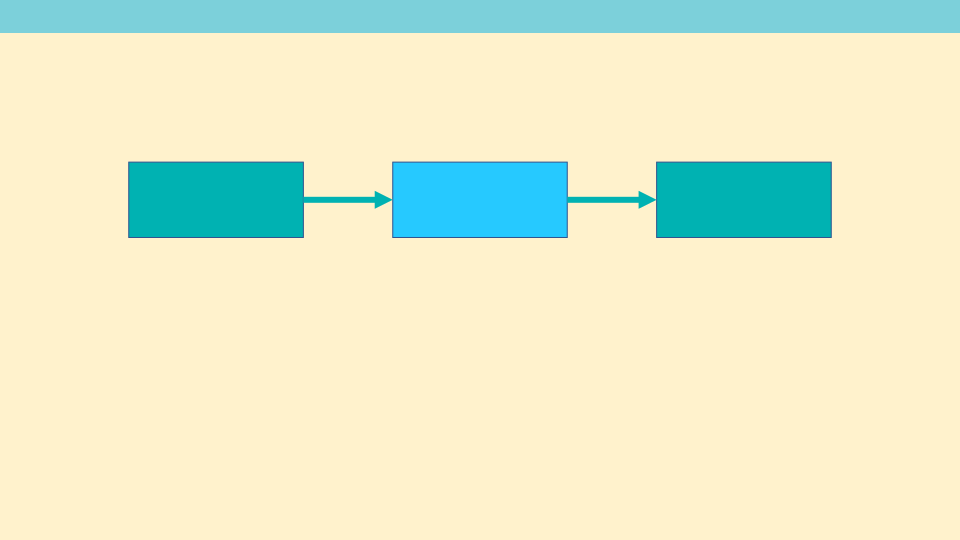
INPUT
5
PROCESS
Multiply by 2
OUTPUT
An electronic device that takes input…processes data…and delivers output.
What is a computer?
12
OCR GCSE (J277)
SLR1.1 Systems architecture| The purpose of the CPU: The fetch-decode-execute cycle
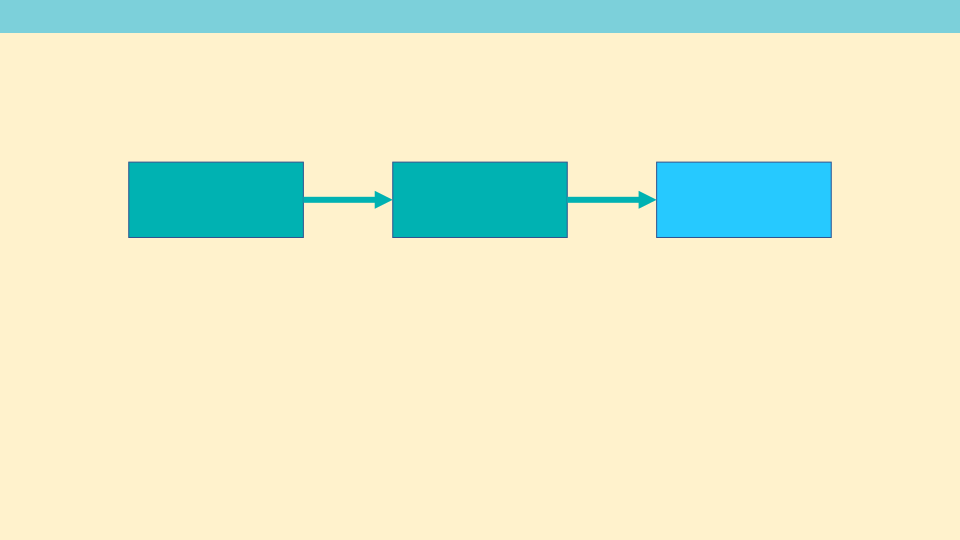
INPUT
5
PROCESS
Multiply by 2
OUTPUT
10
An electronic device that takes input…processes data…and delivers output.
What is a computer?
13


OCR GCSE (J277)
SLR1.1 Systems architecture| The purpose of the CPU: The fetch-decode-execute cycle
INPUT
PROCESS
OUTPUT
What is a computer?
14


OCR GCSE (J277)
SLR1.1 Systems architecture| The purpose of the CPU: The fetch-decode-execute cycle
INPUT
PROCESS
OUTPUT
What is a computer?
15




OCR GCSE (J277)
SLR1.1 Systems architecture| The purpose of the CPU: The fetch-decode-execute cycle
INPUT
PROCESS
OUTPUT
What is a computer?
16


OCR GCSE (J277)
SLR1.1 Systems architecture| The purpose of the CPU: The fetch-decode-execute cycle
INPUT
PROCESS
OUTPUT
To do this, computers follow a set of instructions known as a program.
What is a computer?
17
Open Ended
What is the definition of a computer? Describe and give examples each of the three parts of the definition.
18
OCR GCSE (J277)
SLR1.1 Systems architecture| The purpose of the CPU: The fetch-decode-execute cycle
INPUT
5
PROCESS
Multiply by 2
OUTPUT
10
An electronic device that takes input…processes data…and delivers output.
What is a computer?
19
OCR GCSE (J277)
SLR1.1 Systems architecture| The purpose of the CPU: The fetch-decode-execute cycle
INPUT
PROCESS
OUTPUT
What is a computer?
20

OCR GCSE (J277)
SLR1.1 Systems architecture| The purpose of the CPU: The fetch-decode-execute cycle
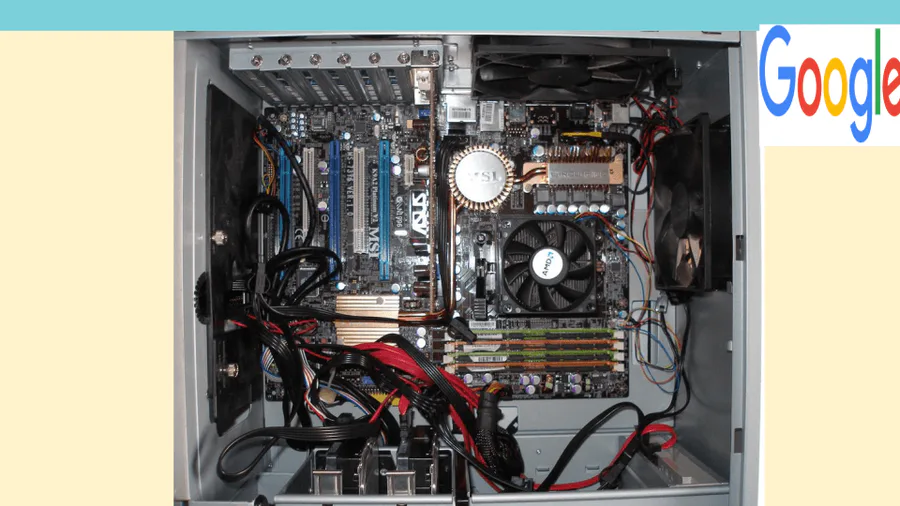
Print out image of computer
Put up image on white boards.
A)
In groups label the image with each components name.
Explain what they do
You can add additional information about any of them,
1 person/group are Researchers. They stay at the computer/s
and tell scribe(s) what do write
I person/group acts as Scribes
Also 1 person will be Speaker to describe what you have written
up when asked
B)
Vote on who has best the best mind map but you must
explain why
C)
Improve you own mindmap.
21
OCR GCSE (J277)
SLR1.1 Systems architecture| The purpose of the CPU: The fetch-decode-execute cycle
Print Out.
Put up on
white
boards.
22

OCR GCSE (J277)
SLR1.1 Systems architecture| The purpose of the CPU: The fetch-decode-execute cycle
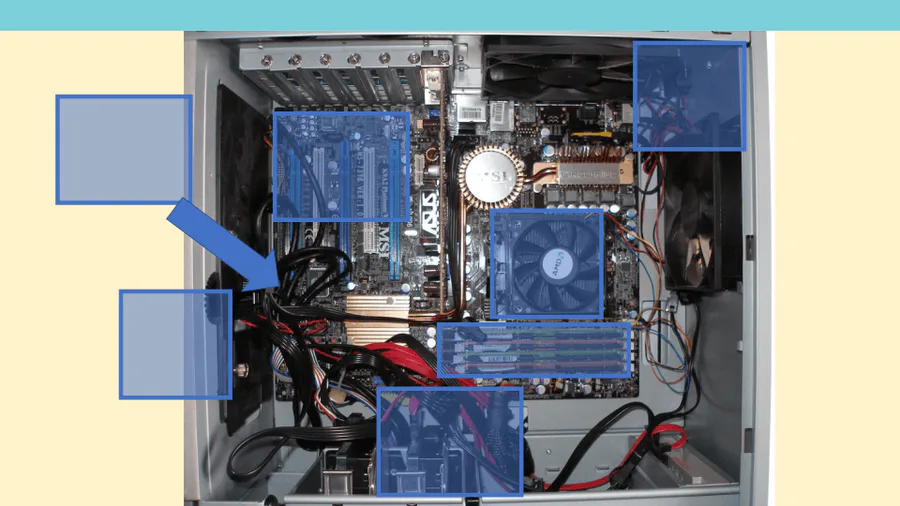
MEMORY (RAM)
23

OCR GCSE (J277)
SLR1.1 Systems architecture| The purpose of the CPU: The fetch-decode-execute cycle
MEMORY
CPU
24
OCR GCSE (J277)
SLR1.1 Systems architecture| The purpose of the CPU: The fetch-decode-execute cycle
MEMORY (RAM)
CPU
(+CPU
FAN)
POWER
SUPLY
EXPANSION
CARD SLOTS
COOLING
FANS
HARD DRIVES
(SECONDARY
STORAGE)
POWER
LEADS
DATA
CABLES
25

OCR GCSE (J277)
SLR1.1 Systems architecture| The purpose of the CPU: The fetch-decode-execute cycle
Fetch
Decode
Execute
26

OCR GCSE (J277)
SLR1.1 Systems architecture| The purpose of the CPU: The fetch-decode-execute cycle
The fetch-decode-execute cycle
Fetch
Decode
Execute
Fetch stage
• Fetch the next instruction from
main memory (RAM).
• Bring it back into the CPU.
27
Open Ended
What happens in the fetch stage?
28
OCR GCSE (J277)
SLR1.1 Systems architecture| The purpose of the CPU: The fetch-decode-execute cycle
The fetch-decode-execute cycle
Fetch
Decode
Execute
Fetch stage
• Fetch the next instruction from
main memory (RAM).
• Bring it back into the CPU.
29

OCR GCSE (J277)
SLR1.1 Systems architecture| The purpose of the CPU: The fetch-decode-execute cycle
The fetch-decode-execute cycle
Fetch
Decode
Execute
Decode stage
• Inspect the instruction to find
out what needs to be done.
• This is carried out by a CPU
component Control Unit
30
Open Ended
What happens in the decode stage?
31
OCR GCSE (J277)
SLR1.1 Systems architecture| The purpose of the CPU: The fetch-decode-execute cycle
The fetch-decode-execute cycle
Fetch
Decode
Execute
Decode stage
• Inspect the instruction to find
out what needs to be done.
• This is carried out by a CPU
component Control Unit
32

OCR GCSE (J277)
SLR1.1 Systems architecture| The purpose of the CPU: The fetch-decode-execute cycle
The fetch-decode-execute cycle
Fetch
Decode
Execute
Execute stage
• Carry out the instruction,
which could be:
o Performing a calculation.
o Or other things
o Going back to main
memory and fetching data
e.g. a variable in a program
o Storing information back in
main memory e.g. a
variable in a program
33
Open Ended
What happens in the execute stage?
34
OCR GCSE (J277)
SLR1.1 Systems architecture| The purpose of the CPU: The fetch-decode-execute cycle
The fetch-decode-execute cycle
Fetch
Decode
Execute
Execute stage
• Carry out the instruction,
which could be:
o Performing a calculation.
o Or other things
o Going back to main
memory and fetching data
e.g. a variable in a program
o Storing information back in
main memory e.g. a
variable in a program
35

OCR GCSE (J277)
SLR1.1 Systems architecture| The purpose of the CPU: The fetch-decode-execute cycle
The fetch-decode-execute cycle
Fetch
Decode
Execute
How often do you
think this happens?
36

37

OCR GCSE (J277)
SLR1.1 Systems architecture| The purpose of the CPU: The fetch-decode-execute cycle
The fetch-decode-execute cycle
Fetch
Decode
Execute
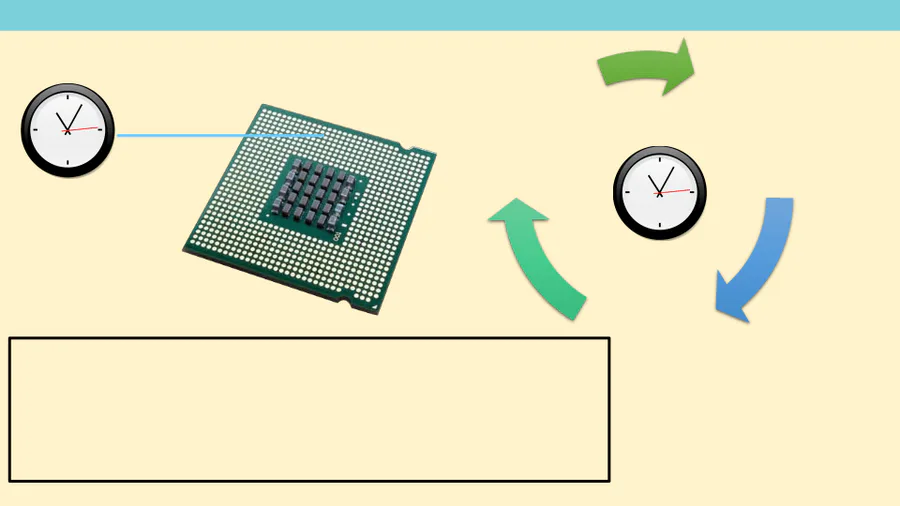
On a modern CPU, the fetch-
decode-execute cycle occurs
billions of times per second.
Clock speed
3Ghz processor = 3 billion cycles
per second.
38

OCR GCSE (J277)
SLR1.1 Systems architecture| The purpose of the CPU: The fetch-decode-execute cycle
Print out image of computer
Put up image on white boards.
A)
In groups mindmap
Fetch , Decode , Execute Cycle
1 person/group are Researchers. They stay at the computer/s
and tell scribe(s) what do write
I person/group acts as Scribes
Also 1 person will be Speaker to describe what you have written
up when asked
B)
Vote on who has best the best mind map but you must
explain why
C)
Improve you own mindmap.
Fetch
Decode
Execute
39


OCR GCSE (J277)
SLR1.1 Systems architecture| The purpose of the CPU: The fetch-decode-execute cycle
A computer is an electronic device that:
•takes input;
•processes data; and
•delivers output.
The purpose of the CPU is to fetch, decode and execute instructions.
Fetch
•Fetch the next instruction from main memory (RAM).
•Bring it back into the CPU.
Decode
•Inspect the instruction to find out what needs to be done. This is carried out by the control Unit
Execute
•Carry out the instruction, which could be:
o Going back to main memory and fetching data.
o Performing a calculation.
o Storing information back in main memory.
40

OCR GCSE
(J277)
SLR1.1 Systems architecture
Learning Intention
To know the purpose of the CPU
=The fetch-decode-execute cycle
AND
The factors that affect CPU
performance:
41

OCR GCSE
(J277)
SLR1.1 Systems architecture
Learning Intention
The factors that affect CPU
performance:
42

OCR GCSE
(J277)
What are the factors
that affect CPU
performance?
43



OCR GCSE (J277)
SLR1.1 Systems architecture| The purpose of the CPU: The fetch-decode-execute cycle
How common characteristics of CPUs affect their performance
Clock speed
•Measured in the number cycles
per second – or hertz (Hz).
•Modern processors operate at
billions of cycles per second – or
gigahertz (GHz).
•3.2GHz clock speed = 3.2 billion
instructions fetched per second.
• How does clock speed relate
to the Fetch, Decode and
Execute Cycle?
44
OCR GCSE (J277)
SLR1.1 Systems architecture| The purpose of the CPU: The fetch-decode-execute cycle
Fetch
Decode
Execute
Clock speed
1 pulse from the clock
= 1 Cycle
= 1 Fetch Decode and Execute Cycle
45
Open Ended
How does clock speed relate to Fetch Decode and Execute Cycle? Why does clock speed affect CPU performance?
46
A faster clock speed means more FDE cylce per second which means more instructions are processed per second so improving CPU performance
47


OCR GCSE (J277)
SLR1.1 Systems architecture| The purpose of the CPU: The fetch-decode-execute cycle
How common characteristics of CPUs affect their performance
Clock speed
•Temporary storage of data and
instructions being read from and
written to main memory (RAM).
•Located on or very near the CPU.
•Stores copies of recent data and
instructions.
•Often these instructions may
need to be carried out millions of
time (e.g. looping over each pixel
of image to make it lighter)
•Much quicker to read from than
main memory (RAM).
•Reduces the need to go and get
instructions and data from
memory, saving time.
Cache size
• Frequently used instructions are
fetched must faster from Cache than
from RAM improving CPU
performance.
A larger cache reduces how often instruction must be fetched from RAM as more instructions can be store in larger cache
48
Open Ended
How does cache size affect CPU perfomance?
49
•Frequently used instructions are fetched must faster from Cache than from RAM improving CPU performance.
•A larger cache reduces how often instruction must be fetched from RAM as more instructions can be store in larger cache
50


OCR GCSE (J277)
SLR1.1 Systems architecture| The purpose of the CPU: The fetch-decode-execute cycle
How common characteristics of CPUs affect their performance
Clock speed
•A core is, in very simple terms, a
complete copy of a CPU.
•A quad-core processor has four
separate processing units.
•Each processing unit has its own:
oRegisters
oALU
oAccumulator
oControl unit, etc.
•CPUs with multiple cores have more
power to run multiple programs at
the same time.
Cache size
Number of cores
51

OCR GCSE (J277)
SLR1.1 Systems architecture| The purpose of the CPU: The fetch-decode-execute cycle
How common characteristics of CPUs affect their performance
Clock speed
•Doubling the number of cores
won’t double processing speed.
•Cores need to communicate with
each other, which takes time.
•Many programs are not designed
to make use of multiple cores.
•BUT these days most programs
can
•And doubling cores will nearly
double processing in some
circumstances………..
Cache size
Number of cores
Each core performs Fetch Decode Execute.
So 2 cores does double FDE, but….
Sometimes cores have to
communicate with each
other...
Other factors affect performance…
Some programs can only use 1 core
52
Open Ended
Why does having more cores improve CPU performance?
53
More cores means more FDE cycles, so more instructions processed per second, which improves CPU performance
54

OCR GCSE (J277)
SLR1.1 Systems architecture| The purpose of the CPU: The fetch-decode-execute cycle
Print out image of computer
Put up image on white boards.
A)
In groups mindmap
Factors that affect performance
1 person/group are Researchers. They stay at the computer/s
and tell scribe(s) what do write
I person/group acts as Scribes
Also 1 person will be Speaker to describe what you have written
up when asked
B)
Vote on who has best the best mind map but you must
explain why
C)
Improve you own mindmap.
How common characteristics of
CPUs affect their performance
55


OCR GCSE (J277)
SLR1.1 Systems architecture| The purpose of the CPU: The fetch-decode-execute cycle
A CPU’s overall performance can be affected by several factors. The three most important factors are:
Clock speed
•Measured in the number of cycles per second or hertz (Hz).
•3.2GHz clock speed = 3.2 billion instructions fetched per second – in theory.
Cache size
•Temporary storage of data and instructions being read from and written to main memory (RAM).
•Stores copies of recent data and instructions.
•Much quicker to read from than main memory (RAM).
•Reduces the need to go and get instructions and data from memory, saving time.
Number of cores
•A core is a complete copy of a CPU.
•A quad-core processor has four separate processing units, each with its own registers, ALU, accumulator and CU.
•Doubling the number of cores won’t normally double processing speed but it might nearly do so in ideal
conditions. There are double the FDE cycles, just some cycles will be….
•Need to for cores to communicate with each other, which takes time
•And some programs are not designed to make use of multiple cores.
56
57

OCR GCSE (J277)
SLR1.1 Systems architecture| The purpose of the CPU: The fetch-decode-execute cycle
58


OCR GCSE (J277)
SLR1.1 Systems architecture| The purpose of the CPU: The fetch-decode-execute cycle
59

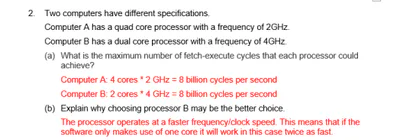
OCR GCSE (J277)
SLR1.1 Systems architecture| The purpose of the CPU: The fetch-decode-execute cycle
60


OCR GCSE (J277)
SLR1.1 Systems architecture| The purpose of the CPU: The fetch-decode-execute cycle
Show answer
Auto Play
Slide 1 / 60
SLIDE
Similar Resources on Wayground

49 questions
J277.Paper1.OCR.Quizzes
Presentation
•
10th - 11th Grade
61 questions
The Canterbury Tales: The Pardoner's Tale
Presentation
•
12th Grade
46 questions
J277.1.1.1IP.revision
Presentation
•
10th - 11th Grade
65 questions
01-01-Architecture of the CPU
Presentation
•
10th Grade
49 questions
25.26. лекција УАР
Presentation
•
6th Grade
71 questions
Fetch Decode Execute
Presentation
•
11th Grade
57 questions
Unit D: The Universe
Presentation
•
10th Grade
57 questions
Paper 1 Revision
Presentation
•
9th Grade
Popular Resources on Wayground
10 questions
Fire Safety Quiz

Quiz
•
12th Grade
20 questions
Equivalent Fractions
Quiz
•
3rd Grade
20 questions
Main Idea and Details
Quiz
•
5th Grade
20 questions
Context Clues
Quiz
•
6th Grade
20 questions
Inferences
Quiz
•
4th Grade
36 questions
6th Grade Math STAAR Review
Quiz
•
6th Grade
19 questions
Classifying Quadrilaterals
Quiz
•
3rd Grade
12 questions
What makes Nebraska's government unique?
Quiz
•
4th - 5th Grade
