

Money and credit (FUll ppt ) 2023 Aug

Presentation
•
Other
•
10th Grade
•
Practice Problem
•
Hard

Akbar Ali
Used 1+ times
FREE Resource
90 Slides • 0 Questions
1


Money and Credit
2

Pre Assessment
Why transactions are made in
money?
3

Learning Objectives
●
Describe Double Coincidence of Wants
4

Can you think of some examples of
goods / services being exchanged or
wages being paid through barter?
5


6


Double Coincidence of Wants
Situation where in what a person wishes to sell is
exactly the same as that the other person wishes to
buy.
Barter system
Sell
Buy
Shoe Manufacture
Shoes
Wheat
Wheat Producer
Wheat
Shoes
7

Quick Check - Peer correction
How does money eliminate the problem of lack of double
coincidence of wants? Give an example
8

1. Double coincidence wants is the most difficult problem of barter system.
2. If wants do not match between two persons, no exchange of goods will take place.
3. A person holding money can easily exchange it for any commodity or services he might want.
4. Money solves the problem of double coincidence of wants by acting as a medium of
exchange
9

Learning Objectives
●
List out the advantages of money
10


11

money is a medium of exchange.
It eliminates the double coincidence of wants.
Everyone prefers to receive payment in money
Exchange for whatever
12

Before the introduction of coins, a
variety of objects was used as money.
Do you know Which were they ?
13


14

Learning Objectives
●
Compare the various forms of money used in ancient times &
modern times
15

●
Nowadays different
countries use paperless
money. What will be
the future of money.
Discussion
●
Discuss the
various forms of
money used in
ancient times &
modern times.
●
Why money is
accepted as a
medium of
exchange?
●
Why poorer nations can't
just print more money
and become rich ?..
●
How do you
evaluate the use
of crypto currency
in our society.
(Pros and cons)
●
How do you differentiate
between credit card and
debit card.
16

Let's check our progress
Which among the following is NOT the limitation of Barter
system?.
1. Lack of double coincidence of wants
2. Absence of common measure of value
3. Difficulty in storing wealth
17

Let's check our progress
Which among the following is NOT the limitation of Barter
system?.
1. Lack of double coincidence of wants
2. Absence of common measure of value
3. Difficulty in storing wealth
18

Assertion : Double coincidence of wants is a part of barter system. .
Reason: what a person desires to sell is what the other person wishes to buy.
Options: (a) Both A and R. are true and R is the correct explanation of A.
(b) Both A and R are true but It is not the correct explanation of A.
(c) A is true but R is false.
(d) A is false but R is true.
19

Assertion : Double coincidence of wants is a part of barter system. .
Reason: what a person desires to sell is what the other person wishes to buy.
Options: (a) Both A and R. are true and R is the correct explanation of A.
(b) Both A and R are true but It is not the correct explanation of A.
(c) A is true but R is false.
(d) A is false but R is true.
20

The modern currency like paper notes and coins is without any
use of its own.’
Then why is it accepted as a medium of exchange? Choose the
correct option
A. It is authorized by the government of the country.
B. It is easy to use
C. It helps the double coincidents of wants
D. It eliminate poverty.
21

The modern currency like paper notes and coins is without any
use of its own.’
Then why is it accepted as a medium of exchange? Choose the
correct option
A. It is authorized by the government of the country.
B. It is easy to use
C. It helps the double coincidents of wants
D. It eliminate poverty.
22


23

Indians used grains and cattle as money.
Thereafter came the use of metallic coins – gold, silver, copper coins.
modern forms of money include currency – paper notes and coins.
modern currency is not made of precious metals.
Unlike grain and cattle, they are neither of everyday use.
24


25


26


27


28


29





30

Learning Objectives
●
Define cheque
●
Illustrate the parts of a cheque
31

Cheque
●
It is a paper instructing the bank to pay a specific amount from
the person’s account to the person in whose name the cheque
has been issued.
32


Video review - Cheque and Demand draft
Cheque
1.
2
3
Demand draft
1
2
3
33


34

M. Salim wants to withdraw Rs 20,000 in cash for making
payments. How would he write a cheque to withdraw
money? Please fill this cheque for him.
35

Learning Objectives
1. Discuss the functions of banks in
an economy.
36

Do you have a bank account ?
How to open a bank account ? List
the procedure.
37


The functions of banks.
Draw a mind map in your notebook
What do you think would happen if all the depositors went
to ask for their money at the same time in the bank?
Bank plays an important
role in the economic
development of the
country. Support the
statement
38


Banks play an important role
●Keep money in safe custody
●Increase the savings and give interest.
●Grant loans to people
●Gives loans with less interest compared to other agencies.
●Support agriculture, industry etc
Banks keep only 15 per cent of their deposits as cash.
If all depositors go to ask for their money at the same time, the bank will not be able to give money back.
39

Quick Check
Assertion: Banks in India hold about 15 per cent of their deposits as cash.
Reason: Banks use this money to people as credit.
1. Both assertion and reason are true, reason is correct explanation of assertion.
2. Both assertion and reason are true, but reason is not a correct to explain the
assertion.
3. Assertion is true but reason is false.
4. Assertion is false but reason is true.
40

Lo-
Critically evaluate the role of credit in
a country.
41


Discussion.
Do you think credit is a trap ?
How to use credit cards without falling into the
debt trap?
42

Credit - Positives and negatives
Advantageous
●Helps people to set up business &
other ventures
●It helps the people to meet the
ongoing expenses. Eg:House rent
●In rural area, helps for crops
production
●Helps to increase production and
national income
●Helps to purchase luxury items
Disadvantages
●Cause to push a person into a debt
trap.
●Increase the expenditure of people.
●It pushes the borrower into a
situation from which recovery is
very painful.
●It forces the people to sell all their
earnings / wealth.
43

Post assessment
44

45

M. Salim wants to withdraw Rs 20,000 in cash for making
payments. How would he write a cheque to withdraw
money? Please fill this cheque for him.
46


47

Learning Objectives
●
Analyse the functions of Bank
●
Differentiate between the advantages and disadvantages of
bank credit in a country
48


Demand Deposit - Function of Banks - Credit system
●
1- What do you think would happen if all the depositors went
to ask for their money at the same time from the Bank?
●
2- How does bank function?
●
3 - Discuss the positive & negative roles of credit
(ppt link)
49

1. Huge cash crisis in the banks
2. They will not be able to give loan to markets
3. There will be no daily transaction in banks
4. No loans can then be given as crop loans
5. It will lead to a complete collapse of the financial system
Topic 1
50

Pre Assessment
Why do lenders ask for collateral while lending?
51

Learning Objectives
●
Define Collateral
52

It is an asset that the borrower owns and uses this as a
guarantee to a lender until the loan is repaid.
53


54


Examples for Collateral
Land,
building,
vehicle,
livestocks,
deposits with banks.
55

Learning Objectives
●
List the various sources of credit in India.
●
Compare the terms of credit for the small farmer, the
medium farmer and the landless agricultural worker in
India.
●
Examine the causes if some farmers in India have a higher
income from cultivation compared to others
56


Terms of credit
•Interest rate, collateral and documentation requirement, and the mode
of repayment together comprise what is called the terms of credit.
•It may vary substantially from one credit arrangement to another.
•They may vary depending on the nature of the lender and the borrower
57


58


59

Group Discussion
🗣
60

• List the various sources of credit in Sonpur.
•Compare the terms of credit for the small farmer, the medium farmer and
the landless agricultural worker in Sonpur.
•Examine the causes if some farmers in India have a higher income from
cultivation compared to others?
Small farmer
medium farmer
the landless agricultural
worker
Interest would have given
Collateral
Terms of credit
61


Page 46 – Read the story of farmers and fill the table given below
Farmers
Purpose of
loan
Where do
they borrow
money ?
(Credit
source )
Interest rate
Other
promises
Benefits for
lender
Benefits for
farmers
Shyamal
Arun
Rama
Krishak
Cooperatives
62

Page 46 – Read the story of farmers and fill the table given below
Farmers
Purpose of
loan
Where do they
borrow money
?
Interest
rate
Other promises
Benefits for
lender
Benefits for
farmers
Shyamal
For cultivation
moneylender
60%
to be repaid when the
crops are ready for
harvest.
make a profit
from buying
the crop at a
low price
Arun
For cultivation
Bank
8.5 %
Any time in the next 3
years
Interest
More Profit
Rama
To meet daily
expenses
her employer,
5 %
(month)
repays the money by
working for the
landowner
More interest
can get loans
Krishak
Cooperative
63


64

Learning Objectives
●
Differentiate between FORMAL SECTOR CREDIT IN INDIA
& INFORMAL SECTOR CREDIT IN INDIA .
●
Analyse the role of credit and country’s development.
65

Group Tasks - ✍
📖
•Prepare a table to show the differences between formal & informal
credit.
•Cheap and affordable credit is crucial for the country’s development.
Discuss
66

LO- Differentiate between FORMAL SECTOR CREDIT IN INDIA &
INFORMAL SECTOR CREDIT IN INDIA
Formal
• loans from bank and
cooperatives.
• Interest rate is low.
• Supervises by RBI
• The urban households
depend largely on formal
sector
Informal
• It includes traders, money
lenders, relatives, land lords,
etc.
• The rate of interest is higher
• no organization to Supervise
• In rural area , people
dependant on informal sector
of credit.
67

Group Tasks - ✍
📖
(Answer)
• If people can borrow at cheaper rates, it leads to increase in income.
•People can grow crops, set up small-scale industries, do business or
trade in goods.
•Hence, cheap and affordable credit provided by the formal lenders is
crucial for the development.
68


69

Learning Objectives
●
Analyse the reason of most of the poor households
deprived of the formal sector of loans in India
●
Justify the causes to expand formal sources of credit in India
70


71


Analyse the diagram
How much loans taken by poor households in
the urban areas are from informal sources.?
Compare this with the rich urban households.
What do you find?
Why do you think that the share of formal
sector credit is higher for the richer
households compared to the poorer
households
Why do we need to expand formal
sources of credit in India? Explain.
72


Analyze the diagram
How much loans taken by poor households in
the urban areas are from informal sources.?
85 %
Compare this with the rich urban households.
What do you find?
Only 10% of their loans are from informal
sources, while 90 per cent are from formal
sources.
1.
Poverty affects poor households’ capacity to borrow.
2.
Formal sector credit requires proper documents and collateral as security against loans.
3.
But poor people lack in providing such things which affect their capacity to get loans from
formal sector.
4.
Sometimes, unwilling to lend to poor households and thus, their share of formal sector credit
is lower than the rich households. Banks are not present everywhere in rural India
73

Why do we need to expand formal sources of credit
in India? Explain. ( HW) Notebook work
Why do banks and cooperative societies need to
lend more? Explain. ( HW) Notebook work
74

Answer key -1
To save people from the exploitation of Informal sector
ii. Formal charge a low interest on loans.
iii. To save from debt trap.
iv. It provides cheap and affordable credit.
v. RBI also supervises the formal sector credit through various rules and
regulations which ensures that banks give loans to small cultivators, small
borrowers, etc. and not just to profit making business and traders.
75

Banks and cooperative societies need to lend more.
i. This would lead to higher incomes
ii. People could borrow cheaply for a variety of needs.
iii. They could grow crops and set up small-scale industries etc.
iv. Cheap and affordable credit is crucial for the country’s development v. To
save and reduce the dependence on informal sources of credit
vi. It is important that the formal credit is distributed more equally so that the
poor can benefit from the cheaper loans
Answer key -2
76

SELF-HELP GROUPS FOR THE POOR
77


78

Learning Objectives
●
Describe about self-help group in india.
●
List out the advantages of Self Help Group (SHG)
79

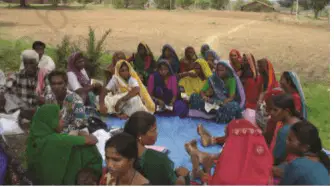

Reading comprehension
Page 50-52
Write a short note on self help group in
india.
The SHGs help borrowers overcome the
problem of lack of collateral. Justify
(List out the advantages of Self Help
Group (SHG))
80

●A typical SHG has 15-20 members, usually belonging to
one neighbourhood,
●who meet and save regularly.
●Saving per member varies from Rs 25 to Rs 100 or more,
depending on the ability of the people to save.
81

●Members can take small loans from the group itself to meet their
needs.
●interest is less
● After 1 or 2 a years if the group is regular in savings, it
becomes eligible for availing loan from the bank.
●Loan is sanctioned in the name of the group and is meant to
create self-employment opportunities for the members.
82

Advantages
1.
It helps borrowers to overcome the problem of lack of collateral
2.
People can get timely loans for a variety of purposes
3.
Reasonable interest rate.
4.
Decisions are taken by group members
5.
Group members are well known to each other
6.
It helps women to become financially self-reliant.
7.
It is the group is the responsible for repayment.
8.
The regular meetings of the group provide a platform to discuss and act on a
variety of social issues such as health, nutrition, domestic violence, etc.
83


84


85


The following table shows people in a variety of occupations in urban areas.
What are the purposes for which the following people might need loans? Fill in
the column
classify the people into two groups based on whom you think might get a bank loan and those
who might not. What is the criterion that you have used for classification?
86


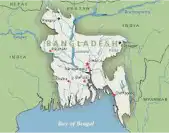

Grameen Bank of Bangladesh
87

Research on Bangladesh
Grameen Bank
88

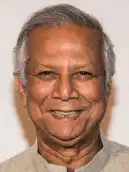
To meet credit needs at reasonable rates.
Started in the 1970s as a small project,
Grameen Bank in 2018 had over 9 million members
81,600 villages spread across Bangladesh.
Almost all of the borrowers are women & belong to
poorest sections.
Pro. Muhammad
Yunus,
Recipient of 2006
Nobel Prize for
Peace
89

Post Assessment
90

https://sway.com/c7ntW1P052OXTUyM
Money and Credit
Show answer
Auto Play
Slide 1 / 90
SLIDE
Similar Resources on Wayground

86 questions
Unsur-Unsur Seni Rupa
Presentation
•
10th Grade
85 questions
hvac
Presentation
•
10th Grade
85 questions
F5 Life's Great Mysteries L10
Presentation
•
9th - 10th Grade
87 questions
Geologic Time Scale
Presentation
•
11th Grade
84 questions
Space physics
Presentation
•
11th Grade
83 questions
SC Biology EOC Review Standard 1
Presentation
•
9th Grade
84 questions
Analyzing Characters
Presentation
•
9th Grade
85 questions
Public Opinion & Political Ideology
Presentation
•
11th - 12th Grade
Popular Resources on Wayground
6 questions
PRIDE Always and Everywhere
Presentation
•
12th Grade
20 questions
Lab Safety Quiz

Quiz
•
6th Grade
26 questions
KOR Review Kahoot Questions
Quiz
•
8th Grade
21 questions
Continents and Oceans
Quiz
•
6th Grade
12 questions
Unit Zero lesson 2 cafeteria
Presentation
•
9th - 12th Grade
20 questions
Parts of Speech
Quiz
•
5th Grade
10 questions
Riddles Riddles fun Riddles
Quiz
•
6th - 12th Grade
16 questions
Subject & Predicate
Quiz
•
5th Grade
Discover more resources for Other
12 questions
Unit Zero lesson 2 cafeteria
Presentation
•
9th - 12th Grade
10 questions
Riddles Riddles fun Riddles
Quiz
•
6th - 12th Grade
21 questions
Lab Safety
Quiz
•
10th Grade
10 questions
Would you Rather?
Quiz
•
9th - 12th Grade
20 questions
Characteristics of Life
Quiz
•
9th - 10th Grade
10 questions
Soup, Salad, or Sandwich?
Quiz
•
1st Grade - Professio...
10 questions
Labor Day and Its Historical Significance

Interactive video
•
7th - 12th Grade
20 questions
Scientific Method & Variables
Quiz
•
9th - 12th Grade