

Studies Weekly, W5, Article 1: The First People of the Americas

Presentation
•
Social Studies
•
4th Grade
•
Practice Problem
•
Medium

ALMA BAZ
Used 23+ times
FREE Resource
11 Slides • 7 Questions
1
Studies Weekly
Week 5: American Indian Life in Texas
Article 1:
The First People of the Americas

2
Before European exploration and colonization, thousands of American Indians lived in the Americas and the Caribbean Islands. However, their ancestors were not originally from these regions. Historians, scientists, and archaeologists have developed many theories to explain how American Indians first arrived in the Western Hemisphere.
3
For many years, researchers believed that the ancient ancestors of American Indians came to America from Siberia, a region in northern Asia. They concluded that these people arrived about 12,000 years ago by hiking across a narrow strip of land that once bridged Asia and Alaska. This land bridge is known as the Bering Strait. From there, they settled in other areas of North America. Eventually, they migrated to Central and South America and the Caribbean Islands.

4
Multiple Choice
Where did researchers first believe Paleo-Indians immigrated from?
Siberia
the Alps
the Congo
Indus Valley
5
In recent years, archaeologists in North and South America have discovered ancient tools, weapons, campsites, and skeletons that are even older than artifacts from the land-bridge travelers. The bones, in particular, were very different from those linked to the people who crossed the land bridge. This new research suggests that a large group of migrants crossed the Bering Strait as early as 30,000 years ago. This larger group split into smaller tribes about 15,000 years ago. Some traveled south through the Americas.
6
Other researchers have proposed that the first people in the Americas traveled here by boat from southern Asia, Australia, India, Japan, or even Europe, arriving long before the land-bridge travelers. These people may have later died out. However, they also could have joined the Siberian tribes who migrated from Asia to Alaska via the Bering Strait. Combined, these groups could represent the American Indians’ earliest ancestors.
Despite differing theories, experts refer to these people as Paleo-Indians. The Paleo-Indians were nomadic, meaning they traveled from place to place looking for food.
7
Multiple Choice
Despite differing theories, experts refer to these people as ______.
tribes
Paleo-Indians
hunters
8
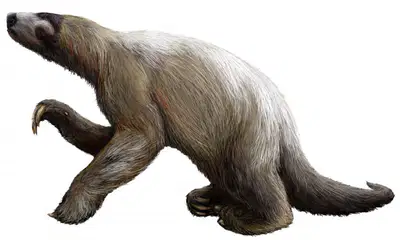
They hunted large animals, such as mammoths, ground sloths, bison, caribou, and others. They traveled in small bands of 20 to 50 people. They worked together to provide for the needs of the group. They built simple shelters using sticks, branches, and animal skins. They also looked for natural shelters like caves.
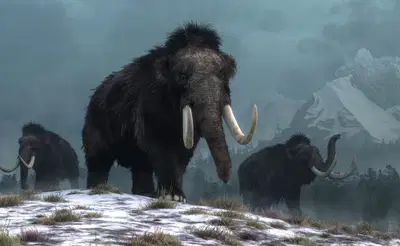
Mammoth
Ground Sloth
9
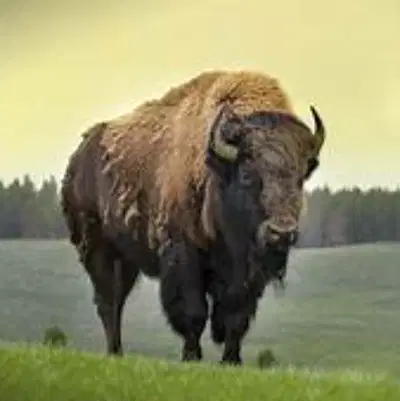
Bison
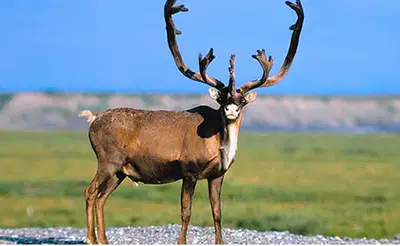
Caribou
10
Multiple Choice
What did Paleo-Indians NOT hunt for food according to the article?
bison
jaguars
mammoths
sloths
11
This group also made spears for hunting. The Paleo-Indians carved rocks into sharp, durable points and shaped them to fit into a groove they had cut into a wooden shaft. Later, they invented a spear-thrower called an atlatl. This was used to throw a spear farther and faster than just by hand. The atlatl made it easier to hunt and helped the Paleo-Indians keep their stomachs filled. The Paleo-Indians also ate roots, plants, seeds, and possibly even insects. They used animal skins for clothing and shelter.

12
Multiple Choice
The Paleo-Indians carved rocks into sharp, durable points and shaped them to fit into a groove they had cut into a wooden shaft. Later, they invented a spear-thrower called _______.
a spear
an arrow head
an atlatl
13
The climate during the Paleo-Indian times was very strange. The ice age was ending, and that caused some pretty crazy weather. Plants and trees that many animals depended on died out over time. This changing environment may have caused many animals to become extinct. It is thought that 30 kinds of "mega-mammals" may have become extinct during this time. This includes the mammoths, mastodons and giant bison. Of course, there are lots of ideas about the disappearance of these animals. Some scientists think it is possible that the Paleo-Indians hunted these animals to extinction. However, the newest evidence suggests that a comet exploded over Canada and changed the weather very, very fast. This event could have easily caused animals to die off.
14
Fill in the Blanks
The climate during the Paleo-Indian times was very strange. The
15
The Paleo-Indian culture gradually became more advanced over generations. With advancements in their culture, their children's children became separate groups of American Indians. The Archaic, the Iroquois, the Cherokee and the Hopewell are all the descendants of the Paleo-Indians.
Over time, they developed different languages, customs, traditions and arts. Our continent was eventually filled with many tribes with different traditions. The Pueblo moved to the southwestern United States and built adobe houses out of the materials around them in their desert homes. The Iroquois built longhouses made of the wood from the woodland environment of the northeastern United States.
16
Multiple Choice
True or False:
Over time, Paleo-Indians developed different languages, customs, traditions and arts.
True
False
17
Time passed, and generations changed. But the Paleo-Indians' descendants are still here. In fact, every American Indian tribe in North America has its roots in the Paleo-Indian culture.
Although they left no written records, researchers have learned much about these ancient peoples. Archaeologists specifically have discovered many examples of stone tools and weapons they used. By studying these artifacts, we can catch a glimpse into the lives of Paleo-Indians thousands of years ago.
18
Multiple Choice
How do archeologists learn about ancient peoples?
observing their cities
by studying artifacts
through their writings
interviewing witnesses
Studies Weekly
Week 5: American Indian Life in Texas
Article 1:
The First People of the Americas
Show answer
Auto Play
Slide 1 / 18
SLIDE
Similar Resources on Wayground

14 questions
Constitution Day
Presentation
•
3rd - 5th Grade
12 questions
French and Indian War
Presentation
•
5th Grade
14 questions
Middle Colonies
Presentation
•
5th Grade
13 questions
Indentured Servants
Presentation
•
4th - 5th Grade
13 questions
Oceans of the World
Presentation
•
4th Grade
11 questions
Plymouth Colony
Presentation
•
5th Grade
13 questions
Natural Disasters
Presentation
•
3rd - 5th Grade
13 questions
Louisiana Purchase
Presentation
•
5th Grade
Popular Resources on Wayground
21 questions
Continents and Oceans

Quiz
•
6th Grade
20 questions
Parts of Speech
Quiz
•
5th Grade
16 questions
Subject & Predicate
Quiz
•
5th Grade
25 questions
Multiplication Facts
Quiz
•
5th Grade
12 questions
Map Skills
Quiz
•
3rd Grade
22 questions
Continents and Oceans
Quiz
•
5th Grade
15 questions
Rounding Decimals
Quiz
•
5th Grade
20 questions
Brand Labels
Quiz
•
5th - 12th Grade
Discover more resources for Social Studies
14 questions
Age of Exploration
Quiz
•
4th Grade
26 questions
VA Studies Ch 2 Virginia's First Peoples
Quiz
•
4th Grade
16 questions
Native Americans of Texas
Quiz
•
4th Grade
12 questions
Personal Finance- GCPS
Quiz
•
4th Grade
24 questions
Chapter 1 Test
Quiz
•
4th Grade
26 questions
2024-2025 1st 9-weeks 4th Grade Social Studies Review
Quiz
•
4th Grade
20 questions
Virginia’s Indigenous Nations
Quiz
•
4th Grade
20 questions
Causes of the American Revolution
Quiz
•
4th Grade