

City Planning Model Constructions Terms

Presentation
•
Science
•
6th Grade
•
Practice Problem
•
Hard
+4
Standards-aligned

Niki Rabo
Used 1+ times
FREE Resource
35 Slides • 0 Questions
1


Industrial Zone
An area of land set aside for factories and warehouses.
2

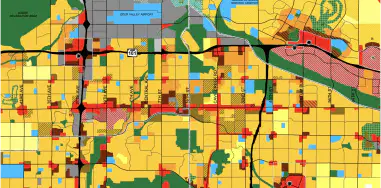
City Zone
An area or district within a city set aside for a specific use.
3

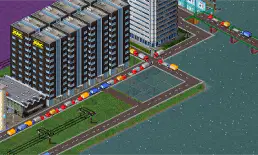
Commercial Zone
An area of land set aside for for-profit businesses like office
complexes, shopping malls, service stations, and
restaurants.
4

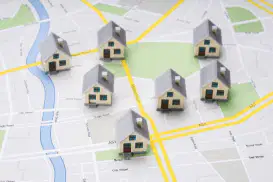
Residential Zone
An area of land set aside for housing.
5

Utilities: Water, Electrical,
Natural Gas
An organization that maintains the infrastructure that
generates, transmits, or distributes electricity, water, or gas
from facilities that it owns or operates.
6

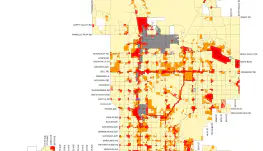
Zoning Density:High, Medium,
Low
Designation of the ratio of building space to open spade
(eg., high-density residential includes high-rise apartment
buildings).
7

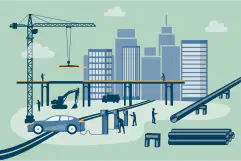
Infrastructure
A public system of services needed by industry,
commercial, and residential zones such as power, water,
transportation, communications and schools.
8

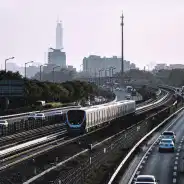
Transportation Systems
A network of roads, streets, water, or rails that allows the
vehicular movement of people and goods.
9


Water Sanitation System
A public utility that provides removal of waste water.
10

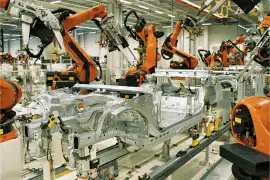
High-Tech Industrial
An industry that develops or uses advanced technology
(eg., aerospace, biotech, telecom, robotics).
11

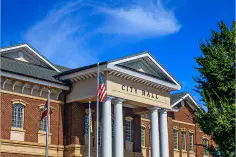
Municipality
A town, city, or region that has its own local government.
12

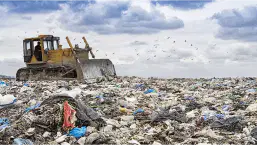
LandFill
A site where waste material has been buried.
13

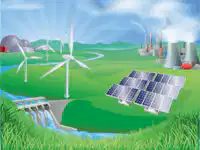
Power Plant: Coal, Natural Gas,
Nuclear, Wind, Solar, Bio, etc.
An industrial plant that generates power such as electricity
from another source like burning coal, nuclear reactions, or
flowing water.
14

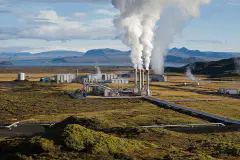
Geothermal Energy
An area of land where energy is generated from the heat in
the interior of the earth.
15

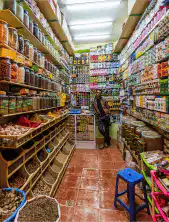
Retail Establishment
A place of business that sells goods such as groceries,
clothing or furniture.
16

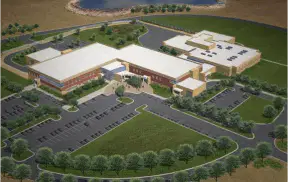
Government Facility
A place that houses government services such as a
courthouse or government offices.
17

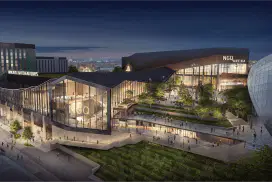
Cultural and Entertainment
Facility
A place such as an art museum, theater, or sports arena.
18


Service Industry
An industry or facility that provides services rather than
sells goods (for example, banking or communications).
19


Proportion
The relationship between two or more amounts of a
number or between the parts of a whole.
20

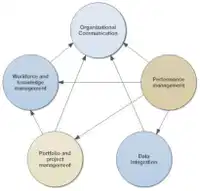
Inter-Relationships
A connection or association between multiple things.
21


Connectivity
The direct links or associations between multiple things. In
city design, connectivity refers to the links between
different parts of a city that provide accessibility and easy
transport from one area to another.
22

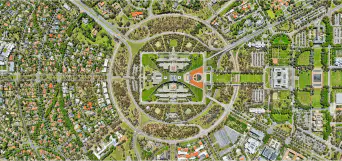
City Planning and Design
Prioritizing and placing city services and city features for
maximum benefit to the quality of life for the citizens, the
environment, and the economic future of the city.
23

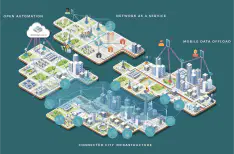
Connectivity
Placing infrastructure so that all areas of the city are served
and linked for maximum benefit of citizens, businesses,
industry, safety, education and recreation.
24

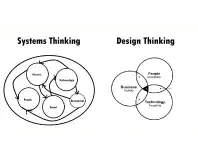
Systems Thinking
Taking into consideration that a system is made up of
individual parts that function in unison or in a cooperative
way that always have an impact on one another.
25

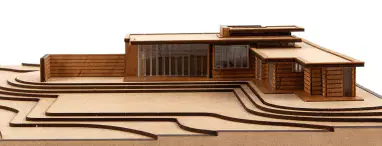
Scale Model
A physical model, representation or copy of an object that
seeks to maintain the relative proportions (scale factor) of
the physical size of the original object.
26

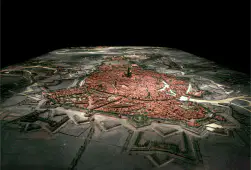
Plan Relief
A scale model or relief used by the military to visualize
building projects, fortifications, or campaigns involving
fortification.
27

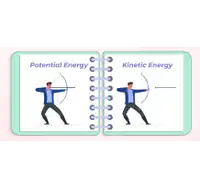
Kinetic Energy
The energy an object has due to its motion.
28

Potential Energy
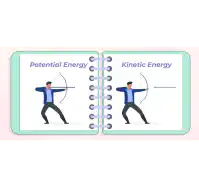
The energy an object has because of its position, rather
than its motion.
29


Energy
The ability to do work.
30

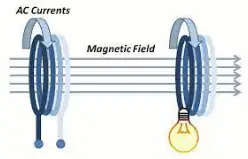
Power
The rate at which energy is transferred, or the amount of
energy transferred in a unit of time (power=energy
transferred/time).
31

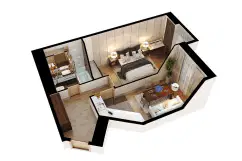
Use of Models for Scientific or
Technological Concepts
Distinguishing between a plan relief and a 3-D architectural
model.
32

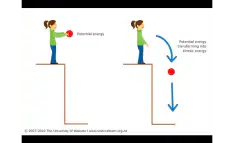
Kinetic and Potential Energy in
Action
Evaluating models in terms of kinetic energy and potential
energy.
33

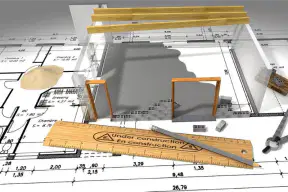
Technology of Structural Design
Explaining how buildings are built.
34


Safe and Appropriate Use of
Tools
Demonstrating and explaining the correct use of tools in
the school environment.
35

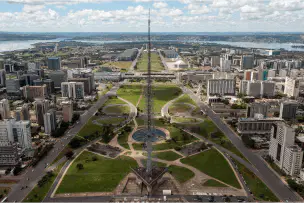
City Design
Communicating how models illustrate the nature of city life
in the future.
Industrial Zone
An area of land set aside for factories and warehouses.
Show answer
Auto Play
Slide 1 / 35
SLIDE
Similar Resources on Wayground

28 questions
Respiratory Circulatory System
Presentation
•
6th Grade
32 questions
Symbiotic Relationships, Food Webs, & Energy Pyramid
Presentation
•
6th Grade
26 questions
Rocks: Types of Rocks
Presentation
•
6th Grade
27 questions
Ocean Currents and Prevailing Winds
Presentation
•
6th Grade
32 questions
Weather Fronts
Presentation
•
6th Grade
25 questions
Thermal Equilibrium Guided Lesson
Presentation
•
6th Grade
33 questions
Cell Structures
Presentation
•
6th Grade
33 questions
Science Tools and Measures
Presentation
•
6th Grade
Popular Resources on Wayground
10 questions
How much do you know about our Portrait of an Eagle?

Quiz
•
10th Grade
10 questions
Fast Food Slogans
Quiz
•
6th - 8th Grade
21 questions
Continents and Oceans
Quiz
•
6th Grade
20 questions
Parts of Speech
Quiz
•
5th Grade
16 questions
Subject & Predicate
Quiz
•
5th Grade
25 questions
Multiplication Facts
Quiz
•
5th Grade
12 questions
Map Skills
Quiz
•
3rd Grade
22 questions
Continents and Oceans
Quiz
•
5th Grade
Discover more resources for Science
10 questions
6.6D - Relative Density Review
Quiz
•
6th Grade
20 questions
Claim, Evidence and Reasoning (CER)
Quiz
•
6th - 8th Grade
20 questions
Density
Quiz
•
6th Grade
10 questions
Exploring Chemical and Physical Changes

Interactive video
•
6th - 10th Grade
20 questions
Food Chains & Food Webs
Quiz
•
5th - 7th Grade
18 questions
Interpreting Distance/Time Graphs
Quiz
•
6th Grade
10 questions
Decoding the Periodic Table of Elements
Interactive video
•
6th - 10th Grade
15 questions
Potential and Kinetic Energy
Quiz
•
6th Grade