Search Header Logo
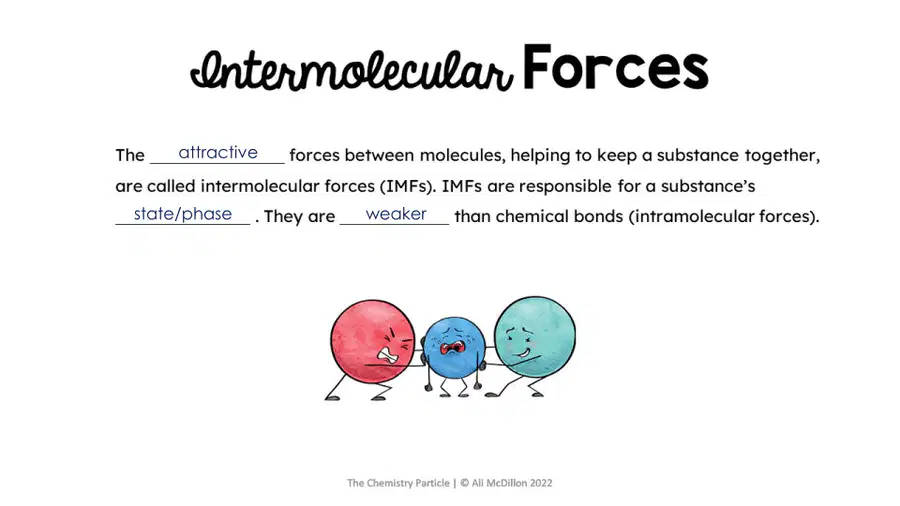
IMF and IMF Strength

IMF and IMF Strength

Assessment

Presentation

Chemistry

9th - 12th Grade

Easy

NGSS
HS-PS1-3, HS-ETS1-3

Standards-aligned

Created by

Monica McClure

Used 58+ times

FREE Resource

17 Slides • 8 Questions

1

media

2

media

3

media

4

media

5

media

6

media

7

Practice

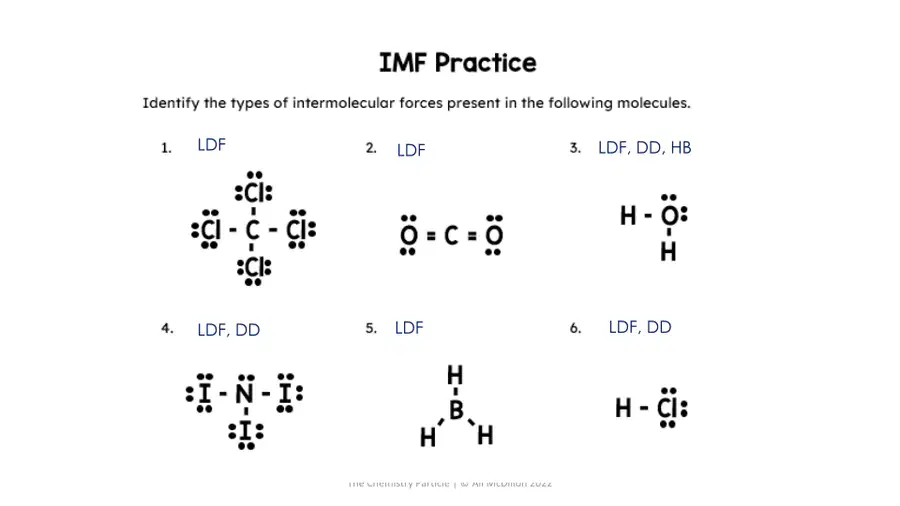
Try the next page on your own you will have 8 minutes

8

media

9

media

10

Match

Match the Following

Hydrogen Bond

London Dispersion Forces

Dipole- Dipole

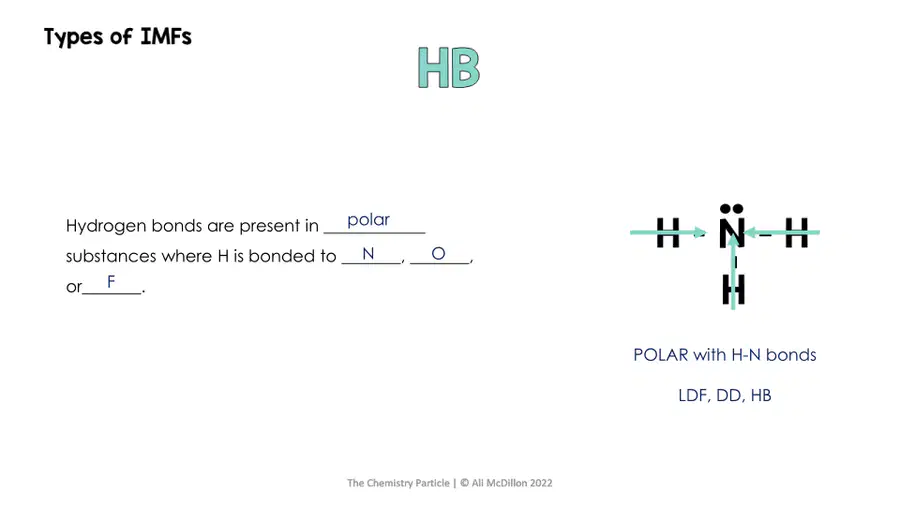
Present in Polar involving N, O, F

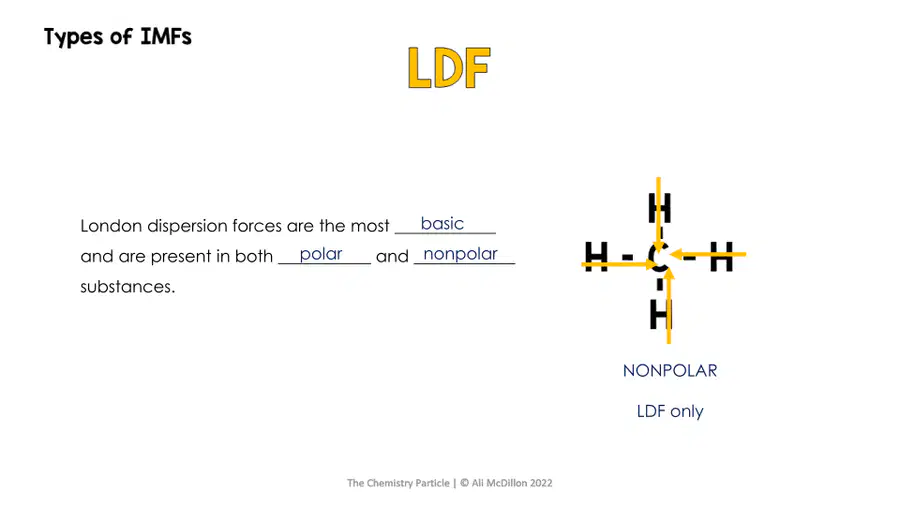
Present in both Polar and Non Polar Molecules

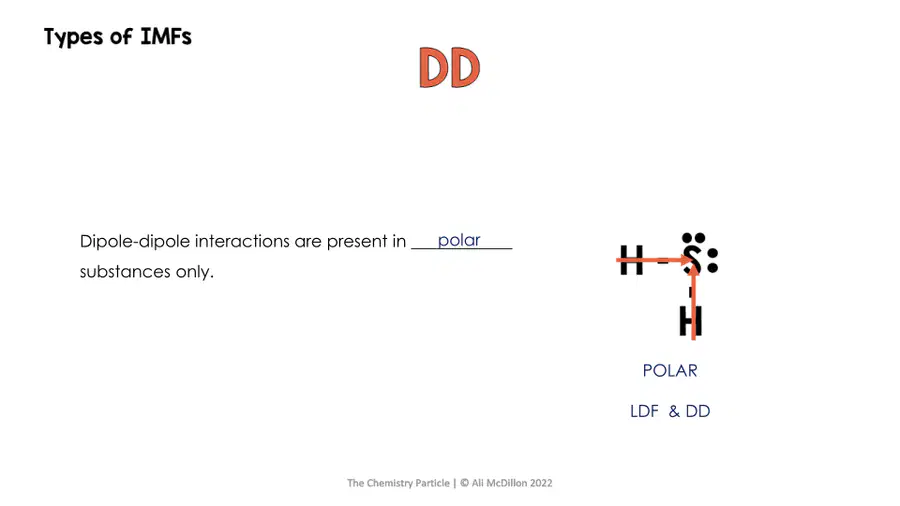
Polar Substances only

11

Multiple Choice

Question image

Intermolecular forces for: NH3

1

Dispersion Force

2

Dipole dipole

3

Hydrogen bonding

12

Multiple Choice

Intermolecular forces are attractions between ______.

1

Cations and anions

2

Atoms within a molecule

3

Neighboring molecules

4

Protons and electrons

13

media

14

media

15

media

16

media

17

media

18

media

19

Practice

Try the next page on your own you will have 8 minutes

20

media

21

Multiple Choice

________________________ have the strongest intermolecular forces of attraction.

1

Dipole- Dipole

2

Dispersion

3

Hydrogen Bonds

22

Reorder

Rank these in order of strength (from strongest to weakest):
covalent bond
London forces
hydrogen bond
dipole-dipole attraction

covalent bond

hydrogen bond

dipole-dipole

London Dispersion forces

1
2
3
4

23

Multiple Choice

Which substance has the weakest intermolecular forces?

1

Substance A, boiling point of 75 °C

2

Substance B, boiling point of 105 °C

3

Substance C, boiling point of 25 °C

4

Substance d, boiling point of 45 °C

24

Multiple Choice

Question image

Intermolecular forces for: CO2

1

Dispersion Force

2

Dipole dipole

3

Hydrogen bonding

25

Poll

How do you feel now about IMF?

media

Show answer

Auto Play

Slide 1 / 25

SLIDE