Search Header Logo
9/18 Cell membrane structure and transport

9/18 Cell membrane structure and transport

Assessment

Presentation

Biology

9th Grade

Medium

NGSS
MS-LS1-2, HS-LS2-3, HS-LS1-3

Standards-aligned

Created by

Aleyah Lyles

Used 5+ times

FREE Resource

25 Slides • 22 Questions

1

media

2

media

3

media

4

media

5

media

6

Multiple Choice

Phospholipids are made up of two parts. Which of the following correctly describes these two parts?

1

hydrophobic head, hydrophilic tail

2

hydrophobic head, hydrophobic tail

3

hydrophilic head, hydrophobic tail

4

hydrophilic head, hydrophilic tail

7

Multiple Choice

Question image

Which part of the phospholipid is the hydrophobic portion (repels water)?

1

Glycerol

2

Fatty acids

3

Water

4

Glycogen

8

media

9

media

10

media

11

media

12

media

13

media

14

media

15

media

16

media

17

media

18

Multiple Select

The cell membrane (two answers):

1

Many protein channels.

2

Is the outermost layer that mostly protects and supports the cell.

3

Is a phospholipid bilayer

4

Doesn't let water in.

19

Multiple Choice

Question image
_____________ allows some things to enter and leave cells, while keeping other things out of the cell.
1

Nucleus control center of the cell

2

Selectively Permeable golgi apparatus

3

A selectively permeable membrane

4

Non Permeable membrane

20

Multiple Choice

Question image

Which of the following describes the 4 parts of the cell membrane?

1

phospholipid bilayer, transport proteins, carbohydrates, and cholesterol

2

phospholipid bilayer, transport proteins, carbohydrates, and cell wall

3

phospholipid bilayer, starch, carbohydrates, and cholesterol

4

cellulose, transport proteins, carbohydrates, and cholesterol

21

Multiple Choice

Question image

In the diagram, what is letter G?

1

Phospholipid

2

Phospholipid bilayer

3

Cholesterol

4

Carbohydrate

5

Carrier or transport protein

22

media

23

media

24

media

25

media

26

media

27

Multiple Choice

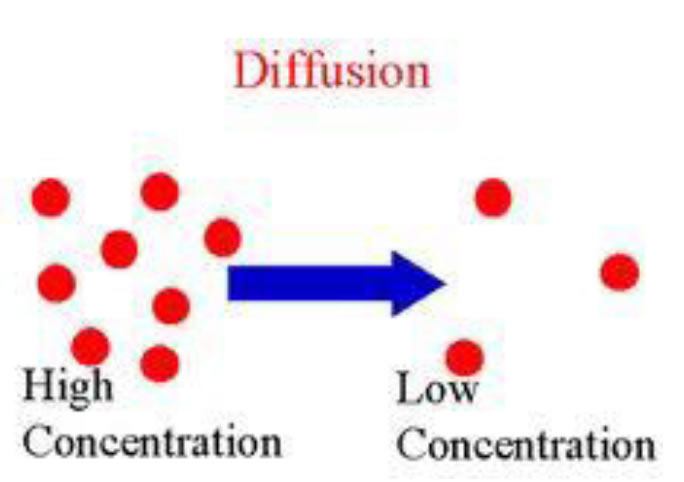
In passive transport, molecules move from an area of __________ concentration to an area of __________ concentraiton
1

high, low

2

low, high

3

water, salt

4

active, passive

28

Multiple Choice

Question image
What type of transport is this?
1

Endocytosis

2

Facilitated Diffusion

3

Active Transport Pump

4

Osmosis

29

media

30

media

31

media

32

media

33

media

34

Multiple Choice

Question image

What is the definition of Selective Permeability?

1

The movement of materials across the cell membrane that requires NO ENERGY from the cell.

2

The movement of materials through (or across) the cell membrane

3

The ability of the cell membrane to allow some things to pass through while preventing other things from passing through.

35

Multiple Select

These are all examples of active transport (select more than one answer).

1

ATP Energy

2

Endocytosis

3

Exocytosis

4

Osmosis

5

Facilitated diffusion

36

Multiple Choice

Question image
What type of transport is this?
1

Diffusion

2

Osmosis

3

Facilitated Diffusion

4

Active Transport

37

Match

Question image

Match the following:

stabilizes and maintains flexibility of cell membrane

2 layers; allows small & non-polar molecules to pass through the membrane

regulates what goes in and out of the cell

allows large and polar molecules to pass through the membrane

located outside of the membrane; helps with cell communication and cell-to-cell connections

Cholesterol

Phospholipid bilayer

Plasma or Cell Membrane

Transport or Channel Proteins

Carbohydrates

38

Multiple Choice

The cell membrane maintains...

1

Energy

2

Homeostasis/Equilibrium

3

The cell looking good

39

Multiple Choice

Question image
What type of transport is this?
1

Endocytosis

2

Diffusion

3

Exocytosis

4

Osmosis

40

Multiple Choice

Question image

Define plasma membrane

1

lipid that helps minimize effects of temperature

2

only on the outer surface of the plasma membrane and are attached to proteins or lipids; form distinctive cellular markers

3

flexible boundary of a cell that separates a cell from its surroundings

4

may extend partway into the plasma membrane, cross the membrane entirely, or be loosely attached to its inside or outside face

41

Multiple Choice

In order for active transport to happen.........

1

a transport protein is needed

2

a transport protein is needed, oxygen is needed and carbon dioxide is needed

3

a transport protein is needed PLUS energy (ATP) is needed

4

no energy is needed

42

Multiple Choice

Which type of biological macromolecule is the main component of the cell (plasma) membrane?

1

carbohydrate

2

lipid

3

protein

4

nucleic acid

43

Multiple Choice

A phospholipid has 2 parts. What are they called? 
1

Hydrophilic Head, Hydrophobic Tail 

2

Hydrophobic Head, Hydrophilic Tail 

44

Multiple Choice

Question image

Molecules moving from high to low concentration.

1

Passive Transport

2

Active Transport

45

Multiple Choice

Question image

Solutes (salt/sugar) move against the concentration gradient

1

Passive Transport

2

Active Transport

46

Multiple Choice

Which image correctly shows the way phospholipids arrange themselves in the cell (plasma) membrane?

1
2
3
4

47

Multiple Choice

What is diffusion?
1

when molecules move 

2

when molecules

(particles) move from a high concentration to a low.

3

no movement 

4

molecules move everywhere

media

Show answer

Auto Play

Slide 1 / 47

SLIDE