

Science Questions

Presentation
•
Science
•
5th Grade
•
Practice Problem
•
Medium

Chelsea Sawyer
Used 4+ times
FREE Resource
6 Slides • 5 Questions
1

2
Multiple Select
Why do we have nails on our fingers?
Strengthening
Protection
Fine motor movements
Sensation
3
Strengthening. The hard, outer covering on the tips of the fingernails makes the fingertips one of the strongest parts of the hand. This makes performing everyday tasks, including gripping, less risky. The fingernails have many small blood vessels to supply them, and can maintain their blood flow even when you’re gripping something very tightly.
Protection. Having a fingernail covering can prevent viruses and bacteria from entering the body. If a person’s nail bed is disrupted, they may be more at risk for nail infections.
Enhancing fine motor movements. The fingernails enhance your ability to scratch and separate, such as pages in a book or hairs on your head. A person can also use their fingernails to pick up items.
Sensation. While you may not think of the nails as being as sensitive as your fingertips, there’s an intricate network of nerves underneath the nail.
4
Multiple Select
Why do we have skin?
To protect your body from germs
To help regulate body temperature
To help feel sensations like hot and cold
To hold everything together
5
Your skin protects your body from germs and regulates body temperature. Nerves in the skin help you feel sensations like hot and cold. Your skin, along with your hair, nails, oil glands and sweat glands, is part of the integumentary (in-TEG-you-ME I NT-a-ree) system. “Integumentary” means a body's outer covering.
6
Multiple Select
Why do we have hair?
Protection from the environment
Prevent sweat from getting into the eyes
Stabilize temperature of the brain
7
In human beings, specialized hairs such as eye lashes and hairs inside the nostrils and external ears afford some protection from the environment. Eyebrows prevent sweat from getting into the eyes. Scalp hairs may assist in stabilizing the temperature of the brain.
8
Multiple Select
Why do we have cartilage in our bodies?
Support bony areas
Flexibility
Enhance bone resilience
To resist compressive forces
9
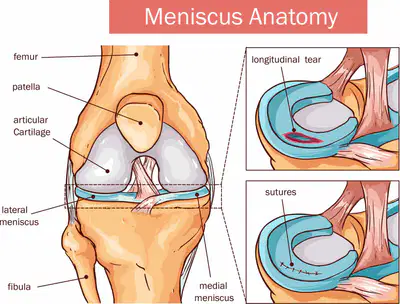
Cartilage is a strong, flexible connective tissue that protects your joints and bones. It acts as a shock absorber throughout your body. Cartilage at the end of your bones reduces friction and prevents them from rubbing together when you use your joints.
What is the main function of cartilage?
10
Multiple Select
Are organs alive?
Yes
No
Maybe?
11
If you meant 'living beings', then no, organs aren't considered as living beings. But, are they living or having life? Yes, as long as they are part of the system that they were supposed to be in. Even without the system, an organ will continue to function, even if it is only for a few minutes at-most.
Show answer
Auto Play
Slide 1 / 11
SLIDE
Similar Resources on Wayground

9 questions
Control Groups
Presentation
•
5th Grade
10 questions
Speed and Velocity
Presentation
•
5th Grade
10 questions
Forms of Energy
Presentation
•
4th - 5th Grade
11 questions
Rapid Changes
Presentation
•
5th Grade
8 questions
Action, helping, and linking verbs
Presentation
•
5th Grade
10 questions
Renewable Resources
Presentation
•
4th Grade
7 questions
Nervous System
Presentation
•
5th Grade
7 questions
Light And Shadow
Presentation
•
5th Grade
Popular Resources on Wayground
10 questions
Safety Day 2026 – Student Review

Quiz
•
9th Grade
21 questions
Continents and Oceans
Quiz
•
6th Grade
20 questions
Parts of Speech
Quiz
•
5th Grade
16 questions
Subject & Predicate
Quiz
•
5th Grade
25 questions
Multiplication Facts
Quiz
•
5th Grade
12 questions
Map Skills
Quiz
•
3rd Grade
22 questions
Continents and Oceans
Quiz
•
5th Grade
15 questions
Rounding Decimals
Quiz
•
5th Grade
Discover more resources for Science
20 questions
Mixtures and Solutions Practice
Quiz
•
5th Grade
20 questions
Food Chains and Food Webs Review
Quiz
•
5th Grade
20 questions
GC Interim #1 Review 2026
Quiz
•
5th Grade
20 questions
5.3 Force and Motion Study Guide Review
Quiz
•
5th Grade
15 questions
Force and Motion
Presentation
•
5th Grade
25 questions
Chemical and Physical Changes in Matter
Quiz
•
5th Grade
10 questions
Exploring the Periodic Table Structure

Interactive video
•
5th Grade
14 questions
Land Breeze and Sea Breeze
Quiz
•
5th Grade