

Energy, Enzymes, OH MY

Presentation
•
Science
•
University
•
Easy
+11
Standards-aligned

Kelsey Crowley
Used 2+ times
FREE Resource
19 Slides • 10 Questions
1

Energy, Membrane and
Enzymes, Oh My
BIO 110
2

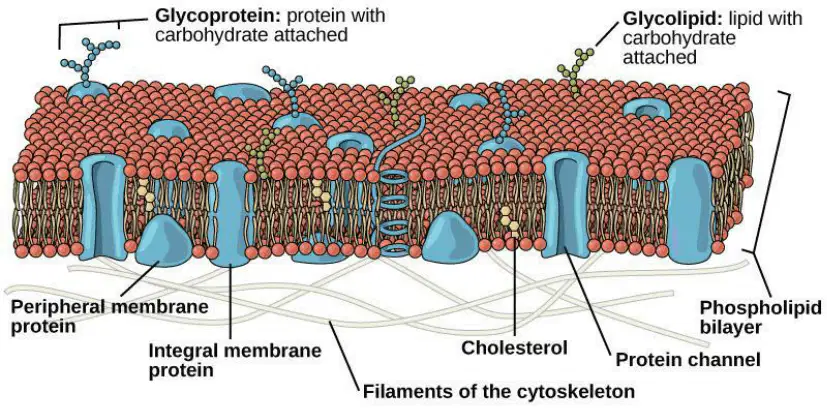
Cell Membrane
• Regulates what can and can’t enter the cell.
• Phospholipid bilayer (heads = hydrophilic; tales = hydrophobic)
• Contains:
- Cholesterol: maintains membrane fluidity
- Proteins: many purposes (anchor, transport, cell signaling)
- Glycolipids and glycoproteins : cell recognition, immunity
Image Source: Wikimedia Commons
3

4
Multiple Choice

5
Multiple Choice
6
Labeling
Move these labels to the correct place
Hydrophilic side
Hydrophobic side
7


Energy
• Capacity for doing work
• Many types of energy, including:
- Kinetic: energy in motion
- Potential: stored energy due to its position
- Thermal: usually in the form of heat
- Chemical: energy released or stored in chemical bonds/reactions
Image Source: Wikimedia Commons
8
Match
Match the following
Kinetic Energy
Potential Energy
Thermal Energy
Chemical Energy
Motion
Stored energy
Heat energy
Chemical bond/reactions energy
Motion
Stored energy
Heat energy
Chemical bond/reactions energy
9


Transport across membranes
• Passive transport requires no energy.
- Substances move along a concentration gradient from high to low
• Active transport requires energy.
- Substances move against a concentration gradient from high to low
Image Source: Wikimedia Commons
10

Transport across membranes
Passive Transport
Active Transport
Simple Diffusion
Pumps/Carrier Proteins
Facilitated Diffusion
Endocytosis
Osmosis
Exocytosis
11


Diffusion
• Diffusion is the passive
movement of molecules in favor of their concentration gradient (from high concentrations to low concentrations)
Image Source: Wikimedia Commons
Lower concentration
Higher concentration
12


1. Passive Transport: Simple Diffusion
• Simple diffusion is diffusion through the plasma membrane without aid
Who can do this?:
- Oxygen
- Carbon dioxide
- Ethanol
- Urea
-Water
Image Source: Wikimedia Commons
13


2. Passive Transport: Facilitated diffusion
• Facilitated diffusion is still diffusion but utilizing a channel protein
Who can do this?:
- Large substances
- Polar molecules
- Glucose
- Ions
Image Source: Wikimedia Commons
14


3. Passive Transport: Osmosis
• Osmosis is diffusion of water to dilute solutions
Image Source: Wikimedia Commons
15


Tonicity
• Tonicity describes the
amount of solute in a
solution in relation to
a cell
- Isotonic: amount of solutes in and out of the cell is equal
- Hypotonic: amount of solutes in the solution is less than inside the cell
- Hypertonic: amount of solutes in the solution is greater than inside the cell
Image Source: Wikimedia Commons
16


Tonicity
Image Source: Wikimedia Commons
17
Match
Match the following
Simple Diffusion
Facilitated diffusion
Osmosis
High to low conc. without aid
Diffusion using channel proteins
Diffusion of water
High to low conc. without aid
Diffusion using channel proteins
Diffusion of water
18

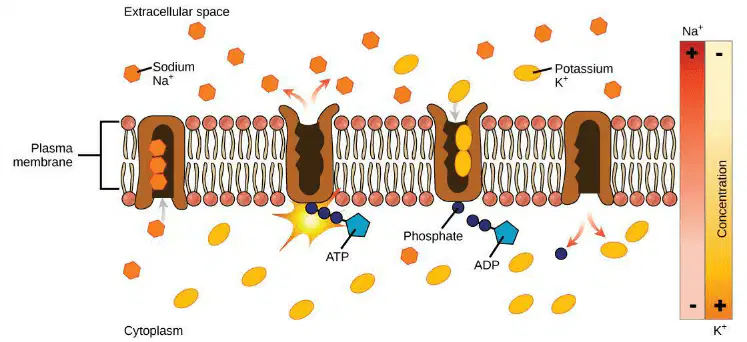
4. Active Transport: Pumps/Carrier
Proteins
• Used to move molecules against their concentration gradient
Sodium/Potassium Pump
Image Source: Wikimedia Commons
19


5. Active Transport: Endocytosis
• Uses vesicles to move large molecules, cells, or large quantities into the cell
Image Source: Wikimedia Commons
20

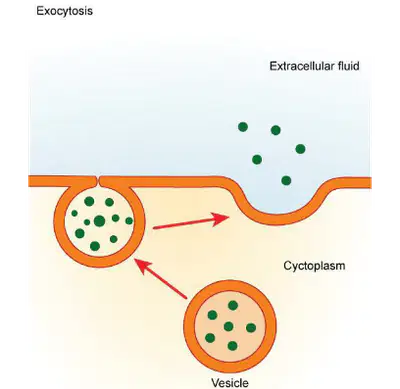
6. Active Transport: Exocytosis
• Uses vesicles to move large molecules, or large quantities out of the cell
Image Source: Wikimedia Commons
21
Categorize
Requires energy
Requires no energy
Exocytosis
Pumps
Goes from low to high concentrations
Diffusion
Osmosis
Goes from high to low concentrations


Less solutes in solution than in cell
More solutes in the solution than in the cell
22


Metabolism
• Sum of all chemical reactions in an organism
Metabolism = anabolism + catabolism
Image Source: Wikimedia Commons
23


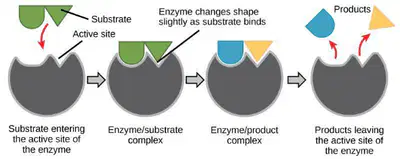
Enzymes
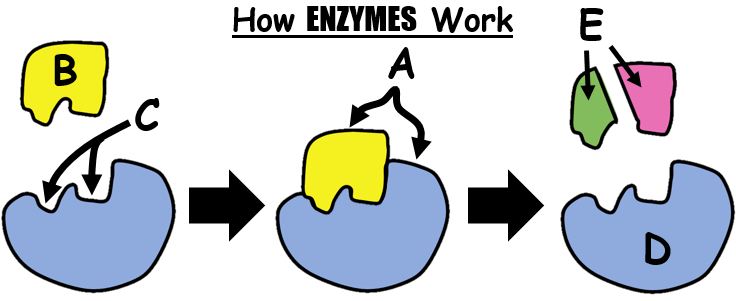
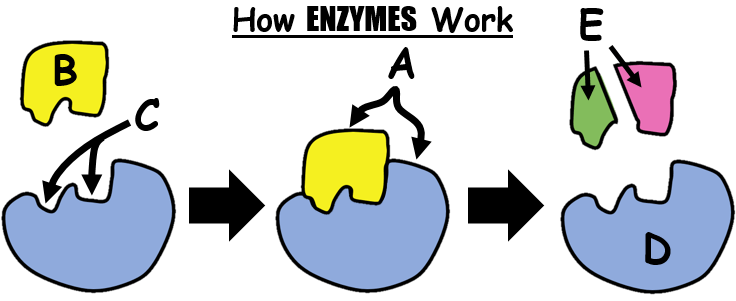
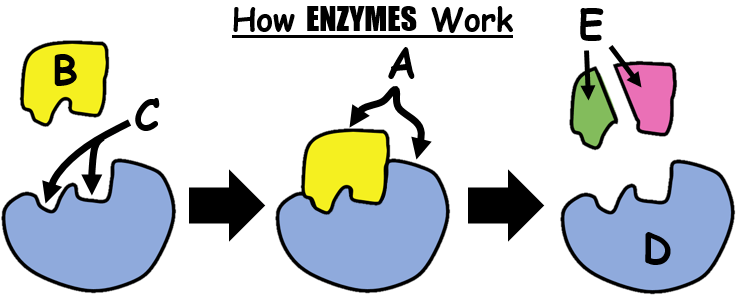
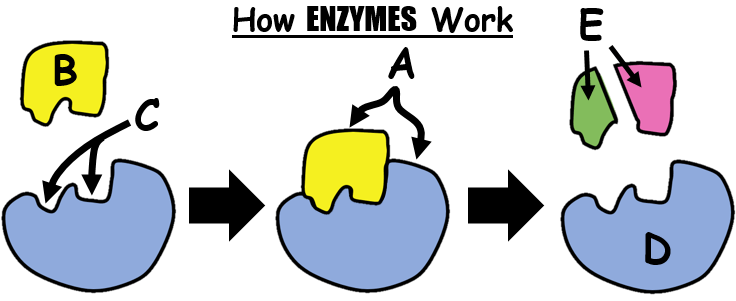
• Substance that speeds up chemical energy and lowers activation energy.
• Enzymes are unique to their substrate; form enzyme-substrate complex.
Image Source: Wikimedia Commons and Amoeba Sisters
24


25


Enzymes are affected by:
•pH and temperature:
- Enzymes have an ideal range; anything too far outside of it can cause denaturation
• Cofactors and coenzymes
- help an enzyme function properly
• Inhibitors
- Molecules that can reduce or stop enzyme activity
26
Multiple Choice
27
Multiple Choice
28
Multiple Choice
29
Multiple Choice
Energy, Membrane and
Enzymes, Oh My
BIO 110
Show answer
Auto Play
Slide 1 / 29
SLIDE
Similar Resources on Wayground

20 questions
Climate and Currents Notes
Presentation
•
12th Grade
23 questions
50 skills for modern life
Presentation
•
University
21 questions
ES 6.4 LESSON Freshwater Ecosystems
Presentation
•
12th Grade - University
19 questions
EKOLOGI
Presentation
•
KG - University
22 questions
9.2 LESSON Photosynthesis Overview
Presentation
•
12th Grade
19 questions
ELECTROLYSIS
Presentation
•
12th Grade
22 questions
Academic Writing Revision
Presentation
•
University
24 questions
SKILL-RESPIRATORY
Presentation
•
12th Grade
Popular Resources on Wayground
10 questions
Safety Day 2026 – Student Review

Quiz
•
9th Grade
21 questions
Continents and Oceans
Quiz
•
6th Grade
20 questions
Parts of Speech
Quiz
•
5th Grade
16 questions
Subject & Predicate
Quiz
•
5th Grade
25 questions
Multiplication Facts
Quiz
•
5th Grade
12 questions
Map Skills
Quiz
•
3rd Grade
22 questions
Continents and Oceans
Quiz
•
5th Grade
15 questions
Rounding Decimals
Quiz
•
5th Grade
Discover more resources for Science
20 questions
Disney Trivia
Quiz
•
University
10 questions
Spanish Greetings and Goodbyes!
Presentation
•
6th Grade - University
20 questions
Physical or Chemical Change/Phases
Quiz
•
8th Grade - University
39 questions
Unit 7 Key Terms
Quiz
•
11th Grade - University
25 questions
SER and Subject Pronouns
Quiz
•
8th Grade - University
38 questions
Unit 6 Key Terms
Quiz
•
11th Grade - University
19 questions
Key Concepts in Buddhism
Quiz
•
University
0 questions
Cell Domain Basic Review (Biology)
Quiz
•
University